

Key Takeaways
- The monthly payment is not the same as the total cost - focus on the full purchase price first.
- Add-ons presented in the finance office are optional, even when they don't feel that way.
- Dealer financing is not always better than a pre-approved loan from your bank or credit union.
- The contract supersedes any verbal agreement - review every line before signing.
- Spot delivery clauses can allow loan terms to change after you've driven the car home.
Why the Finance Office Catches So Many Buyers Off Guard
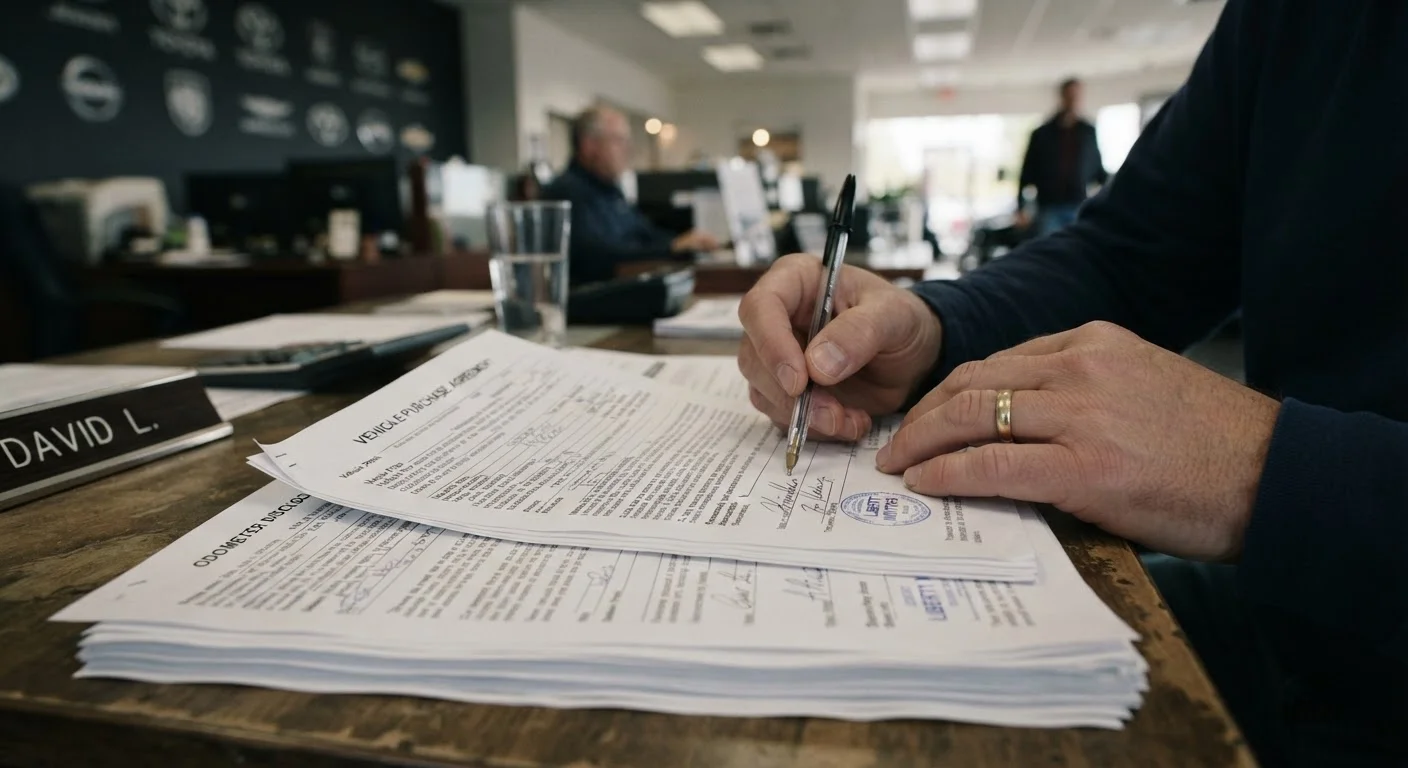
Most car buyers spend their energy negotiating the sticker price and trade-in value - which makes sense. But the finance office, sometimes called the F&I (finance and insurance) office, is where the final structure of the deal takes shape. It's also where misunderstandings are most costly.
The paperwork stage feels like a formality, especially after hours at the dealership. That mental fatigue is real, and it's the environment in which easy-to-miss assumptions get locked into binding contracts. Understanding how the finance office works is just as important as knowing the car's market value before you walk in.
Common car-buying myths can follow buyers all the way to the signing table. Knowing what's actually optional, what's negotiable, and what should match your earlier agreement will help you leave with a deal that reflects what you intended.
Verbal Promises Are Not Binding
Anything a salesperson or finance manager tells you verbally does not carry legal weight once you sign the contract. If a fee was promised to be waived, a service was promised to be included, or a rate was quoted over the phone, it must appear in the written documents. Do not sign until the paperwork reflects exactly what you agreed to.
The Most Common Signing-Day Mistakes - and How to Avoid Them
The errors below aren't unique to first-time buyers. Repeat buyers make them too, often because the finance process is designed to move quickly and the documents are dense. Each mistake below has a straightforward fix.
Focusing only on the monthly payment instead of the total price.
Why it happens: Buyers often enter the finance office relieved that negotiating is over, and a low monthly number feels like a win. Dealers know this and may extend the loan term to lower the payment while increasing the total amount paid.
Assuming dealer financing is always the most convenient or competitive option.
Why it happens: The finance office presents financing as a seamless next step, which leads many buyers to skip shopping for rates elsewhere. Some dealers earn income from the difference between the rate a lender approves and the rate offered to the buyer.
Treating add-on products as mandatory parts of the deal.
Why it happens: Extended warranties, paint protection, gap insurance, and credit insurance are often presented in a bundled, matter-of-fact way that implies they are required. Buyers are rarely told they can decline each item individually.
Not verifying that the signed contract matches the negotiated deal.
Why it happens: By the time buyers reach the finance office, fatigue sets in. It can feel awkward to scrutinize paperwork in front of a finance manager who seems busy and efficient.
Misunderstanding what gap insurance actually covers.
Why it happens: The term 'gap insurance' is used loosely, and buyers often assume it covers any shortfall in any circumstance. In reality, gap coverage applies to the difference between what you owe on a loan and what your insurer pays out if the vehicle is totaled or stolen.
For a detailed look at what individual add-ons and dealer fees actually represent, reading the fine print on dealership extras can help you evaluate each line item before you sit down to sign.
What to Do Before You Sit Down to Sign
Preparation before the finance office visit makes every step easier. A few practical steps:
- Get pre-approved for a loan from your bank or credit union so you have a rate benchmark.
- Write down your agreed terms - vehicle price, trade-in credit, down payment, any included accessories or services.
- Ask for an itemized breakdown of all fees and add-ons before the paperwork is drawn up, not while you're reviewing the final stack.
- Take your time. A legitimate dealership will not pressure you to sign without reading.
Watch for Spot Delivery Agreements
Some dealerships allow buyers to take a vehicle home before financing is fully finalized - a practice sometimes called 'spot delivery' or a 'yo-yo sale.' If the lender later rejects the terms, the dealer may call you back to re-sign at a higher interest rate. Ask explicitly whether financing is final before leaving the lot, and get confirmation in writing.
~$400
Average U.S. monthly new car payment
According to Experian's State of the Automotive Finance Market reports, average monthly new vehicle payments in the U.S. have consistently exceeded $700 in recent years, with used vehicles averaging around $525 - figures that shift significantly with loan term length.
72-84 months
Common loan terms offered at dealerships
Longer loan terms have become increasingly common, according to consumer finance researchers, stretching repayment windows that raise total interest paid even when monthly payments appear manageable.
Buyers who discover unexpected charges after the fact often have limited recourse once a contract is signed. Hidden fees drivers discover too late covers the charges that most commonly surface after the paperwork is done - worth reviewing before your next purchase.
This article is for general informational purposes only and does not constitute legal, financial, or professional advice. Consult a qualified professional for guidance specific to your situation.