

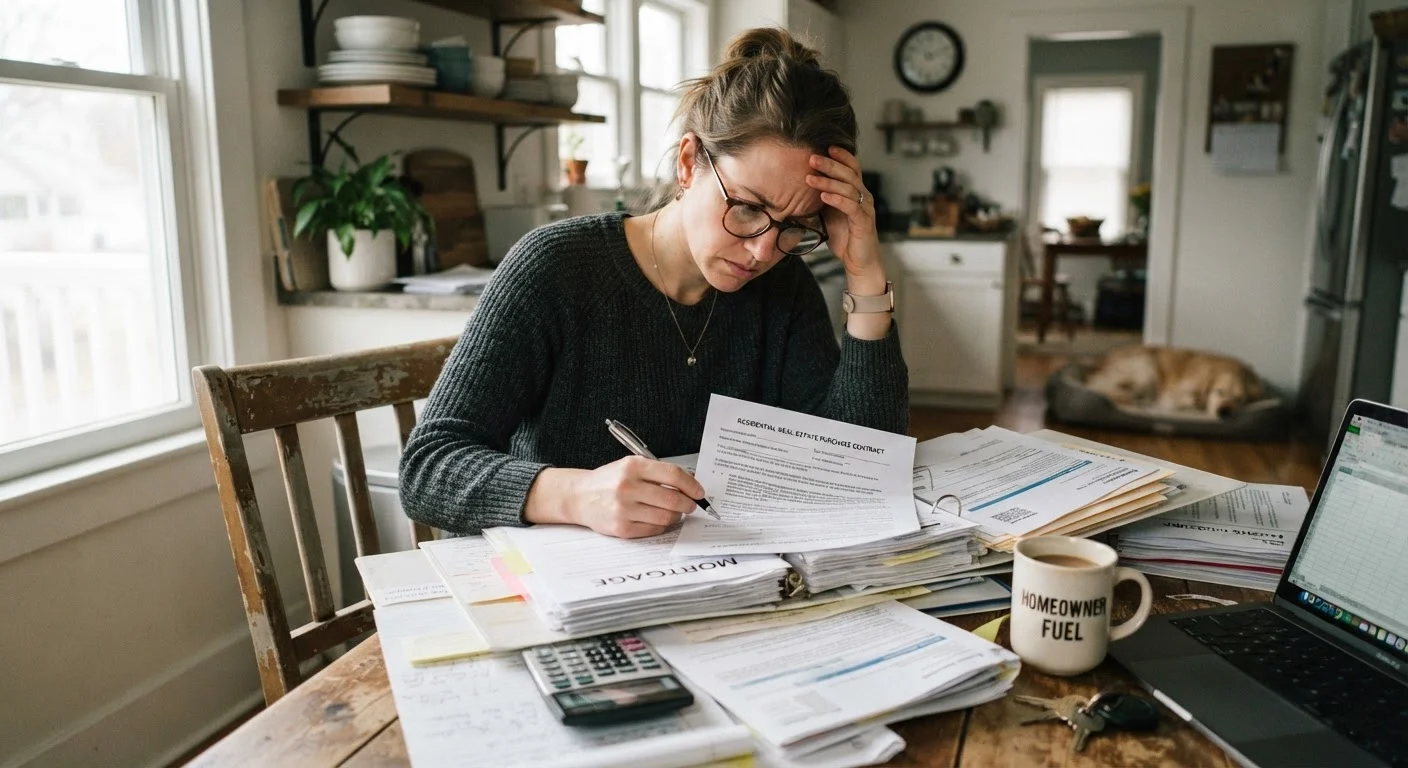
Key Takeaways
- Closing costs typically range from 2% to 5% of the home's purchase price, adding thousands to your total outlay.
- Many buyers budget only for the down payment and are caught off guard when closing day arrives.
- Costs are split across lender fees, third-party services, prepaid items, and government charges — each negotiable to varying degrees.
- Requesting a Loan Estimate from your lender within three business days of application is required by law and gives you an itemized preview.
- Some costs are fixed; others — like title insurance and settlement fees — can be comparison-shopped to reduce your total.
Why Closing Costs Blindside So Many Buyers
Most homebuyers spend months saving for a down payment, carefully calculating how much house they can afford. What rarely gets the same attention is the separate — and significant — pile of fees due at the closing table. These are closing costs: the charges associated with finalizing a mortgage and transferring property ownership. For a $350,000 home, that could mean anywhere from $7,000 to $17,500 in additional expenses due on the same day you hand over your down payment.
The problem isn't that closing costs are hidden — lenders are legally required to disclose them. The problem is that buyers often don't ask about them early enough, or don't fully absorb what's on the disclosure forms they receive. By the time closing day arrives, there's little room to negotiate or adjust.
This gap between expectation and reality is one of the most common financial missteps in the homebuying process. Understanding what's included — and when to pay attention — makes the difference between a smooth closing and a last-minute financial scramble. See our first-time buyer mistakes guide for a broader look at what catches new buyers off guard.
Budgeting only for the down payment and assuming closing costs will be minimal.
Why it happens: The down payment dominates financial planning conversations, and closing costs are rarely discussed with the same urgency by real estate agents or family advisors.
Waiting until the final week before closing to review the Closing Disclosure.
Why it happens: Buyers assume the numbers will match what they were told verbally, or they feel overwhelmed by the document and set it aside.
Accepting all third-party service providers without shopping alternatives.
Why it happens: Buyers often assume they're required to use the lender's preferred vendors, not realizing they have the legal right to choose their own title company, settlement agent, or attorney in most states.
Overlooking the prepaid and escrow items as 'not real' closing costs.
Why it happens: Prepaids — insurance premiums, interim interest, and escrow seed funds — don't feel like fees because they're going toward things buyers were going to pay anyway.
Assuming seller concessions will cover all closing costs without confirming the arrangement in writing.
Why it happens: Buyers sometimes negotiate seller concessions verbally or misunderstand what the seller has actually agreed to contribute, leading to shortfalls at the table.
What's Actually Inside Your Closing Costs
Closing costs aren't a single fee — they're a collection of charges from multiple parties. Understanding the categories helps you evaluate each line item rather than accepting the total as a black box.
2%–5%
Typical closing cost range as a share of purchase price
Industry estimates from sources including the Consumer Financial Protection Bureau place closing costs for most US home purchases in this range, though amounts vary by loan type, location, and lender.
$6,000+
Average closing costs paid by US homebuyers
Data from mortgage analytics firms has consistently shown average closing costs — excluding prepaid items — exceeding $6,000 for a typical US home purchase, with higher-priced markets pushing totals well above that figure.
- Lender fees: Origination fees, underwriting fees, and discount points (prepaid interest to lower your rate) are charged by your mortgage lender. These can often be negotiated, particularly if you have strong credit or are comparing offers from multiple lenders.
- Third-party service fees: Home appraisal, title search, title insurance, survey, and settlement or escrow fees fall here. Many of these can be comparison-shopped — your lender must provide a list of approved providers, but you're not locked into their suggestions.
- Prepaid items and escrow setup: These include prepaid homeowners insurance, prepaid mortgage interest (covering the days between closing and your first payment), and the initial funding of your escrow account for property taxes and insurance. These aren't negotiable, but they're predictable.
- Government fees: Recording fees and transfer taxes are set by local and state governments and vary widely by location.
For a detailed breakdown of every line item and who typically pays it, see our closing costs line-by-line reference.
Don't Drain Your Emergency Fund at Closing
Some buyers use every available dollar — including their emergency savings — to cover closing costs and the down payment. This leaves no cushion for the immediate expenses of homeownership: a failing appliance, a roof repair, or an unexpected utility bill. Aim to keep at least two to three months of housing expenses accessible after closing, separate from funds earmarked for the purchase itself.
Putting It in the Broader Budget Picture
Closing costs are one piece of a larger financial picture that new owners often underestimate. Once you've closed, recurring costs — property taxes, maintenance reserves, HOA fees, and utility increases — begin immediately. Building a realistic ownership budget from day one prevents the kind of financial strain that surprises even well-prepared buyers.
If you find yourself underestimating costs across multiple categories, you're not alone. Hidden costs that budgets forget is a pattern that shows up in homeownership just as it does in car ownership and everyday spending. Our guide on hidden homeownership costs covers what tends to catch new owners off guard after closing day has passed.
The homebuying process has many moving parts, but closing costs are one of the most concrete and controllable. Getting an early Loan Estimate, shopping third-party vendors, and building a closing cost buffer into your savings plan are practical steps any buyer can take — regardless of experience level.
This article is for general informational and educational purposes only and does not constitute financial, legal, or real estate advice. Consult a qualified financial advisor or real estate professional for guidance specific to your situation.