

Key Takeaways
- A lease is a binding contract — read every clause before signing, not after.
- Key sections to scrutinize include rent terms, security deposit rules, maintenance responsibilities, and early termination penalties.
- Some lease clauses are unenforceable if they violate state or local tenant protection laws.
- Verbal promises from landlords carry little legal weight — get everything in writing.
- Many lease terms are negotiable before signing, especially in slower rental markets.
Lease Agreement
A lease agreement is a legally binding contract between a landlord and a tenant that sets the terms of renting a property. It spells out how much rent is due, when it's due, how long the tenancy lasts, and what both parties are responsible for. Once signed, both sides are obligated to follow its terms for the duration of the lease.
Leases are governed by state and local landlord-tenant law, which can override certain lease provisions — meaning a clause in your lease may not be enforceable if it conflicts with applicable law.
The Core Structure of a Lease
Most residential leases follow a predictable structure, even when the exact language differs. Understanding this structure helps you know where to look for the terms that matter most.
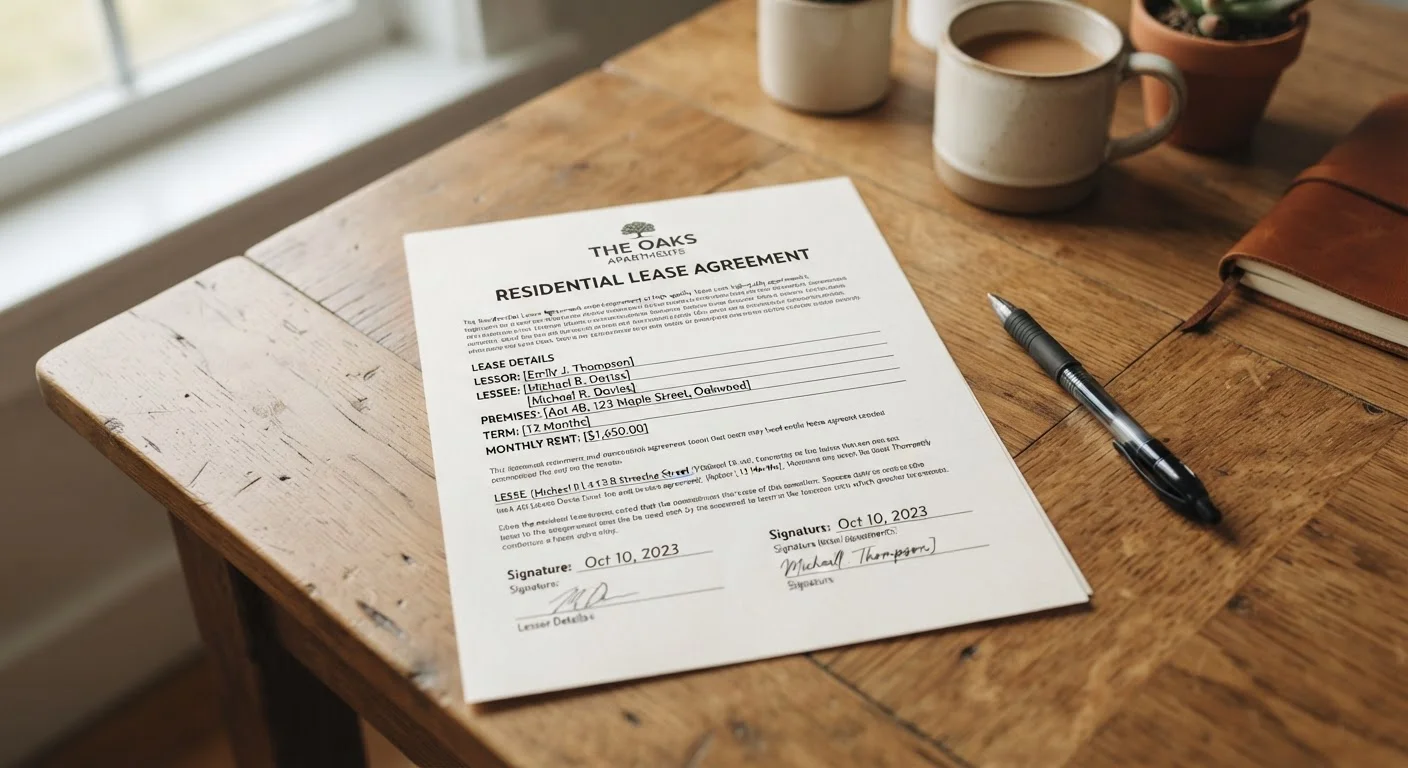
A standard lease will identify the parties (landlord and tenant), the property address, the lease term (start and end date), and the monthly rent amount. These basics appear near the top and establish the fundamental agreement.
Beyond those basics, the bulk of the document covers rules, responsibilities, and what happens when things go wrong. This is where renters most often encounter surprises — and where careful reading pays off. See our plain-language glossary of renter terms if unfamiliar vocabulary slows you down.
~50%
Renters who don't fully read their lease
Industry surveys and tenant advocacy organizations consistently find that roughly half of renters sign without reading the full document, leaving them unaware of key obligations.
14–30 days
Typical security deposit return window
Most U.S. states require landlords to return security deposits within 14 to 30 days of move-out, though the exact timeline varies by jurisdiction.
1–2 months
Security deposit cap in many states
A majority of U.S. states cap residential security deposits at one to two months' rent, though some states impose no statutory limit.
Clauses That Deserve Extra Scrutiny
Not all lease sections carry equal weight. These are the clauses that most frequently cause disputes or unexpected costs:
- Rent payment terms: Look for the due date, any grace period, and the exact late fee amount. Some leases charge a flat fee; others charge a percentage of rent per day.
- Security deposit rules: The lease should state the deposit amount, what it can be used for, and the timeline for its return. Compare this against your state's legal limits and deadlines — many states cap deposits at one to two months' rent.
- Maintenance and repairs: Leases typically divide responsibility between landlord and tenant. Landlords are generally required to maintain habitable conditions; tenants are usually responsible for minor upkeep and damage they cause.
- Pet policy: If pets are addressed, note whether there's a separate pet deposit (refundable) or a pet fee (non-refundable), and any breed or weight restrictions.
- Early termination: This clause describes what you owe if you need to leave before the lease ends. Penalties vary widely — from one month's rent to the remainder of the term.
- Renewal and rent increase terms: Some leases auto-renew unless you give notice; others convert to month-to-month. Look for any language about how much advance notice you must give.
For the full cost picture beyond monthly rent, see the true cost of renting.
Always Request Changes in Writing
If your landlord agrees to modify any lease term — a lower pet fee, a later move-in date, permission to paint — ask for a written addendum or an email confirmation before you sign the original lease. Verbal promises are very difficult to enforce if a dispute arises later.
Red Flags and Unenforceable Clauses
Some lease language sounds authoritative but may not hold up legally. Common red flags include:
- Waiver of habitability: Any clause stating you accept the unit "as-is" and waive the landlord's duty to make repairs is likely unenforceable in most states. Landlords are legally required to maintain livable conditions.
- Blanket no-guest policies: Extremely restrictive guest clauses — such as prohibiting any overnight visitor — may conflict with tenant rights laws in some jurisdictions.
- Automatic rent increases mid-lease: A fixed-term lease generally locks in the rent for its duration. Clauses permitting mid-lease increases without clear legal basis deserve scrutiny.
- Non-refundable security deposits: In many states, security deposits must be refundable by law. A lease calling the deposit "non-refundable" may not override that protection.
Lease Law Varies Significantly by State
There is no single national landlord-tenant law in the United States. Rules about security deposits, required notice periods, habitability standards, and tenant remedies differ considerably from state to state — and sometimes by city or county. Always verify how your state's statutes apply to a specific clause before assuming it is or isn't enforceable.
If a clause seems unusual or one-sided, cross-reference it with your state's landlord-tenant statutes or consult a local legal aid organization before signing. You can also review tenant rights every renter should know for a broader picture of your legal protections.
What to Do Before You Sign
Reading a lease thoroughly before signing is the single most effective way to avoid problems later. Here's a practical approach:
- Read the entire document — including the fine print and any addenda (pet addendum, parking addendum, move-in inspection form).
- Ask questions in writing. If you're unclear on any clause, email your landlord or property manager and keep the response. Verbal explanations don't carry legal weight if there's ever a dispute.
- Document the unit's condition before moving in. Take timestamped photos of any existing damage and submit a written move-in inspection form, even if it isn't required.
- Know what's negotiable. Lease start dates, pet fees, minor rule modifications, and sometimes even rent can be negotiable — particularly in softer rental markets. Our guide on negotiating lease terms explains which clauses landlords commonly adjust.
- Use a checklist. A structured review helps ensure you don't miss anything. See our lease review checklist for a clause-by-clause walkthrough.
“A lease is not a take-it-or-leave-it document. It's a negotiation, and the renter who reads carefully is always in a stronger position than one who doesn't.”
— National Housing Law Project, Nonprofit tenant advocacy and legal organization
This article is for general informational purposes only and does not constitute legal advice. Lease law varies by state and locality. Consult a qualified attorney or legal aid organization for guidance specific to your situation.