

Key Takeaways
- Meal planning before each trip is one of the most effective ways to reduce impulse spending at the store.
- Tracking unit prices rather than sticker prices reveals the true cost of what you're buying.
- Building flexible, repeatable habits matters more than chasing one-time deals or discounts.
- Pantry staples like dried beans, grains, and frozen vegetables stretch limited budgets without sacrificing nutrition.
- Reviewing your grocery spending weekly — even briefly — helps catch budget drift before it compounds.
Why One-Off Tricks Don't Work Long-Term
Plenty of advice about grocery budgeting focuses on coupon stacking or one-day sales. These tactics can help occasionally, but they rarely produce lasting results on their own. The households that consistently spend less on food tend to rely on repeatable habits rather than sporadic efforts.
The goal isn't to find the perfect deal. It's to make lower-cost choices automatic — so that even on a hectic week, you're not walking in blind and walking out over budget. If you're building these habits alongside a broader household financial plan, the Budgeting Basics hub offers a useful starting framework for tracking where grocery spending fits within your overall budget.
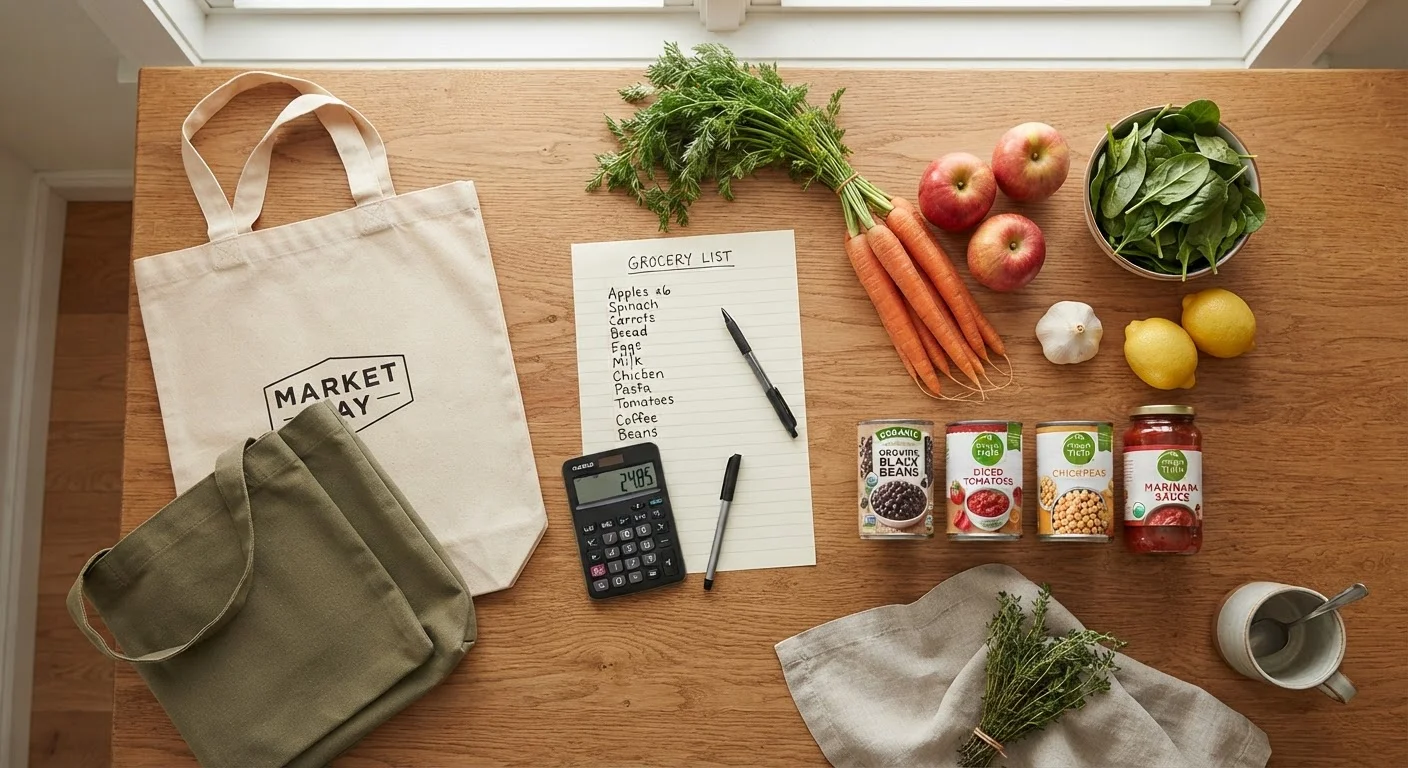
Plan meals for the week before writing your grocery list.
Without a meal plan, shopping becomes reactive — you buy what looks appealing rather than what you'll actually use. This leads to duplicate purchases, forgotten ingredients, and food that spoils. A simple weekly plan anchors your list to real meals.
Check your pantry and fridge before every trip.
One of the most common budget leaks is buying something you already have. A two-minute inventory before you write your list eliminates redundant purchases and forces you to cook down what's already there.
Compare unit prices, not package prices.
Shelf prices can be misleading when package sizes vary. Unit price — the cost per ounce, pound, or count — tells you what you're actually paying for the product, regardless of how it's packaged. Most US grocery stores are required to display unit pricing on shelf tags.
Build meals around flexible pantry staples.
Ingredients like dried legumes, canned tomatoes, rice, frozen vegetables, and eggs are among the most cost-effective foods available and work across many cuisines and recipes. Keeping these on hand reduces the need for expensive last-minute purchases.
Set a firm dollar limit before you enter the store.
Walking in without a spending target makes it easy to justify small additions that accumulate fast. A pre-set limit creates a concrete boundary and encourages trade-off thinking — if something goes in the cart, something else may need to come out.
Do a brief weekly spending review.
Habits drift without feedback. Spending five minutes comparing your actual grocery receipt against your planned budget helps you spot patterns — specific categories or impulse purchases — that quietly push costs higher over time.
Core Habits That Actually Hold
The practices below aren't glamorous, but they're durable. Each one addresses a specific failure point — impulse buying, invisible waste, price confusion — that tends to push grocery bills higher week after week.
For a more detailed look at how these habits interact with nutrition goals, see Stretching a Grocery Budget Without Sacrificing Nutrition, which covers meal planning and unit pricing in depth.
Staying on Track Over Time
Even solid habits erode without a simple feedback loop. A quick weekly review — five minutes looking at what you spent versus what you planned — is often enough to catch drift before it becomes a problem. You don't need a complex spreadsheet; a notes app or a written list works just as well.
Food Waste Is a Hidden Budget Cost
When food gets thrown out, so does the money spent on it. The USDA has consistently found that food waste is a significant issue in American households. Buying only what you have a plan to use — rather than stocking up on perishables speculatively — is one of the most direct ways to stretch a grocery budget further without changing what you eat.
Food waste is one of the most common budget leaks. The USDA estimates that a significant share of household food purchases end up discarded. Buying less with more intention — rather than stocking up speculatively — reduces both waste and cost over time.
These grocery habits pair naturally with broader money routines. The article Habits That Keep a Budget Working Long-Term covers how consistent practices help households stay financially steady as circumstances change. And if you're looking for additional small-effort ways to reduce monthly spending, Small Daily Habits That Quietly Add Up to Real Savings is worth reading alongside this one.
~$1,500
Average annual household food waste cost
USDA research estimates the average US family of four discards between $1,500 and $2,000 worth of food per year.
11%
Share of household spending on food
According to the Bureau of Labor Statistics Consumer Expenditure Survey, food represents roughly 11–12% of the average American household's annual expenditures.