

Key Takeaways
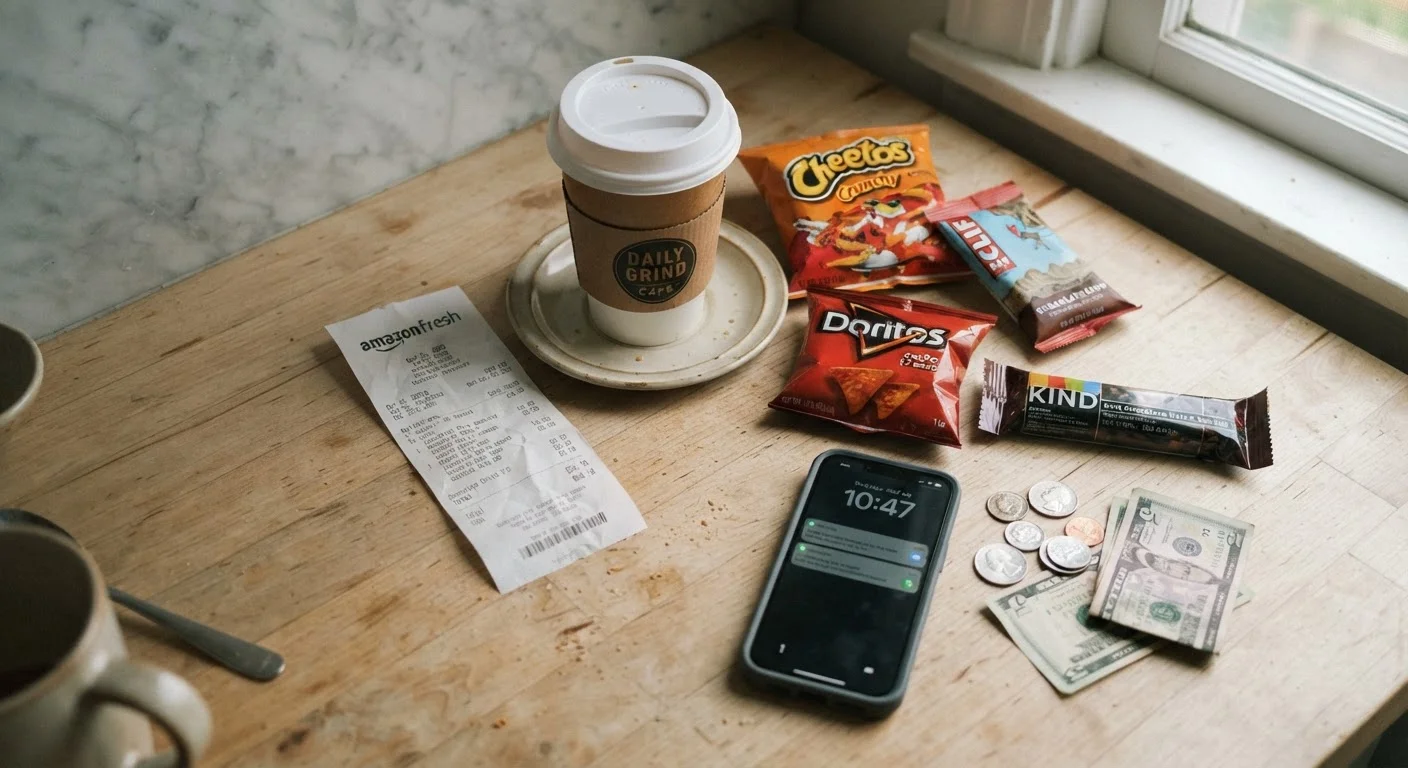
- Small convenience purchases feel harmless individually but can total hundreds of dollars monthly.
- Delivery fees, single-serve packaging, and last-minute buys carry the steepest convenience premiums.
- Most people underestimate their convenience spending by a significant margin.
- Awareness — not deprivation — is the first and most effective corrective step.
- A simple spending audit can reveal where convenience costs are highest in your own habits.
Convenience Cost Creep
Convenience cost creep is the gradual, often unnoticed erosion of your budget caused by repeated small purchases made for ease or speed rather than value. Individually, these transactions — a delivery fee here, a single-serve item there — feel trivial. Collectively, they can represent a surprisingly large slice of monthly spending.
Behavioral economists sometimes refer to this as 'the latte factor' or 'present bias' — the tendency to underweight future financial impact when a current cost feels negligible.
Why Small Purchases Feel Financially Invisible
A $3.99 delivery fee. A $2.50 bottled water from an airport kiosk. A $6 single-serve yogurt pack at a convenience store. None of these feel like financial decisions in the moment — they feel like logistics. That psychological gap between what something costs and how much it feels like it costs is exactly where convenience spending hides.
The core mechanism is simple: humans are poor at mentally aggregating small, frequent costs. We're wired to react to large, visible expenses — a car repair, a medical bill — and to largely ignore the steady drip of minor ones. This is compounded by the fact that convenience purchases often happen when we're tired, rushed, or distracted — conditions that further reduce financial deliberateness.
Small spending leaks follow the same psychological pattern: individually insignificant, collectively significant, and almost always underestimated when people are asked to guess their own totals.
~$2,000+
Annual delivery fee spend per household
Consumer spending analyses suggest frequent delivery platform users can spend well over $2,000 per year in fees and service charges alone, separate from food costs.
Up to 200%
Single-serve price premium over standard sizes
Per-unit cost comparisons across common grocery categories show single-serve packaging can cost twice as much — or more — than standard-size equivalents.
40–60%
Underestimation of personal convenience spending
Behavioral finance research indicates consumers routinely underestimate their discretionary and convenience spending by 40–60% when asked to self-report without reviewing statements.
The Most Expensive Forms of Everyday Convenience
Not all convenience spending is equal. Some categories carry steeper premiums than others, and knowing which ones is half the battle.
- Food delivery fees and markups: Delivery platforms frequently add 15–30% in fees and service charges on top of menu prices that are sometimes already inflated vs. in-store. A meal that costs $12 to prepare at home can easily run $22–$28 delivered.
- Single-serve and grab-and-go packaging: Per-unit pricing on single-serve versions of pantry staples — nuts, coffee pods, salad kits — routinely runs 40–200% higher than buying in a standard format and portioning yourself.
- Last-minute and location-premium purchases: Buying the same item at an airport, hotel minibar, or corner store versus a regular supermarket can double or triple the price. Urgency removes price comparison from the equation entirely.
- Expedited shipping: Paying for faster delivery — when standard shipping would have worked with a day's more planning — is one of the purest forms of paying for time you didn't technically need.
For a broader look at costs that tend to escape standard budget categories, our piece on hidden costs most budgets overlook covers similar ground.
Try the 'annualize it' mental check
Before any convenience purchase, multiply the cost by how often you make that same purchase in a year. A $4 daily convenience fee becomes $1,460 annually. Seeing the annualized figure tends to make the real cost land differently — and helps you decide more deliberately whether it's worth it.
How to Audit and Recalibrate — Without Going Cold Turkey
The goal of examining convenience spending isn't to eliminate comfort from daily life. It's to make the spending intentional rather than automatic. A few practical steps:
- Run a 30-day transaction audit. Export your last month of bank or card transactions and flag every purchase under $20 that was driven by convenience rather than necessity. Add them up. Most people find the total genuinely surprises them.
- Identify your two or three highest-cost habits. You don't need to overhaul everything. Targeting the two or three patterns that cost the most — and that you'd realistically change — produces most of the benefit with minimal friction.
- Build in one substitution, not a restriction. For each high-cost habit, identify one lower-cost alternative that requires modest planning. Meal prepping two lunches per week instead of ordering delivery every day, for example, doesn't require perfection — just some forethought.
- Reassess quarterly. Convenience habits shift with life circumstances. A quarterly check-in keeps your spending aligned with what actually matters to you rather than with whatever was convenient last season.
Small behavioral shifts in this direction connect directly to the habits explored in small daily habits that quietly add up to real savings — low-effort changes that compound meaningfully over time.
The Bigger Picture: Convenience as a Budget Category
One reframe that tends to shift behavior: treat convenience as a line item, not an exception. When convenience spending is named and tracked — like groceries or utilities — it becomes something you can manage deliberately. When it's invisible, it manages you.
This doesn't mean every delivery fee is a failure. It means understanding roughly what you're spending on convenience per month and deciding whether that amount reflects your actual priorities. For some households, outsourcing certain tasks is genuinely worthwhile. The problem isn't convenience itself — it's convenience on autopilot.
Patterns that trip up even thoughtful shoppers — like defaulting to convenience out of habit rather than genuine need — are covered in depth in where budget shoppers go wrong. Recognizing the pattern is the precondition for changing it.
“The real cost of convenience isn't what you pay at checkout — it's the cumulative total you never bother to add up.”
— Smart Shopping Editorial Team, Consumer spending research and editorial
This article is for general informational purposes only and does not constitute personalized financial advice. Consult a qualified financial professional for guidance tailored to your individual situation.