
Grocery, Electronics, Clothing: How Price Comparison Works Differently by Category

Key Takeaways
- Unit pricing is the most reliable comparison tool for groceries; package size often obscures true cost.
- Electronics comparisons must account for specifications, warranties, and return policies—not just sticker price.
- Clothing price comparisons hinge on fabric content, construction quality, and cost-per-wear over time.
- Price volatility differs sharply by category: groceries fluctuate weekly, electronics follow product cycles.
- Loyalty programs and store cards affect the real price differently depending on the category.
Why One Comparison Method Doesn't Fit All Categories
Most shoppers apply the same instinct to every purchase: find the lower number and go with it. That works sometimes — but price comparison is more nuanced than it looks, and the right technique changes depending on what you're buying.
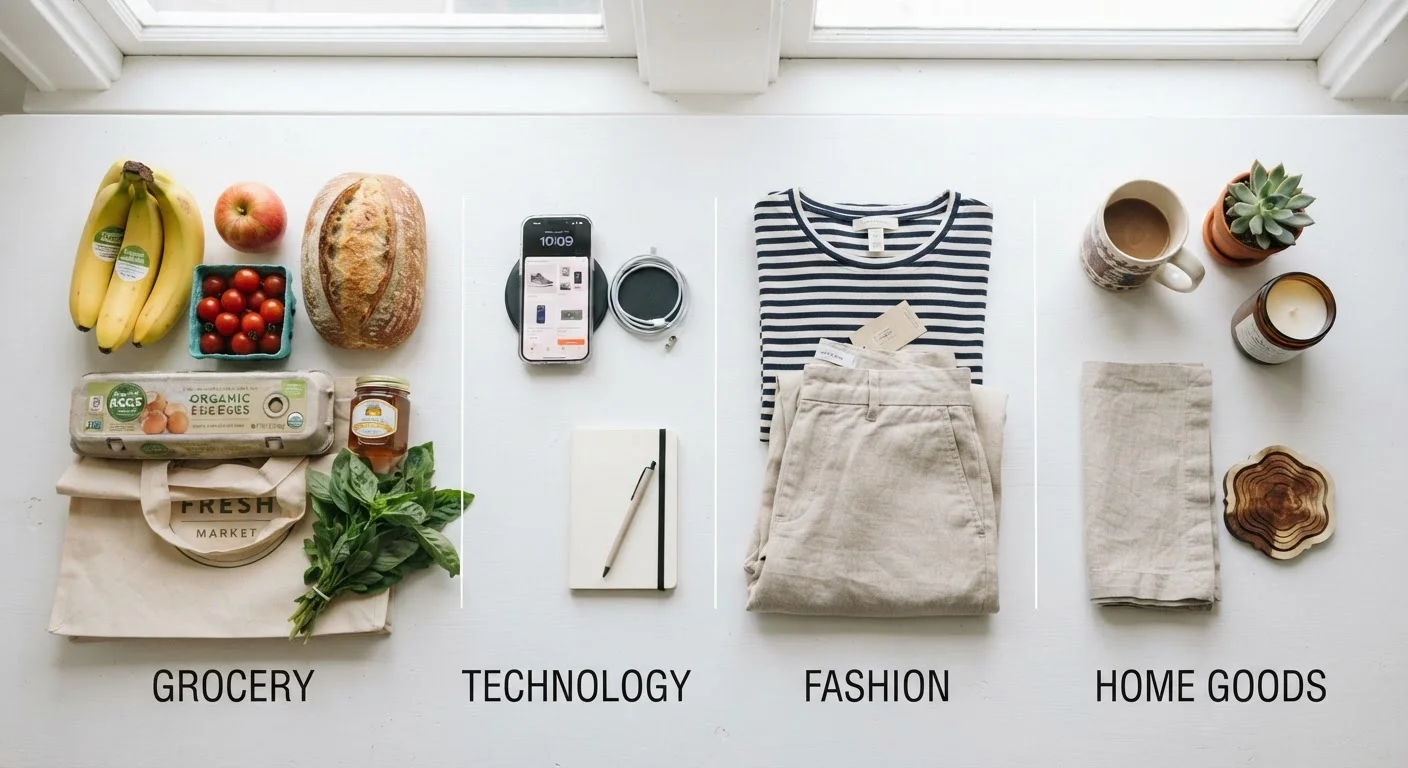
Groceries are high-frequency, frequently reformulated, and sold in endlessly varying package sizes. Electronics are complex, specification-driven, and depreciate fast. Clothing sits somewhere in between — highly subjective, quality-variable, and rarely standardized. Treating all three categories the same way leads to decisions that feel frugal but aren't. This article breaks down how to approach each one in a way that reflects how those markets actually work. For a broader look at the mechanics behind accurate comparisons, see the complete guide to comparing prices across stores and channels.
Groceries: Unit Price Is the Only Number That Matters
In the grocery aisle, the shelf price is almost meaningless without knowing the quantity behind it. A 32-oz jar of pasta sauce priced at $4.49 and a 24-oz jar at $3.29 look similar at a glance — but the unit price (price per ounce) tells a different story. Most grocery stores are required to display unit pricing on shelf tags, but the format varies and isn't always easy to spot.
Key factors to watch in grocery comparisons:
- Unit price per ounce, pound, or count — always normalize before comparing.
- Store-brand vs. name-brand formulation — ingredients and nutritional profiles sometimes differ, sometimes don't.
- Sales cycles — many grocery staples rotate through predictable promotions every four to six weeks.
- Loyalty card pricing — the advertised price often requires a store card, making the true shelf price higher for non-members.
Bulk buying only saves money if you'll actually use the product before it expires. Factor in waste when comparing large-format items.
In the grocery aisle, unit price is the only number that gives you an honest comparison.
Electronics: Specifications and Total Cost of Ownership
Electronics pricing is rarely apples-to-apples. Two laptops with nearly identical sticker prices can differ dramatically in processor generation, RAM, storage type, display resolution, and battery life. Comparing price without comparing specifications is comparing incompatible things.
What to evaluate beyond the price tag:
- Specification parity — confirm you're comparing devices with equivalent core specs before drawing conclusions.
- Warranty length and coverage — a lower-priced device with a one-year warranty may cost more over time than a pricier option with three years of coverage.
- Return and restocking policies — some retailers charge restocking fees of 15–25%, which changes the real cost if the product doesn't work out.
- Price history — electronics often drop significantly after a newer model launches. Price tracking tools can help you identify whether the current price reflects a genuine low or routine list pricing.
For a deeper look at how specs and quality should factor into any price comparison, this framework for comparing prices when quality varies is a useful reference.
Two electronics at the same price can differ dramatically in real-world value once specs and warranty are compared.
Clothing: Cost-Per-Wear Over Sticker Price
Clothing pricing is among the most opaque categories for consumers. A $30 T-shirt and an $80 T-shirt don't reveal much about relative value from the tag alone. The variables that determine whether you're getting a fair price are mostly invisible at checkout: fabric weight and composition, stitching quality, colorfastness, and how the garment will hold up after repeated washing.
Practical factors to weigh when comparing clothing prices:
- Fabric content — check the care label. Higher natural fiber content (cotton, wool, linen) often correlates with durability, though blends can perform well too.
- Cost-per-wear estimate — divide the price by how many times you realistically expect to wear the item. A $90 jacket worn 100 times costs less per wear than a $40 jacket worn 15 times.
- Return window — clothing fit and quality issues often only become apparent after washing. A longer, no-questions return window meaningfully reduces risk.
- Sale timing — apparel markdowns follow predictable seasonal patterns, typically deepening at end-of-season clearance periods.
Online and in-store clothing prices differ in ways that aren't always obvious — fit uncertainty and shipping costs affect the real value of online deals.
Cost-per-wear is a more honest measure of clothing value than the price on the tag.
All Categories: Factor In Where You're Buying
The same product can carry a different effective price depending on the channel — physical store, retailer website, or third-party marketplace. That's true across groceries, electronics, and clothing, though the reasons differ by category.
- Groceries — delivery and service fees from grocery apps can add 15–30% to your total. In-store pickup often reduces this significantly.
- Electronics — authorized retailers carry manufacturer warranties; third-party marketplace sellers sometimes don't, which affects warranty claims.
- Clothing — online-only sellers may price lower but shift return shipping costs back to the consumer, narrowing the apparent saving.
Research on in-store vs. online pricing shows neither channel consistently wins — the answer depends heavily on what you're buying and when.
The channel you buy from affects effective price in ways that differ by category — always include fees in your comparison.
Loyalty Programs: Not All Rewards Are Equal Across Categories
Loyalty programs are a meaningful part of the real price you pay — but their value isn't uniform across categories. Understanding what a program actually offers in each context helps you weigh it correctly in a comparison.
- Grocery loyalty cards — often required to access sale pricing, making membership effectively mandatory for regular shoppers. Points or cashback can add 1–5% in additional value on high-volume spending.
- Electronics retailer programs — rewards points sometimes expire or are restricted to future in-store purchases, limiting their practical value. Read the terms before counting them as savings.
- Clothing store programs — many offer percentage-off rewards that apply to already-marked-down items, which can generate genuine savings on seasonal clearance items.
For a clear breakdown of how cashback, coupons, and reward programs differ in practice, this guide to cashback, coupons, and promo codes covers the mechanics in plain terms.
Loyalty rewards have real monetary value in some categories and surprisingly little in others — read the terms carefully.
Putting It All Together
Effective price comparison isn't about obsessing over every cent — it's about knowing which variables matter most in each category and checking those first. Grocery shopping rewards unit-price discipline and loyalty-program awareness. Electronics shopping rewards patience, specification literacy, and attention to the total cost of ownership. Clothing rewards a longer view of value, where cost-per-wear often tells a truer story than the tag price.
Start With the Category, Then Pick Your Tool
Before reaching for a comparison app or scanning barcodes, ask what category you're in and what that category requires. Groceries need unit-price math. Electronics need spec sheets and warranty details. Clothing needs a cost-per-wear estimate. Matching your method to the category takes less than a minute and consistently leads to sharper decisions.
Shoppers who switch strategies by category consistently make more informed decisions than those who rely on a single approach. For a closer look at the common mistakes that undermine comparisons across all categories, see where price comparisons go wrong and how to keep yours accurate.