
Planning a Budget Trip End to End: From Choosing a Destination to Coming Home

Key Takeaways
- Destination cost varies widely — research daily travel costs before committing to a location.
- A written budget with specific categories prevents overspending across every trip phase.
- Booking timing and flexibility on dates can meaningfully reduce flight and hotel costs.
- Tracking daily spending on the road stops small expenses from becoming budget-busting surprises.
- A post-trip review turns your experience into a smarter plan for the next trip.
Choosing a Destination That Fits Your Budget
The first and most impactful budget decision you'll make is where to go. Two trips of identical length can differ by thousands of dollars based solely on destination. Before falling in love with a location, research its average daily costs for a traveler at your comfort level.
Useful benchmarks to look up: average cost of a mid-range meal, a night in a budget-friendly guesthouse or hotel, local transportation fares, and entry fees to major attractions. Travel forums, backpacker blogs, and destination travel guides often publish these figures with real examples.
Consider these destination factors side by side:
- Currency strength: Destinations where the US dollar goes further tend to offer lower day-to-day costs.
- Proximity: A closer destination often means a cheaper flight, which can offset a slightly higher daily cost on the ground.
- Shoulder season timing: Visiting just before or after peak tourist season typically lowers both accommodation and activity prices significantly.
- Free or low-cost attractions: National parks, public beaches, walking neighborhoods, and free museum days can anchor an itinerary without draining funds.
Compare total trip cost — not just airfare — across two or three destination options before deciding. A cheaper flight to an expensive city can easily cost more overall than a pricier ticket to a lower-cost destination.
Travelers frequently optimize for the lowest flight price and underestimate how much daily costs vary by destination, leading to budget shortfalls mid-trip.
Build your daily spending limit around what you can actually sustain, not an aspirational minimum. Unrealistic daily budgets create stress and usually get abandoned within the first few days.
Behavioral research on budgeting consistently shows that overly restrictive targets lead to abandonment rather than adherence — moderate, realistic limits perform better over time.
Narrowing your list to two or three destinations and comparing total estimated costs — not just flight prices — gives you a much clearer picture than browsing deals impulsively.
Building a Realistic Trip Budget
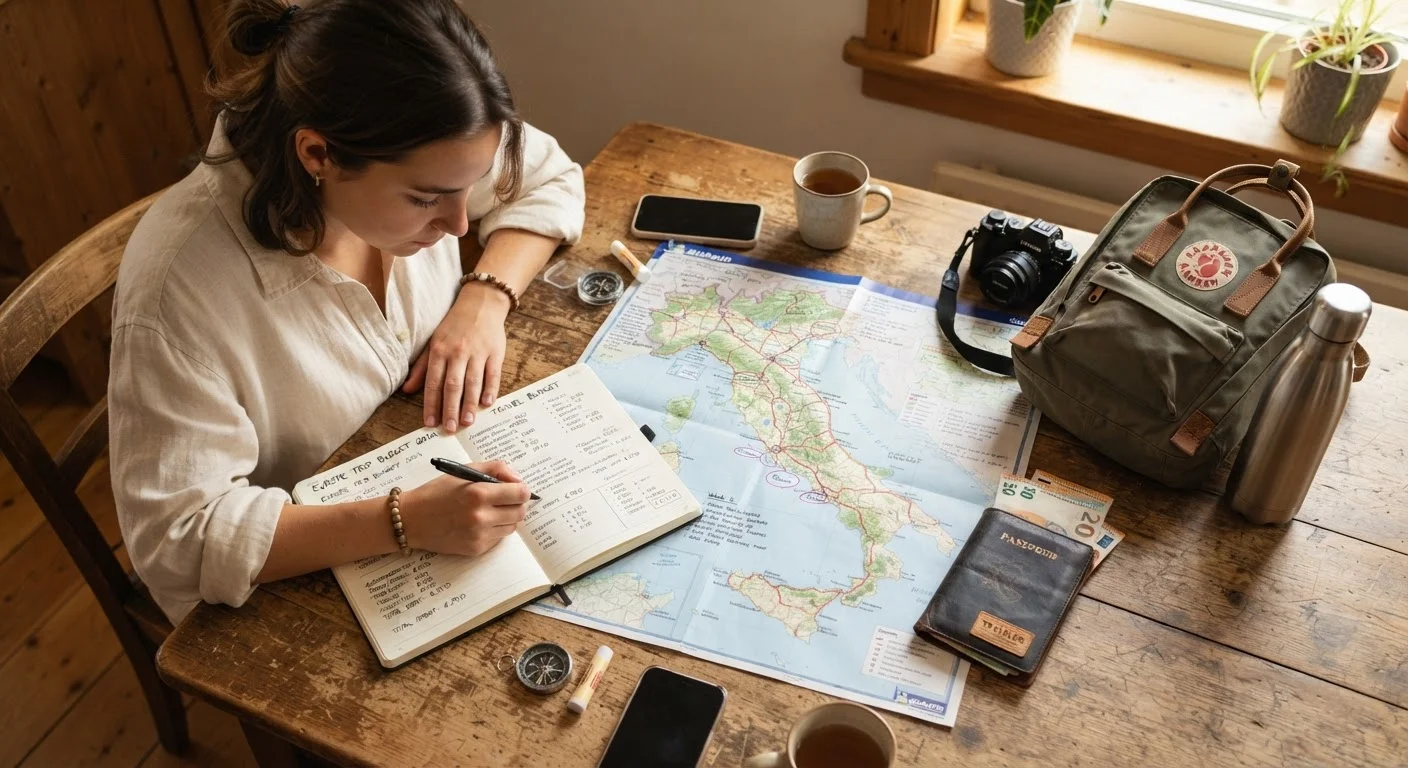
Once you've chosen a destination, build a written budget before booking anything. Vague intentions to "spend less" rarely work. A budget broken into specific categories does.
Standard categories to include:
- Flights (including any checked bag fees)
- Accommodation (per night × number of nights)
- Daily food (breakfast, lunch, dinner estimates)
- Local transportation (transit passes, rideshares, car rental if needed)
- Activities and entrance fees
- Travel insurance (see note below)
- A contingency buffer — typically 10–15% of your total estimate
Travel Insurance Is a Real Budget Category
Travel insurance is often left out of initial trip budgets and then either skipped or purchased impulsively. It covers scenarios like trip cancellation, medical emergencies abroad, and lost baggage. Costs vary based on trip length, destination, and coverage level. Research what policies typically cover and verify any existing coverage you may have through credit cards or health insurance before purchasing.
Research each category using real numbers from traveler reports or destination cost databases rather than guessing. Overestimating slightly is safer than underestimating. For broader household budgeting skills that carry into travel planning, budgeting basics covers practical methods for tracking and planning spending.
Booking Flights and Accommodation Strategically
Booking windows and flexibility matter more than many travelers realize. For domestic US flights, fares often soften in the one-to-three-month window before departure, though very last-minute bookings tend to spike again. International routes generally reward earlier planning — often three to six months out.
A few broadly consistent patterns worth knowing:
- Midweek departures (Tuesday, Wednesday) often carry lower fares than weekend travel.
- Nearby airports can offer meaningfully different prices — checking alternate departure or arrival airports is worth a few minutes of research.
- Setting fare alerts lets you monitor price movement without obsessively checking manually.
For accommodation, comparing multiple booking types — hostels, guesthouses, vacation rentals, and budget hotel chains — reveals price gaps that aren't always obvious. Reading recent guest reviews specifically about cleanliness and safety gives a realistic picture before committing.
Don't Optimize Only for Price
Choosing the absolute cheapest option in every category — the cheapest flight with multiple long layovers, the cheapest accommodation in an inconvenient location — can create hidden costs in time, transportation, and stress. Weigh price against practicality, especially for accommodation location. A slightly higher nightly rate near public transit can save meaningful money on daily transport.
Making purchases and booking decisions that align with how you actually spend is a skill worth developing. Smart spending habits are just as applicable to travel booking as they are to everyday purchases.
Managing Money While You Travel
Having a budget means little if you're not tracking it on the road. Small daily expenses — a coffee here, a souvenir there — add up quickly and are the most common reason travelers exceed their budgets.
Practical approaches that work:
- Set a daily spending limit for food and incidentals and check your total each evening.
- Use a simple notes app or a travel expense app to log purchases as you go — not from memory at the end of the day.
- Withdraw local currency in thoughtful amounts to avoid repeated ATM fees, but don't carry more cash than you'd be comfortable losing.
- Understand your bank card's foreign transaction fees before departure — some cards charge 3% on every purchase abroad, which adds up over a two-week trip.
Eat Like a Local to Cut Food Costs
Food is one of the most flexible line items in any travel budget. Markets, food halls, and neighborhood restaurants away from tourist hotspots routinely offer meals at a fraction of the price of attraction-adjacent dining. Looking where locals are actually eating — rather than where signs are in English — is a reliable signal.
Eating where locals eat — markets, neighborhood restaurants away from tourist centers — is one of the most reliable ways to cut daily food costs without sacrificing quality.
Reviewing Your Trip Spending After You Return
The post-trip review is the step most budget travelers skip — and one of the most valuable. Within a few days of returning, compare what you actually spent in each category against what you budgeted.
Ask yourself:
- Which categories consistently ran over? (Transportation and food are the most common culprits.)
- Which estimates were accurate or even high?
- Were there costs you didn't anticipate at all?
- Did you feel financially stressed at any point, and if so, why?
Documenting these answers — even in a simple notes file — builds a personal reference for your next trip. Over two or three trips, your estimates will become increasingly accurate, and the gap between budgeted and actual spending will narrow. That's how casual travelers become genuinely efficient ones.
10–15%
Recommended contingency buffer on any travel budget
Travel planners commonly recommend reserving this amount above your estimated total to absorb unexpected costs without derailing the trip.
3%
Typical foreign transaction fee on standard bank cards
Many US bank cards charge this fee on every international purchase — a detail worth checking before departure to avoid unnecessary charges.
Budget travel is a skill that improves with practice, not just willpower. Each trip teaches you something a generic guide can't: how you personally spend, what you're willing to trade off, and where your travel money actually goes.