

Key Takeaways
- Dealerships appraise trade-ins based on resale potential, not what you paid or what you owe.
- Condition, mileage, local demand, and current inventory all influence the offer you receive.
- Trade-in value and purchase price are separate negotiations - keep them that way.
- Getting independent valuations before visiting a dealer gives you a realistic baseline.
- Selling privately typically yields more money, but involves more time and effort.
Trade-In Value
Trade-in value is the amount a dealership offers to purchase your current vehicle when you're buying another car from them. It's applied as a credit toward your new purchase, reducing what you owe out of pocket. This figure is set by the dealer - not by you - and is based on how quickly and profitably they believe they can resell your car.
Trade-in value differs from retail market value (what a private buyer might pay) and from wholesale auction value (what dealers typically pay at auction). Your offer will usually fall somewhere between those two numbers.
What Goes Into a Trade-In Appraisal
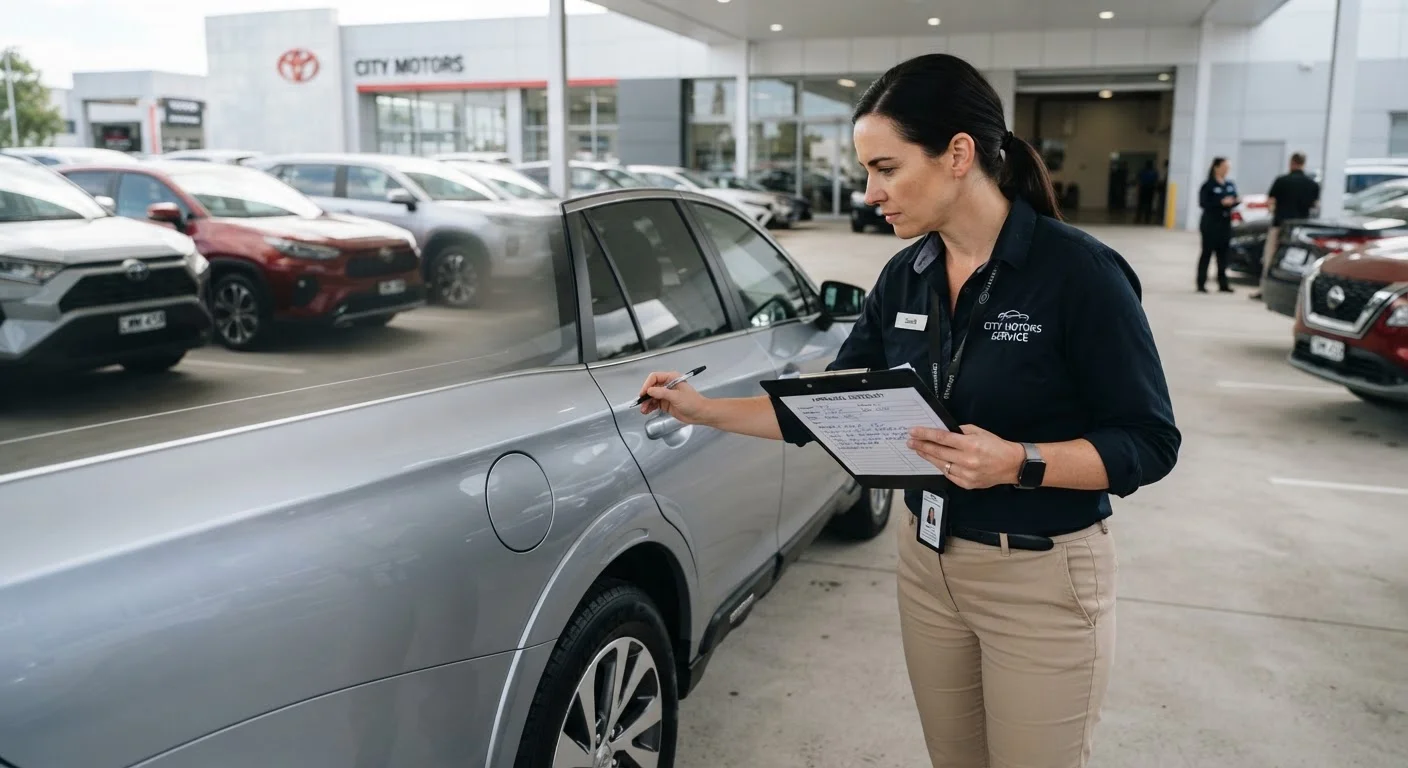
When you bring a car to a dealership, an appraiser - sometimes called a used-car manager - physically inspects the vehicle and runs it through a structured evaluation. The process is more systematic than most buyers realise.
Key factors typically assessed include:
- Mileage: Higher mileage generally means more wear, which lowers resale value.
- Condition: Paint, interior, tires, and mechanical components are all examined. Even minor cosmetic issues can reduce an offer because the dealer will price in reconditioning costs.
- Accident and service history: A vehicle history report (such as those from Carfax or AutoCheck) is almost always pulled. Reported accidents can significantly suppress value.
- Market demand: A pickup truck may command a strong offer in one region and a weaker one in another. Dealers stock what they can sell locally.
- Current inventory: If a dealer already has several similar vehicles on the lot, they may offer less for yours - or decline to take it at all.
Dealers also reference wholesale pricing guides and recent auction data to anchor their offers. Understanding how depreciation works helps explain why trade-in offers often feel lower than expected - your car's market value declines continuously from the day it was purchased.
~20%
Average first-year depreciation for new vehicles
Industry data from automotive valuation firms consistently shows most new cars lose roughly 15-20% of their value in the first year of ownership.
$1,000-$3,000+
Typical gap between trade-in and private-sale price
Consumer automotive research suggests private sellers often receive meaningfully more than trade-in offers, though the gap varies by vehicle type and market conditions.
1 in 4
Car buyers with negative equity at trade-in
Periodic surveys by automotive finance researchers have found a significant share of trade-in transactions involve vehicles worth less than their outstanding loan balances.
Where Buyers Commonly Lose Ground
Even well-prepared buyers can leave money on the table during trade-in negotiations. The most common pitfalls are structural - built into how the transaction is framed.
Bundling the trade-in with the purchase price
Dealers often present monthly payment figures that blend the purchase price, trade-in credit, financing rate, and loan term into one number. This packaging makes it easy to shift value between categories without the buyer noticing. A higher trade-in offer might be offset by a lower discount on the new car. Keeping these negotiations separate - as recommended in our guide to car purchase negotiation - gives you a cleaner view of each figure.
Not knowing your baseline before you walk in
Without an independent reference point, you have no way to evaluate whether an offer is fair. Free online tools provide rough ranges; getting a written offer from another dealer or a direct-purchase service gives you something concrete to compare. Those offers don't bind you to sell - they inform you.
Carrying negative equity into the deal
If you owe more on your current loan than the car is worth, that gap - called negative equity or being "underwater" - doesn't disappear at trade-in. It typically gets added to the new loan, increasing what you'll owe and potentially the interest you'll pay. Common car-buying myths often obscure how this works, leaving buyers surprised by their new loan balance.
Get a Written Offer Before You Visit
Before walking into a dealership, obtain a written appraisal from at least one other source - another dealer, or a direct-purchase service that operates in your area. A written figure gives you a concrete reference point and signals to the dealer that you've done your homework. You are not obligated to accept any offer.
Trade-In vs. Selling Privately: A Practical Comparison
The convenience of a trade-in comes at a cost. Private sales almost always yield a higher price because you're selling directly to the end buyer rather than to an intermediary who needs to build in a profit margin.
That said, private sales involve real effort: listing the vehicle, communicating with potential buyers, managing test drives safely, and handling title transfer paperwork. In some states, there are also sales tax considerations - trading in a vehicle may reduce the taxable amount on your new purchase, which can partially offset the lower trade-in price.
If you're weighing your options, also consider whether you're buying from a dealer or a private party - our comparison of private sellers and dealerships walks through the trade-offs on both sides of the transaction.
Sales Tax Treatment Varies by State
In many U.S. states, you only pay sales tax on the difference between the new vehicle's price and your trade-in value - not on the full purchase price. This "trade-in tax credit" can meaningfully reduce your out-of-pocket tax. Rules differ by state, so verify the specifics with your state's DMV or a tax professional before making a decision based on this factor.
There's no universally correct answer. The right choice depends on how much the price gap is worth to you relative to your time and comfort with the private-sale process.