

Key Takeaways
- Private sellers typically list vehicles at lower prices, but buyers receive fewer legal protections.
- Dealerships offer financing, warranties, and title-handling convenience that private sales rarely include.
- A pre-purchase inspection from an independent mechanic is strongly advisable for any used vehicle.
- Your negotiating position, budget, and risk tolerance should guide which channel fits your situation.
- Researching the vehicle's history report before committing is essential regardless of who's selling.
Our Verdict
Neither buying channel is universally better. Private sellers can offer lower asking prices and a more direct transaction, but dealerships bring structured protections, financing options, and recourse if problems arise. The right choice depends on how much risk you're comfortable absorbing and how much preparation you're willing to do upfront.
| Best for | Recommended |
|---|---|
| Buyers comfortable doing their own due diligence and seeking a lower price | Private Seller |
| First-time buyers or those wanting financing, warranties, and legal protections | Dealership |
| Buyers with a specific, hard-to-find vehicle in mind | Private Seller |
| Buyers who want to trade in their current vehicle as part of the transaction | Dealership |
The Core Difference Between These Two Paths
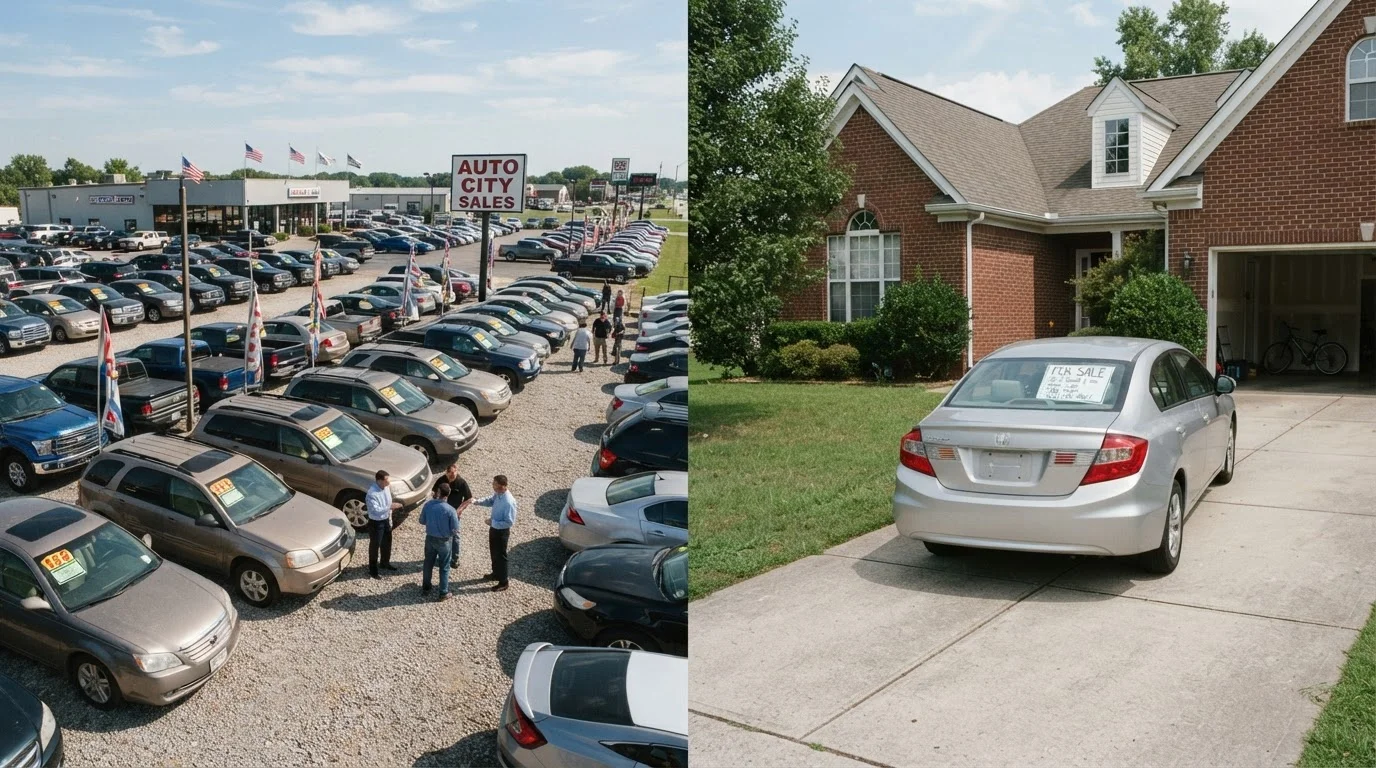
When you buy from a private seller, you're dealing directly with an individual - no sales staff, no finance office, no institutional overhead. When you buy from a dealership, you're working with a licensed business that operates under state regulations, maintains inventory, and typically offers a range of services alongside the vehicle itself.
That structural difference shapes nearly everything: the price you'll pay, the paperwork you'll handle, the protections you'll have, and the flexibility you'll get on financing. Neither path is inherently safer or smarter. Understanding what each one actually involves helps you decide which fits your circumstances. For a broader look at how research can shift the balance in your favor, see what to investigate before visiting a dealership.
What Private Sellers Offer - and Where They Fall Short
The most cited advantage of buying from a private seller is price. Without dealership overhead - staff salaries, lot fees, reconditioning costs - sellers often list vehicles at or closer to actual market value. In some cases, motivated sellers price below market to move a car quickly.
Private transactions also tend to be more straightforward in one sense: you negotiate directly with the owner, who usually knows the vehicle's history firsthand. That transparency can work in your favor.
The drawbacks are significant, however. Private sales are almost always as-is. Once you hand over payment, you typically have no recourse if a mechanical problem surfaces the next day. There is no warranty, no certified inspection, and no regulatory body holding the seller accountable the way state licensing boards hold dealerships.
Verify the Title Before Paying
In a private sale, it's your responsibility to confirm the seller holds a clear title with no outstanding liens. Buying a vehicle with an unresolved lien can mean the lienholder has a legal claim to the car even after you've paid for it. Always check the title document in person and run a history report before exchanging money.
Title and paperwork handling also falls to the buyer. You'll need to verify that the seller holds a clean title - free of liens - and complete the transfer correctly with your state's DMV. Running a vehicle history report (through services that compile public records) before committing is a basic step that's easy to overlook. If financing is needed, private-party auto loans exist through banks and credit unions but typically carry higher rates and require more legwork than dealer-arranged financing.
What Dealerships Offer - and Their Trade-Offs
Licensed dealerships carry obligations private sellers don't. Most states require dealers to provide certain disclosures, and certified pre-owned (CPO) programs - offered by many franchise dealerships - include manufacturer-backed inspections and limited warranties. That layer of accountability is meaningful for buyers who want some protection after the sale.
Dealers also handle the administrative side of a purchase: title transfers, registration in many states, and financing paperwork. If you're trading in a vehicle, dealers can roll that transaction into the same deal - though understanding how trade-in valuations work is important before you sit down at the desk. See how trade-in value is determined for a realistic look at that process.
The trade-offs: dealer pricing typically reflects their costs. Reconditioning, lot fees, and profit margin are priced in. Negotiation happens, but within a different dynamic than a one-on-one private conversation. Finance offices may also present add-ons - extended warranties, GAP insurance, paint protection - that add cost quickly. Reviewing dealer financing versus bank or credit union loans before you visit can help you arrive with realistic expectations.
| Private Seller | Dealership | |
|---|---|---|
| Typical price level | Often lower; less overhead built in | Higher; includes reconditioning and margin |
| Warranty / post-sale protection | Rarely any; usually sold as-is | CPO and dealer warranties available |
| Financing options | Must arrange own loan externally | In-house financing offered on-site |
| Title and paperwork | Buyer manages DMV transfer process | Dealer typically handles title work |
| Trade-in convenience | Not applicable; separate transaction needed | Can be integrated into same deal |
| Regulatory accountability | None; individual transaction | State-licensed; subject to dealer regulations |
| Negotiation dynamic | Direct with owner; more flexible | Structured; finance office involvement |
How to Protect Yourself in Either Scenario
Regardless of who's selling, a few practices apply across the board:
- Get a pre-purchase inspection. An independent mechanic - one not affiliated with the seller - can identify issues that aren't visible in a test drive. This step is especially critical in private transactions where no warranty exists.
- Check the vehicle history report. Publicly sourced records can reveal accident history, odometer readings, title status, and previous ownership.
- Know market pricing before you negotiate. Resources that aggregate listing data give you a realistic baseline. Comparing manual search to price-comparison tools covers how to approach that research efficiently.
- Understand your financing before you commit. Whether you're borrowing through a bank, credit union, or dealer, knowing your rate and terms in advance reduces the risk of accepting unfavorable terms under pressure.
Negotiation dynamics differ between channels, but the fundamentals are the same. Approaching a car negotiation without feeling outmatched offers straightforward strategies for either setting.
Always Inspect Before You Commit
A pre-purchase inspection from an independent mechanic typically costs between $100 and $200 and can uncover issues worth far more than that in repair costs. Any seller - private or dealer - who refuses to allow an independent inspection is a red flag worth taking seriously. Budget the inspection cost into your planning from the start.