

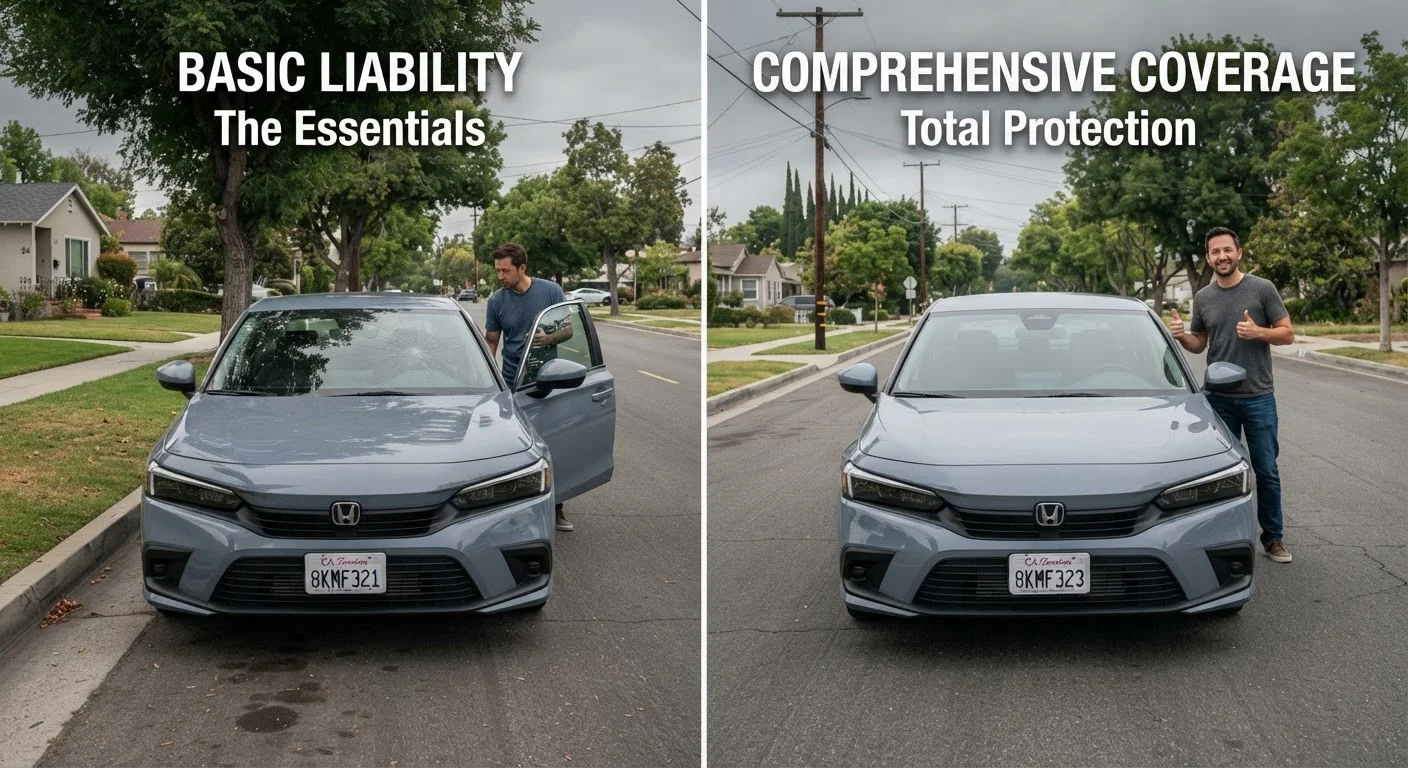
Key Takeaways
- Third-party insurance covers damages you cause to other people and their property - not your own vehicle.
- Comprehensive insurance adds protection for your own car from theft, weather events, collisions, and other covered incidents.
- State minimums for third-party coverage vary significantly; carrying only the minimum can leave serious financial gaps.
- Older vehicles with low market value may not justify the added cost of comprehensive coverage.
- Lenders typically require comprehensive coverage on financed or leased vehicles.
- Understanding what each tier excludes is just as important as knowing what it includes.
Option A
Comprehensive Insurance
The broader, all-around protection tier.
Best for: Drivers who want coverage for damage to their own vehicle from accidents, weather, theft, and more.
Option B
Third-Party Insurance
The legally required minimum in most states.
Best for: Drivers primarily concerned with covering damage or injury they cause to others, at the lowest premium cost.
If you drive an older, paid-off vehicle with low market value
Third-Party Insurance
When a car's market value is low, the premium cost of comprehensive coverage may exceed what you'd collect in a claim. Third-party coverage keeps you legally protected at a lower cost.
If you're financing or leasing your vehicle
Comprehensive Insurance
Most lenders and lease agreements contractually require comprehensive (and collision) coverage. Carrying only third-party would breach your loan or lease terms.
If you live in an area with high rates of vehicle theft or severe weather
Comprehensive Insurance
Comprehensive covers theft and non-collision damage like hail or flooding. Third-party coverage would leave you unprotected against these risks entirely.
If budget is your primary concern and you can absorb out-of-pocket repair costs
Third-Party Insurance
Third-party keeps premiums lower. If you could self-fund repairs to your own vehicle, the savings on premiums may outweigh the reduced coverage.
What Third-Party Insurance Actually Covers
Third-party insurance - also called liability coverage in U.S. insurance terminology - is the legal baseline required to drive in virtually every state. It covers costs you're responsible for when you cause harm to someone else. That breaks down into two categories:
- Bodily injury liability: Medical expenses, lost wages, and legal costs for people injured in an accident you caused.
- Property damage liability: Repair or replacement costs for another driver's vehicle or property you damaged.
What third-party coverage does not do is pay for anything related to your own car or your own medical bills. If you cause a crash and your vehicle is totaled, third-party insurance leaves you paying out of pocket for your own vehicle.
State-mandated minimums also vary widely. Some states require only modest liability limits that may be far below the actual cost of a serious accident. Carrying only the state minimum may keep you legal but could still expose you to personal financial liability if damages exceed your policy limits. This is one of the overlooked cost gaps that catches drivers off guard.
What Comprehensive Insurance Actually Covers
Comprehensive insurance extends protection to cover damage to your own vehicle from a wide range of causes. In U.S. auto insurance, a full-coverage policy typically bundles three components:
- Liability (third-party): The same other-party protection described above.
- Collision: Covers damage to your vehicle from a collision, regardless of fault.
- Comprehensive: Covers non-collision damage - theft, vandalism, fire, flooding, hail, falling objects, and animal strikes.
It's worth noting that in U.S. insurance language, "comprehensive" refers specifically to the non-collision component, while the broader bundle is often called "full coverage." Despite that terminology quirk, the practical takeaway is the same: a comprehensive policy addresses a much wider set of scenarios than a liability-only policy.
Comprehensive coverage also typically includes a deductible - the amount you pay out of pocket before the insurer covers the rest. Choosing a higher deductible generally lowers your monthly premium, but increases what you'd owe after a claim.
| Criterion | Comprehensive (Full Coverage) | Third-Party (Liability Only) |
|---|---|---|
| Damage to other people's property | Yes - covered | Yes - covered |
| Injury to other parties | Yes - covered | Yes - covered |
| Damage to your own vehicle (collision) | Yes - covered | Not covered |
| Theft of your vehicle | Yes - covered | Not covered |
| Weather damage (hail, flood, etc.) | Yes - covered | Not covered |
| Required by lenders/lessors | Typically yes | No |
| Typical monthly premium | Higher | Lower |
| State legal minimum | Exceeds minimum | Meets minimum |
How to Decide Which Tier Fits Your Situation
The right coverage level depends on a few practical factors - not just premium cost.
Vehicle Value
A common guideline is that if your annual premium for comprehensive coverage exceeds 10% of your car's current market value, the math may favor dropping to liability only. This is especially relevant for older vehicles. If you're still weighing vehicle types, understanding what you own is the first step - see our breakdown of new, used, and certified pre-owned differences for context on vehicle valuation.
Loan or Lease Requirements
If a lender has a financial interest in your vehicle, they'll almost certainly require comprehensive and collision coverage. This isn't optional - it's a contract condition.
Your Risk Environment
Parking on a street in an area with high theft rates, or living somewhere prone to hailstorms or flooding, tilts the calculus toward comprehensive coverage regardless of your vehicle's age.
Your Financial Buffer
Third-party-only coverage is effectively a bet that you can absorb your own repair or replacement costs. Be honest about whether that's realistic before opting for minimum coverage to save on premiums. Applying the same analytical mindset used in smart price comparison helps here: the lowest sticker price isn't always the best value.
A Note on Insurance Terminology
In U.S. auto insurance, "comprehensive" technically refers to one specific coverage component (non-collision vehicle damage), not the entire policy. When people say "comprehensive coverage" in everyday conversation, they usually mean a full-coverage bundle that includes liability, collision, and the comprehensive component. Always read your policy's declarations page to confirm exactly what your coverage includes and excludes.
This article provides general information about auto insurance coverage types and is not a substitute for personalized advice from a licensed insurance professional. Coverage terms, exclusions, and state requirements vary. Always review your policy documents carefully and consult a licensed agent for guidance specific to your situation.