

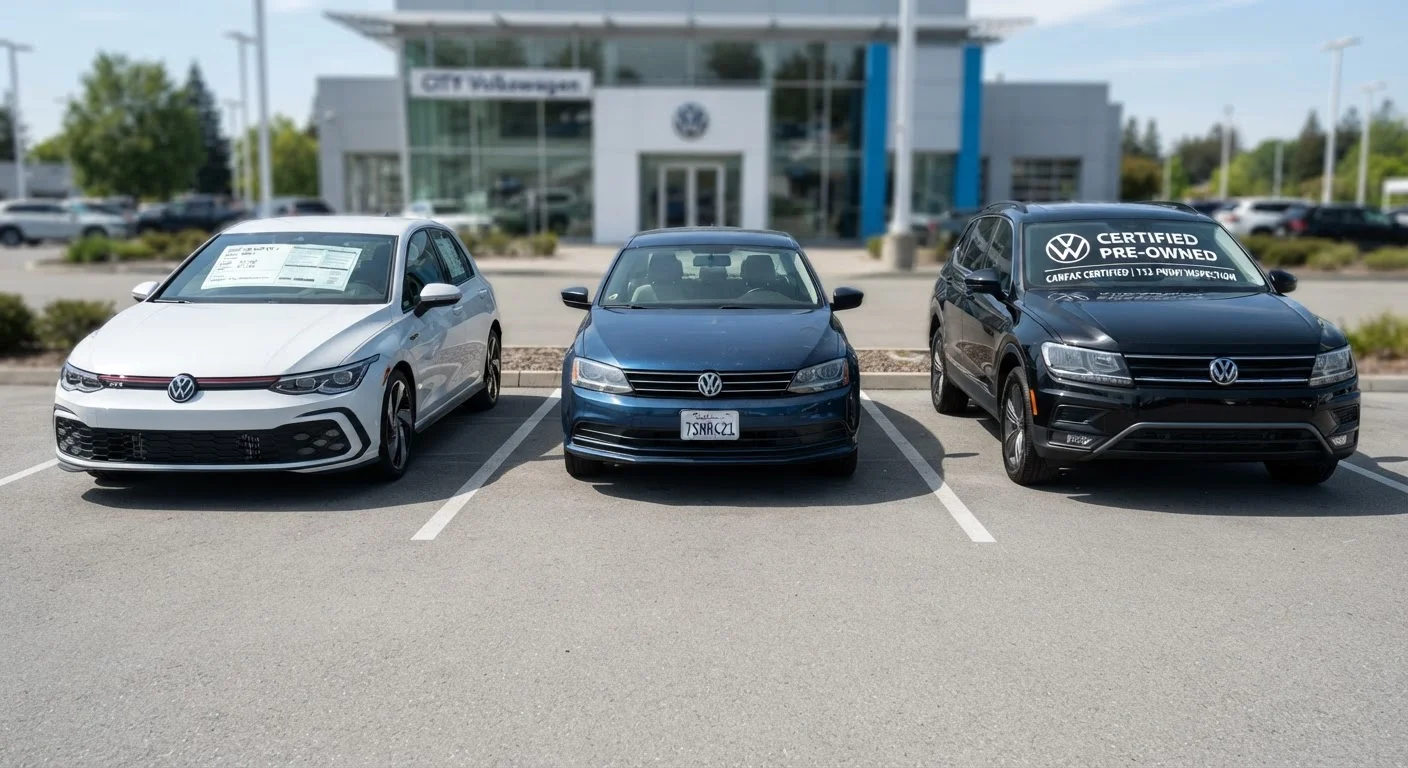
Key Takeaways
- New cars carry the highest sticker price but come with full factory warranties and no ownership history.
- Used cars offer the lowest entry cost but carry the most uncertainty without an inspection or history report.
- CPO vehicles provide a middle ground - inspected and warrantied - but the quality of that assurance varies by program.
- Manufacturer CPO programs are generally more standardized than dealer-run certification programs.
- An independent pre-purchase inspection is still worth considering even on a CPO vehicle.
- Your budget, risk tolerance, and how long you plan to keep the car should all shape which option fits you.
Certified Pre-Owned (CPO)
A certified pre-owned vehicle is a used car that has been inspected, reconditioned, and approved by a manufacturer or dealer to meet a specific set of standards. CPO vehicles typically come with an extended warranty and may include other perks. The label sits between a standard used car and a new car in terms of cost and assurance.
Manufacturer CPO programs are backed by the automaker and usually offer longer, more comprehensive warranties than dealer-certified programs, which are set by individual dealerships and vary widely.
What "New" Actually Means
A new car is a vehicle that has never been titled to a private owner. It comes directly from the manufacturer through a franchised dealer and carries the original factory warranty. In the U.S., new-car warranties typically include a bumper-to-bumper component (covering most parts for a set period) and a longer powertrain warranty covering the engine and transmission.
The main advantages of buying new are predictability and peace of mind. You know the vehicle's full history because there isn't one yet. You get the latest safety technology, emissions standards compliance, and - in most cases - the longest possible useful life ahead of you.
The trade-off is cost. New cars carry the highest purchase price, and a new vehicle loses a meaningful portion of its value in its first few years of ownership. If you plan to sell or trade in within a short window, that depreciation hits hardest on a new purchase. For buyers who plan to keep a vehicle long-term, that same depreciation curve matters less.
Ask About Remaining Factory Warranty
If a new car has been sitting on a dealer lot for months, part of its factory warranty may have already elapsed - warranties typically begin at the original sale date or manufacture date, depending on the automaker. Ask the dealer to confirm exactly when the warranty coverage begins for the specific vehicle you're considering.
What "Used" Actually Means
A used car is any vehicle that has been previously titled - it could be one year old with low mileage or a decade old with significant wear. The range is enormous, which is both the appeal and the challenge of the used market.
Used vehicles are generally less expensive to purchase outright, and because they've already absorbed the steepest depreciation, they can hold their value more steadily during your ownership. That said, a used car comes with less certainty. You're relying on disclosed history, a vehicle history report (such as one from Carfax or AutoCheck), and ideally an independent inspection to understand what you're actually buying.
Private-party sales and dealership used-car lots operate differently. Private sellers typically offer lower prices but fewer protections and no warranty. Dealerships may offer limited return windows or "as-is" sales, depending on state law.
For a thorough look at protecting yourself before signing, see what a pre-purchase inspection involves.
~20%
Typical first-year new car depreciation
Industry data consistently shows new vehicles can lose roughly 15-20% of their value within the first year, with the steepest drop occurring immediately after purchase.
2-6 years
Typical age range of manufacturer CPO vehicles
Most manufacturer CPO programs set eligibility limits on vehicle age and mileage; specific thresholds vary by automaker and model year.
100+ points
Items on many manufacturer CPO inspection checklists
Published manufacturer CPO checklists frequently include over 100 inspection points covering mechanical, safety, and cosmetic criteria.
What "Certified Pre-Owned" Actually Means
Certified pre-owned (CPO) sits between new and used. A CPO vehicle has passed a formal inspection process and typically comes with an extended warranty - either from the manufacturer or from the dealership. The goal is to give buyers more confidence than a standard used car provides, at a price lower than new.
There are two distinct types of CPO programs worth understanding:
- Manufacturer CPO programs are administered by the automaker. They tend to have standardized eligibility criteria (age and mileage limits), published inspection checklists, and manufacturer-backed warranties. These programs are generally considered more consistent.
- Dealer CPO programs are created and run by individual dealerships. Standards vary significantly. The inspection may be less rigorous, and the warranty is typically dealer-backed rather than manufacturer-backed.
Always ask which type of program applies to the vehicle you're considering, and request the actual inspection checklist - not just a summary. CPO status does not eliminate all risk, and an independent inspection is still a reasonable step.
CPO Doesn't Mean Problem-Free
A certified pre-owned designation means the vehicle passed an inspection at a point in time - it is not a guarantee against future mechanical problems. Warranties cover defined components for defined periods, and exclusions apply. Read the warranty document carefully so you understand what is and isn't covered before you buy.
For a broader look at how "refurbished" and "pre-owned" labels work across product categories, this comparison of second-hand versus new purchases provides useful context.
Choosing the Right Option for Your Situation
None of these three options is universally better. The right choice depends on your budget, how long you plan to keep the vehicle, your comfort with uncertainty, and the specific car in question.
Think about total cost of ownership - not just the purchase price. A lower sticker price on a used vehicle can be offset by higher repair costs, a shorter service life, or less favorable financing terms. For context on ongoing costs beyond the purchase, understanding vehicle ownership costs is a useful reference.
If you're navigating the full buying process for the first time, a step-by-step walkthrough of the car-buying process covers what to expect from budgeting through final paperwork. And if you're weighing whether to buy at all versus lease, the buying versus leasing comparison breaks down the financial and practical trade-offs.
This article is for general informational purposes only and does not constitute financial or purchasing advice. Costs, warranty terms, and program standards vary by manufacturer, dealer, and vehicle. Verify details directly with the seller before making any purchase decision.