

Key Takeaways
- Demand-responsive transit can fill coverage gaps in suburbs and rural areas where fixed routes don't reach.
- Passenger ferries in some metro areas offer competitive commute times with far less stress than highway driving.
- Neighborhood electric vehicles (NEVs) are street-legal for low-speed trips and cost far less than full-size cars.
- Intercity bus networks have expanded significantly and often undercut train fares on popular corridors.
- Combining two or three overlooked modes can eliminate car ownership costs entirely for some households.
Why Some Modes Stay Under the Radar
Most transportation conversations start and end with two options: drive your own car or take the subway. But that framing leaves out a surprisingly wide range of practical alternatives that millions of Americans already use — often without realizing those options have names or that they might be available nearby.
This isn't about forcing anyone out of their car. It's about making sure you actually know what's on the table before you commit to a car payment, a parking permit, or an hour-long traffic crawl every day. The full landscape of transportation alternatives is broader than most people expect. The modes below tend to get overlooked because they don't have heavy marketing budgets or obvious storefronts — but they solve real commuting problems.
Availability Varies Significantly by Location
Not every mode on this list exists in every metro area or region. Availability depends on local transit funding, geography, and population density. The goal here is awareness — knowing what to look for so you can research what's actually operating near you. Official transit agency websites and regional planning portals are the most reliable places to check.
Seven Transportation Modes Worth a Closer Look
Demand-Responsive Transit (DRT)
Demand-responsive transit — sometimes called dial-a-ride or microtransit — doesn't run on a fixed schedule or a fixed route. Instead, you request a ride through an app or phone call, and a small bus or van comes to a nearby stop. Several transit agencies across the US have deployed DRT in lower-density suburbs and rural corridors where a traditional fixed route would run nearly empty.
DRT is worth checking for if you live in an area where the regular bus doesn't reach your neighborhood, or if you need to get to a transit hub to catch a train or express bus. Fares are generally comparable to standard transit, not rideshare prices.
DRT fills the gaps where fixed bus routes can't run economically — at prices closer to transit than rideshare.
Passenger Ferry Service
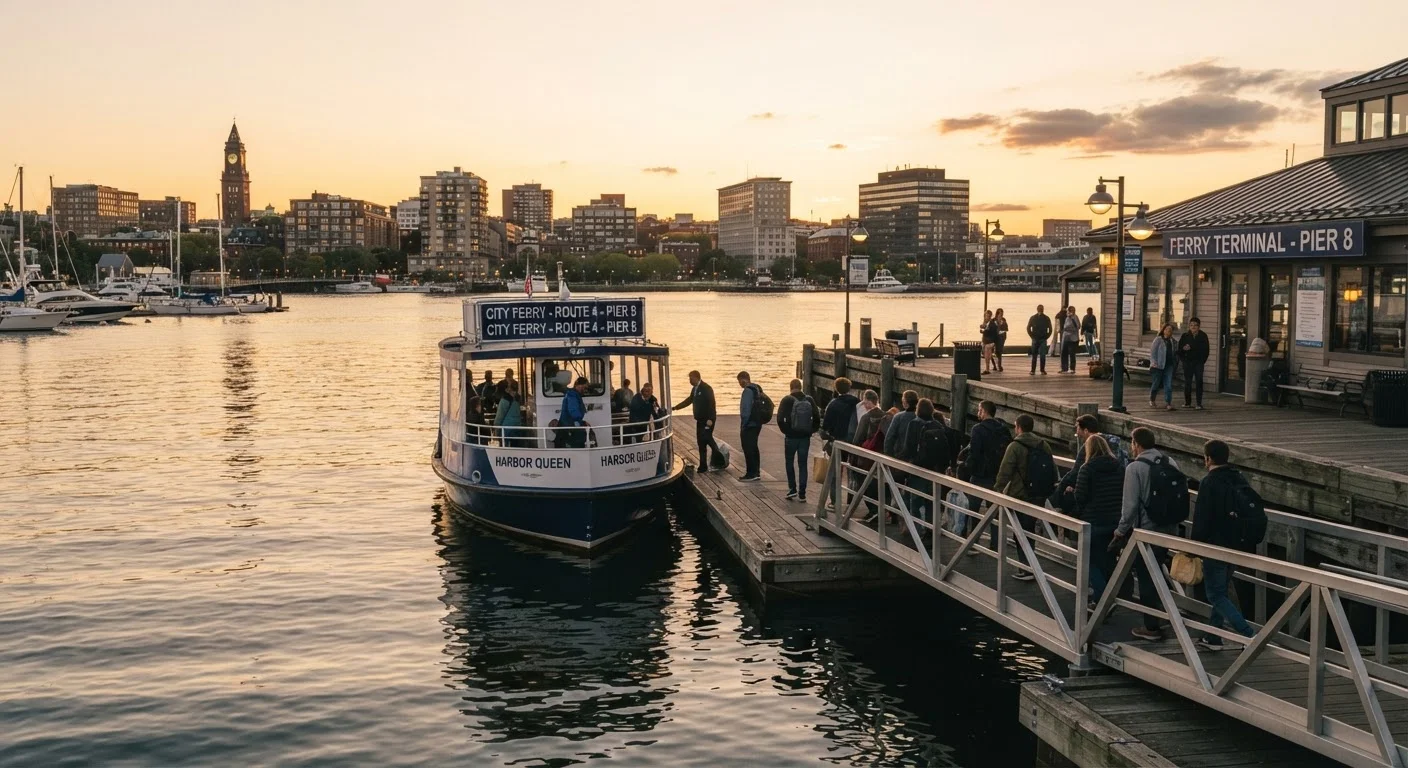
Several major metros — including New York, San Francisco, Seattle, and Boston — operate commuter ferry systems that carry thousands of daily riders. On the right corridor, a ferry crossing can be genuinely faster than the parallel highway route during peak hours, and the ride is almost universally less stressful than driving.
Ferry fares vary widely by region. Some systems are integrated with regional transit passes; others charge separately. If you live near navigable water and your workplace is also near a waterfront, it's worth pulling up your regional transit authority's route map to check. Many people who live near active ferry routes have never thought to look.
On the right corridor, a ferry crossing can beat highway travel time and costs less than parking downtown.
Neighborhood Electric Vehicles (NEVs)
A neighborhood electric vehicle is a low-speed electric car — legally limited to 25 mph under federal rules — that's street-legal on roads posted at 35 mph or below. They're common in retirement communities and resort towns, but they can also make sense for households with a short, low-speed commute to a transit stop, a grocery run, or a school pickup loop.
NEVs cost substantially less than full-size electric cars to purchase, insure, and charge. They're not appropriate for highways or high-speed arterials, but for the right short-distance use case, they represent a genuine cost reduction compared to maintaining a second full-size vehicle.
NEVs are street-legal, low-cost electric vehicles that work well for short, low-speed trips most people take daily.
Intercity Bus Networks
The intercity bus market in the US has grown considerably over the past decade. Several operators now run between mid-size and large cities on routes that Amtrak either doesn't serve or serves infrequently. Fares on popular corridors — particularly in the Northeast and between Sun Belt metros — are often lower than comparable train tickets, though travel times vary.
If you travel between cities a few times a month for work or family, intercity buses are worth pricing out. Amenities on newer fleets have improved, and departure points are often more centrally located than regional airports or train stations. Commuter bus options overlap with this category and are worth comparing side by side.
Intercity buses frequently undercut train fares and now serve many corridors that rail doesn't reach.
Employer Shuttle Programs
Large employers — particularly tech campuses, hospital systems, and university complexes — often operate private shuttle networks for employees. These routes are rarely advertised publicly because they're not open to general riders, but many people who qualify for them don't know they exist or don't bother to check enrollment.
Employer shuttles typically run between transit hubs and the worksite, which effectively extends the reach of the public transit system. If your employer is large enough to have a commuter benefits coordinator, that's the right person to ask. Some programs also integrate with pre-tax commuter benefit accounts, which reduces the out-of-pocket cost further.
Many large employers run private shuttles that workers qualify for but never think to ask about.
Cargo Bike Commuting
A cargo bike — pedal-assist or conventional — can handle grocery runs, school drop-offs, and short-to-medium commutes that a standard bicycle can't manage with gear or passengers. In cities and inner suburbs with reasonable bike infrastructure, cargo bikes have replaced second cars for some households entirely.
The upfront cost is higher than a standard bike but far lower than a car, and operating costs are minimal. For a detailed breakdown of how cargo bikes compare to e-bikes and scooters for daily use, see which micro-mobility option fits your commute.
Cargo bikes handle real hauling tasks — groceries, kids, gear — that keep most people tethered to a car.
Subscription-Based Carsharing
Traditional hourly carsharing (pay per use) is fairly well known, but subscription-based carsharing — where you pay a flat monthly fee for a set number of trips or hours — is less common knowledge. Some regional programs and transit agencies have partnered to offer these arrangements, particularly for residents in transit-rich areas who need a car occasionally but not daily.
The financial case depends heavily on how often you actually need a car. For households that genuinely use a car fewer than five or six days per month, a subscription or hourly carsharing arrangement may cost less than insurance and depreciation alone on a privately owned vehicle. Going car-free in a suburban area often involves carsharing as one piece of the puzzle.
Subscription carsharing can cost less than car insurance alone for households that drive fewer than six days a month.
Check Your Regional Transit Authority First
Before assuming a mode isn't available in your area, look up your regional or metropolitan transit authority's website directly. DRT programs, ferry routes, and employer shuttle partnerships are often listed there but don't show up in general search results. A five-minute search can uncover options that have been running for years without much public awareness.
Putting It Together
None of these modes requires you to overhaul your life. The practical move is to identify the one or two trips per week where a car is genuinely the worst tool for the job — and see whether anything on this list fits better. If you're ready to go further, combining transit, biking, and rideshare into a deliberate routine is more manageable than it sounds.
Not sure what some of the terms above mean? The plain-language glossary for commuters covers the jargon without the planning-department tone.