

Key Takeaways
- Water helps your digestive system break down food and move nutrients into the bloodstream.
- Dehydration can reduce your body's ability to absorb water-soluble vitamins effectively.
- Electrolytes — minerals found in food — work with water to maintain fluid balance in cells.
- Thirst is a late signal; mild dehydration can affect digestion and energy before you feel thirsty.
- Eating water-rich foods like fruits and vegetables contributes meaningfully to daily fluid intake.
- Good hydration habits support, but do not replace, a varied and balanced diet.
Hydration and Nutrient Absorption
Hydration refers to how much water your body has available to carry out its basic functions. Nutrient absorption is the process by which your body takes vitamins, minerals, and other compounds from food and moves them into the bloodstream. These two processes are deeply connected — water is the medium your digestive system uses to break down food and transport nutrients where they need to go.
Water-soluble vitamins such as B vitamins and vitamin C depend on an adequate fluid environment to be absorbed and transported through the body, while electrolytes like sodium and potassium regulate fluid balance at the cellular level.
Why Water Is Part of the Nutrition Story
Most conversations about eating well focus on what's on your plate — protein, carbohydrates, vitamins, and minerals. Water rarely gets the same attention, yet it's involved in nearly every step of how your body handles the food you eat. Without adequate fluid, the digestive process doesn't work as smoothly, and some nutrients are harder for your body to access.
When you eat, your digestive system uses water to produce saliva and digestive juices, soften food so enzymes can break it down, and transport nutrients through the intestinal wall into your bloodstream. Think of water as the transport network that carries nutritional cargo from your gut to your cells. Macronutrients like carbohydrates, protein, and fat all require this fluid environment to be properly processed.
~60%
Percentage of the adult human body that is water
According to the U.S. Geological Survey and general physiology references, water makes up roughly 60% of body weight in adult men and somewhat less in women, underscoring how central fluid is to all bodily functions.
~20%
Daily fluid intake that comes from food
The National Academies of Sciences, Engineering, and Medicine estimate that roughly 20% of total daily water intake typically comes from food rather than beverages.
9–13 cups
General daily fluid intake reference range for adults
The National Academies suggest approximately 9 cups (about 2.2 liters) per day for adult women and 13 cups (about 3 liters) for adult men from all beverages and food combined; individual needs vary.
Water-Soluble Nutrients and Fluid Dependence
Not all nutrients behave the same way. Fat-soluble vitamins (A, D, E, and K) are absorbed alongside dietary fats and stored in body tissue. But water-soluble vitamins — vitamin C and the eight B vitamins — dissolve in water to be absorbed and transported, and your body doesn't store large reserves of them. This means both adequate dietary intake and adequate hydration matter for keeping these levels steady.
Minerals like calcium, magnesium, potassium, and sodium also depend on fluid for absorption and transportation. These minerals, often called electrolytes when dissolved in fluid, regulate the flow of water in and out of cells — a process that affects everything from muscle function to how your kidneys filter waste. You can learn more about how specific vitamins and minerals function in our micronutrients overview.
A simple way to support both hydration and nutrition
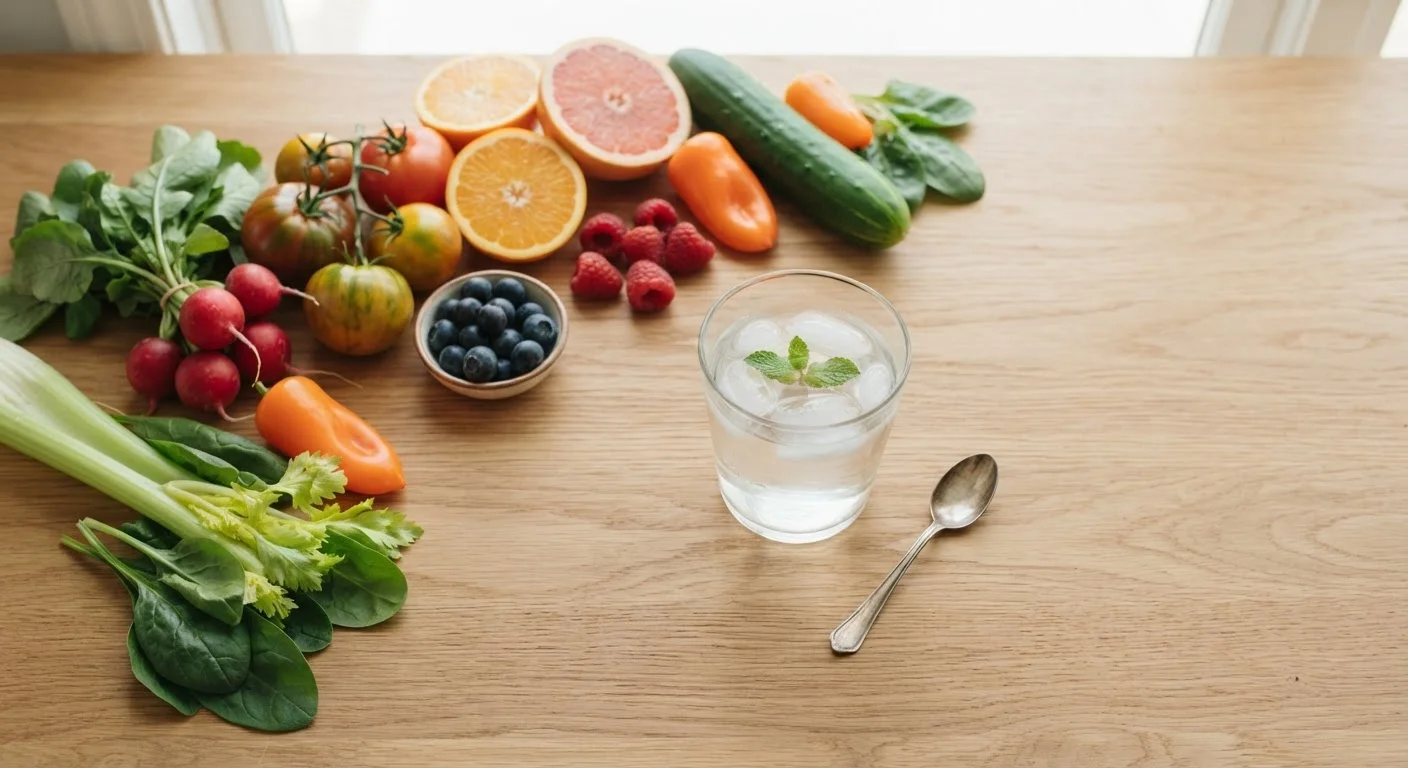
Including water-rich whole foods — like cucumbers, berries, leafy greens, and citrus — at meals contributes to both fluid intake and micronutrient diversity at the same time. This approach naturally supports digestion without requiring you to track every glass of water precisely.
Dehydration's Quiet Effect on Digestion
Mild dehydration — levels most people don't immediately recognize as a problem — can have a noticeable effect on how the digestive system functions. When fluid levels are low, the large intestine pulls more water out of food waste to compensate, which is a common contributor to constipation. Digestive enzyme activity can also slow down, affecting how thoroughly food is broken down before nutrients are absorbed.
This is one reason that what feels like a nutrition problem sometimes has a hydration component. If you're eating a thoughtful diet but still feeling low energy or sluggish digestion, fluid intake is worth reflecting on — alongside other factors. That said, chronic digestive symptoms always warrant a conversation with a healthcare professional rather than a self-diagnosis.
It's also worth noting that thirst is a late signal. By the time you feel thirsty, mild dehydration may already be present. This is especially relevant for older adults, whose thirst response can become less reliable with age. For guidance tailored to specific life stages or health conditions, please consult a qualified healthcare provider.
Hydration needs vary by individual
Factors like body size, activity level, climate, and certain health conditions all influence how much fluid a person needs each day. General guidelines are a helpful starting point, but they aren't a prescription. If you have a health condition, are pregnant, or are managing a chronic illness, speak with your healthcare provider about what's appropriate for you.
Food as a Source of Fluid — and Fluid as a Source of Support
Hydration doesn't come from water alone. Many foods — cucumbers, watermelon, oranges, leafy greens, soups, and yogurt — contain significant amounts of water and contribute to your daily fluid intake. This means that a diet rich in whole fruits and vegetables supports hydration alongside delivering fiber, vitamins, and minerals. Our guide to dietary fiber explores how fiber-rich, often water-dense foods support digestive health in multiple ways at once.
Conversely, heavily processed foods tend to be low in water and high in sodium, which can work against fluid balance. This doesn't mean occasional processed foods are harmful, but it's a useful thing to be aware of when thinking about the full picture of your eating patterns. For a broader look at how common eating habits can quietly undermine nutrition goals, see our article on why good intentions at mealtime don't always translate to good nutrition.
Balancing fluid intake and nutrient-dense food doesn't have to be complicated. Staying reasonably hydrated throughout the day, eating a variety of whole foods, and not waiting until you're very thirsty to drink are practical habits that support both sides of the equation. For more on building sustainable eating habits, explore our balanced eating on a busy schedule resource.
This article is for general informational and educational purposes only and is not a substitute for professional medical advice, diagnosis, or treatment. Always consult a qualified healthcare provider with questions about your health or nutrition.