

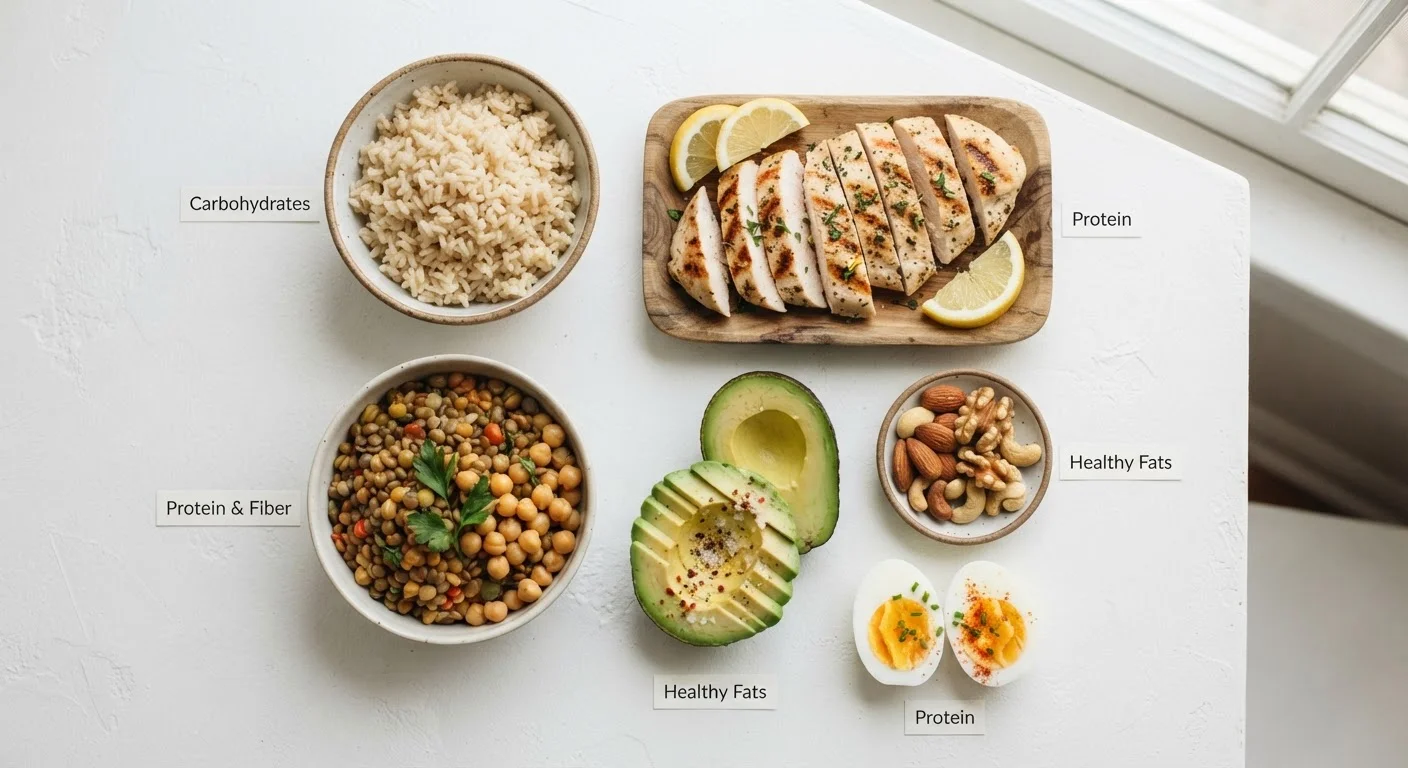
Key Takeaways
- All three macronutrients — carbs, protein, and fat — are essential; eliminating any one of them can create gaps in nutrition.
- Carbohydrates are your body's preferred source of quick energy, especially for the brain and muscles.
- Protein supports tissue repair, immune function, and the production of enzymes and hormones.
- Dietary fat helps absorb fat-soluble vitamins and supports cell structure and hormone health.
- The quality and source of each macronutrient matters as much as the quantity.
- A registered dietitian can help you find a balance that suits your individual health needs.
Macronutrients
Macronutrients are the three main categories of nutrients your body needs in relatively large amounts to function: carbohydrates, protein, and fat. Each one provides energy (measured in calories) and performs specific jobs that keep your organs, muscles, and metabolism running. Unlike vitamins and minerals, which the body needs in smaller quantities, macronutrients form the bulk of what you eat every day.
Energy density differs by macronutrient: carbohydrates and protein each provide 4 calories per gram, while fat provides 9 calories per gram.
Why Macronutrients Matter
Every meal you eat is essentially a combination of macronutrients. Whether you're having oatmeal for breakfast, a chicken salad at lunch, or pasta for dinner, your body is busy breaking those foods down into carbohydrates, proteins, and fats — and using each for a different purpose.
These three nutrients aren't interchangeable. Each one has specific roles that the others can't fully replace. That's why nutrition guidance from organizations like the USDA consistently recommends eating a balance of all three, rather than focusing heavily on one while cutting out another.
For a broader picture of how macronutrients fit alongside vitamins and minerals, see our guide to micronutrients.
4 kcal/g
Energy provided per gram of carbohydrate or protein
Per standard nutritional values established by the USDA and international dietary bodies.
9 kcal/g
Energy provided per gram of dietary fat
Fat is the most energy-dense macronutrient, delivering more than twice the calories per gram compared to carbs or protein.
9
Essential amino acids the body cannot produce on its own
These must be obtained through food; complete protein sources such as eggs, fish, and soy contain all nine.
Carbohydrates: Your Body's First Energy Source
Carbohydrates are often misunderstood — sometimes celebrated, sometimes blamed. The reality is more straightforward: carbs are your body's preferred and most efficient source of fuel, especially for the brain and for physical activity.
When you eat carbohydrates, your digestive system breaks them down into glucose (a simple sugar), which enters the bloodstream and powers your cells. Excess glucose can be stored in your muscles and liver as glycogen for later use.
Not all carbohydrates work the same way, though. Simple carbohydrates — like those in white bread or sugary drinks — digest quickly and can cause rapid shifts in blood sugar. Complex carbohydrates — found in whole grains, legumes, and vegetables — digest more slowly, providing more sustained energy and dietary fiber, which supports digestive health.
Understanding carbohydrate quality becomes easier once you know how to read a nutrition label. Our guide to reading nutrition labels walks you through exactly that.
Protein: Building, Repairing, and Regulating
Protein does far more than build muscle, though that's the role it's most famous for. It's also central to repairing tissues, producing enzymes and hormones, supporting immune function, and transporting nutrients through the blood.
Proteins are made up of smaller units called amino acids. Of the 20 amino acids your body uses, nine are considered "essential" — meaning your body can't produce them on its own and must obtain them through food. Foods that contain all nine essential amino acids in adequate amounts are called complete proteins; examples include eggs, fish, poultry, and soy.
Plant-based proteins — such as beans, lentils, and nuts — are often incomplete proteins, but eating a variety of plant foods throughout the day can easily meet your amino acid needs.
Combine Plant Proteins for Complete Nutrition
If you eat mostly plant-based foods, pairing different protein sources — such as rice and beans, or hummus with whole-grain bread — helps ensure you're getting a full range of essential amino acids across your meals. You don't need to combine them in the same sitting; variety throughout the day is what counts.
This article is for general informational purposes only and is not a substitute for professional medical or dietary advice. Always consult a qualified healthcare provider or registered dietitian for guidance specific to your health situation.
Fat: More Essential Than You Might Think
Dietary fat spent decades with an unfair reputation, but research and updated nutritional guidelines have helped clarify its importance. Fat is essential — your body cannot function well without it.
Fat serves several critical roles: it helps your body absorb fat-soluble vitamins (A, D, E, and K), cushions and protects your organs, supports brain health, and plays a key role in hormone production. It also provides a concentrated source of energy, particularly during lower-intensity activity or between meals.
The type of fat matters considerably. Unsaturated fats — found in foods like olive oil, avocados, and fatty fish — are generally considered beneficial by leading health organizations. Saturated fats — common in red meat and full-fat dairy — are recommended in moderation by most guidelines. Trans fats, which are largely artificial, have been widely removed from the food supply due to their association with cardiovascular risk.
For a closer look at how whole-food fat sources compare with processed alternatives, see our article on whole foods vs. processed foods.
Putting It All Together
No single macronutrient is a hero or a villain. Carbohydrates provide reliable energy; protein keeps your tissues maintained and your body regulated; fat supports absorption, brain function, and hormones. Together, they form the nutritional foundation of a balanced diet.
Dietary patterns that emphasize whole, minimally processed sources of all three macronutrients — rather than eliminating or dramatically skewing any one — tend to align best with what major health organizations recommend. If you're curious about common misconceptions that can make nutrition feel confusing, our nutrition facts that often get misunderstood article is a helpful next step.
Remember: while understanding macronutrients is valuable, personal nutrition needs vary based on age, activity level, health conditions, and other factors. A registered dietitian or your primary care provider is the right resource for advice tailored to you.
“Nutrition is not about eating perfectly. It's about having enough information to make choices that serve your body and your life.”
— Academy of Nutrition and Dietetics, Leading professional organization for registered dietitians in the United States