

Key Takeaways
- Always check the serving size first — all other numbers on the label are based on it.
- The % Daily Value column shows how much a nutrient contributes to a 2,000-calorie reference diet.
- Aim to limit saturated fat, sodium, and added sugars; prioritize fiber, vitamins, and minerals.
- Ingredients are listed by weight — the first few ingredients make up the bulk of the product.
- Nutrition labels are standardized by the FDA, so the format is consistent across packaged foods.
What you will need
Why Nutrition Labels Feel Confusing (and Why They Don't Have To)
Nutrition labels were designed to inform — but a wall of numbers, percentages, and unfamiliar terms can make even a simple snack feel like a pop quiz. The good news is that the U.S. Food and Drug Administration (FDA) requires all packaged foods to follow the same label format, which means once you learn how to read one, you can read them all.
If you're just getting started with nutrition concepts, it may help to review foundational nutrition basics before diving in. But even without a background in nutrition, the steps below will give you a reliable system for making sense of any label you pick up.
What you will need
How to Read a Nutrition Label Step by Step
Follow these steps in order. Each one builds on the last, and together they give you a complete picture of what's in the food you're eating.
Find the Serving Size
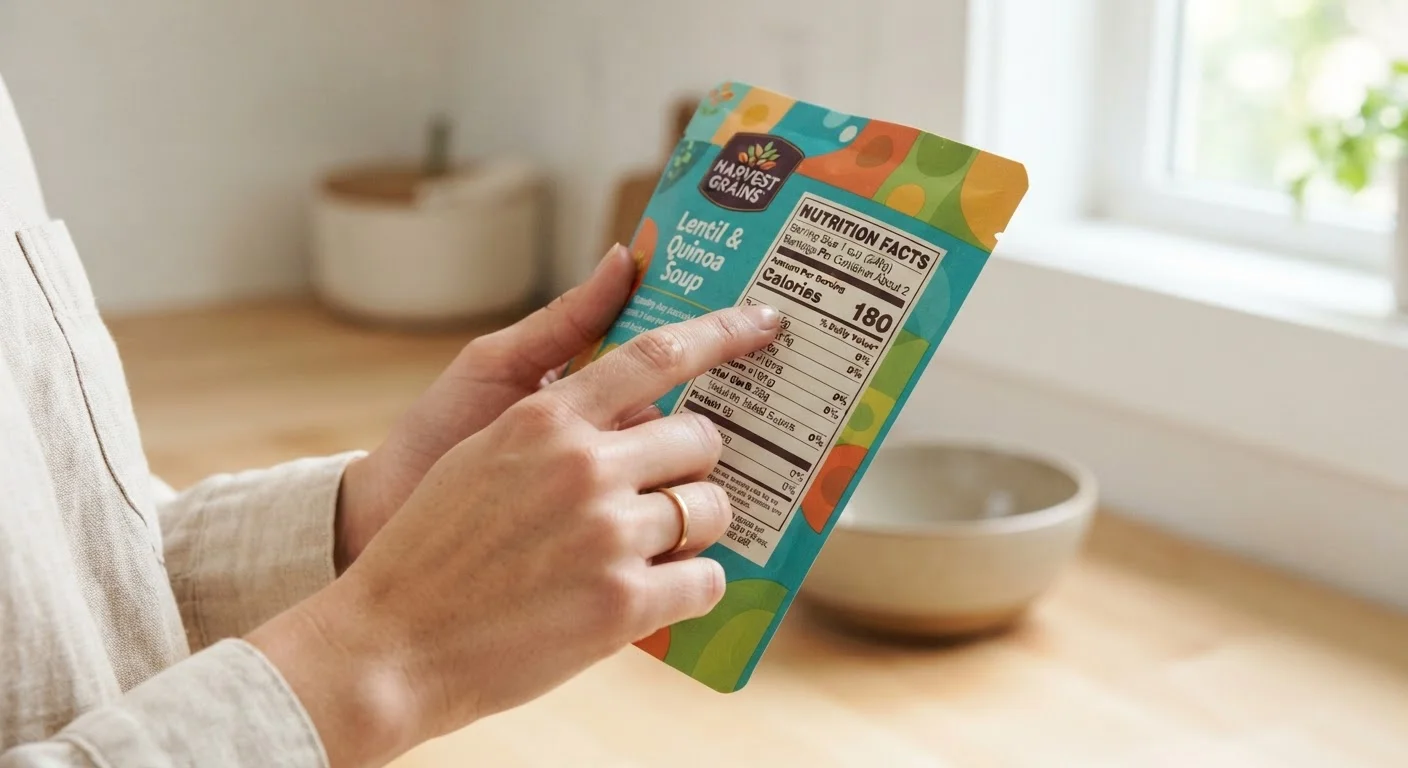
The very first line of the Nutrition Facts panel lists the serving size and the number of servings per container. Every number that follows — calories, fat, sodium, everything — is based on that one serving, not the whole package. If you eat two servings, you double all the values.
Check the Calories
Calories measure the energy one serving provides. This number is displayed prominently. It's useful context, but calories alone don't tell the full story — where those calories come from (fat, carbs, protein) matters for nutritional quality. Use calories as one data point, not the only one.
Understand % Daily Value (%DV)
The % Daily Value (%DV) column tells you how much one serving of the food contributes to a standard 2,000-calorie daily diet. A quick rule of thumb from the FDA: 5% DV or less is considered low for a nutrient; 20% DV or more is considered high. Use this column to compare products quickly without doing math.
Identify Nutrients to Limit
Look for these nutrients and aim to keep their %DV on the lower side:
- Saturated fat — linked to cardiovascular risk at high intake levels
- Sodium — most Americans consume more than recommended; high intake is associated with blood pressure concerns
- Added sugars — listed separately from total sugars so you can see what was added during processing
Look for Nutrients to Prioritize
On the flip side, these are nutrients most people benefit from getting enough of:
- Dietary fiber — supports digestive health and satiety
- Vitamin D, calcium, iron, and potassium — commonly under-consumed in typical American diets, per the FDA
A higher %DV for these is generally a positive sign.
Scan the Ingredients List
Ingredients are listed in descending order by weight — the first ingredient is the most abundant. A short, recognizable ingredients list generally indicates less processing. If the first few ingredients are whole foods (like oats, water, or almonds), that's a straightforward sign. For a broader look at common nutrition misconceptions, see our guide on nutrition facts that often get misunderstood.
Use %DV as Your Quick Compass
When you're short on time, just scan the %DV column for the key nutrients: saturated fat, sodium, added sugars, and fiber. That single column does most of the work for you. You don't need to analyze every line to make a reasonably informed choice.
Common Label Traps to Watch For
Even after you know how to read the facts panel, front-of-package claims can still be misleading. Words like "natural," "light," or "multigrain" are not tightly regulated the way the Nutrition Facts panel is — they're marketing terms, not nutritional guarantees. Always flip to the back and let the label speak for itself.
Added sugars deserve a closer look too. They appear on their own line under "Total Sugars" so you can distinguish naturally occurring sugars (as in fruit or dairy) from those added during processing. For a deeper dive into where sugar hides, see our guide on sugar in everyday foods.
Front-of-Package Claims Aren't Regulated Like the Facts Panel
Terms like "low-fat," "all-natural," or "made with whole grains" can appear on products that are otherwise high in sodium, added sugars, or saturated fat. These phrases are marketing language. The standardized Nutrition Facts panel on the back is the reliable source — use it instead of relying on front-of-package framing.
Finally, keep portion awareness in mind as you shop. A label might look perfectly reasonable until you realize the package contains three servings, not one. Our article on understanding portion sizes offers practical, non-obsessive strategies for keeping this in check.
This article is for general informational and educational purposes only and is not a substitute for advice from a qualified healthcare professional or registered dietitian.