

Key Takeaways
- Lenders must provide a Loan Estimate within three business days of your mortgage application.
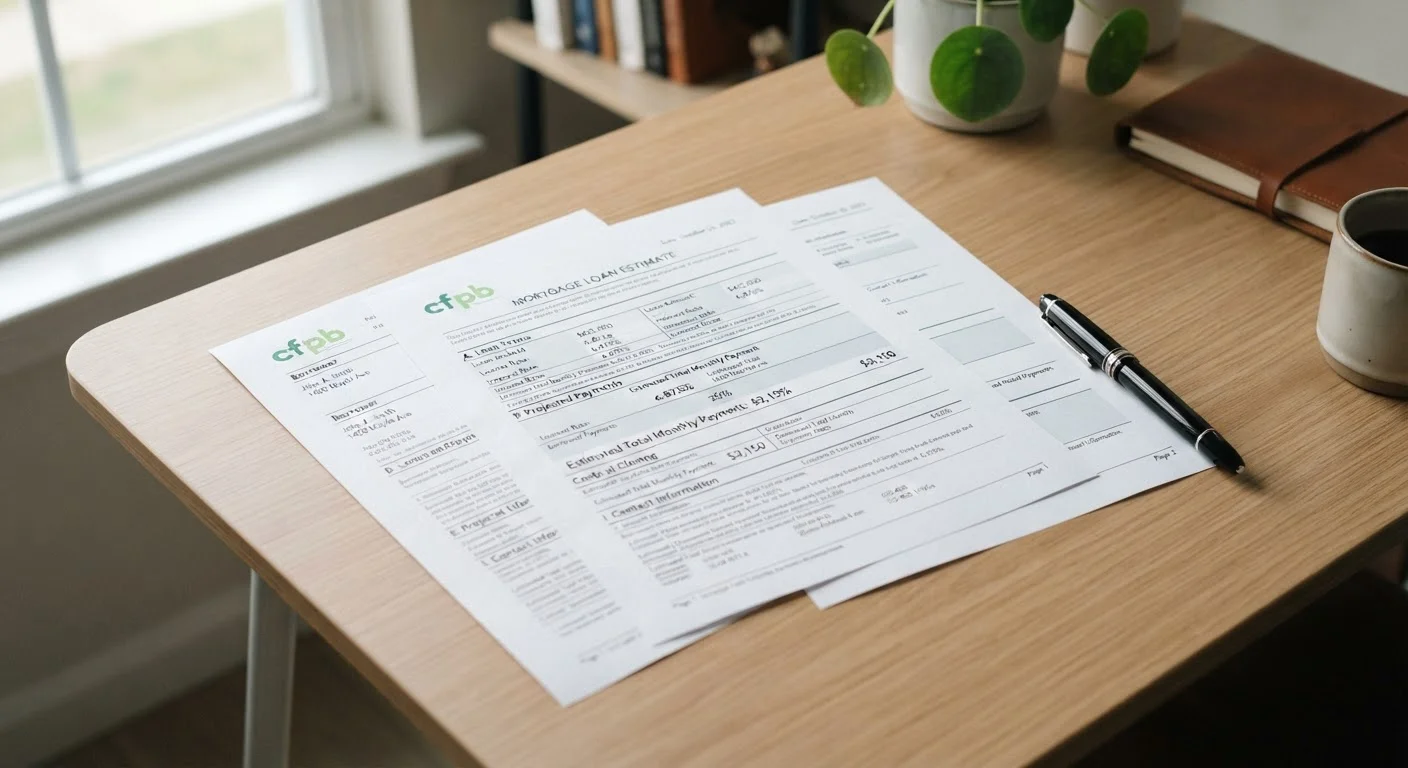
- Page 1 covers loan terms; Page 2 breaks down closing costs; Page 3 flags key risk features.
- The Annual Percentage Rate (APR) is always higher than the interest rate — that difference matters.
- You can and should compare Loan Estimates from multiple lenders before choosing one.
- Some closing cost categories are fixed by law; others allow you to shop for lower prices.
What you will need
Why the Loan Estimate Exists
The Loan Estimate is a standardized three-page federal disclosure form required under the Truth in Lending Act and RESPA (Real Estate Settlement Procedures Act), administered through the Consumer Financial Protection Bureau (CFPB). Every lender in the U.S. must use the same format, which means you can place two estimates side by side and compare them line for line. That standardization is intentional — it exists to protect you from hidden fees and make the mortgage market more transparent.
Lenders must deliver or mail the form within three business days of receiving your completed application. You then have at least three business days to review it before you can be required to move forward. This is part of the broader home-buying process that moves from application through underwriting to closing.
What you will need
What You'll Need Before You Start
Before walking through the steps below, gather your Loan Estimate document and a way to take notes — a printed copy you can annotate works well. If you've received estimates from more than one lender, keep all of them together for direct comparison.
Loan Estimate form (CFPB standard form)
The three-page federal disclosure document you will be reading and annotating.
Highlighter or annotation tool
Mark the interest rate, APR, projected monthly payment, and total closing costs for quick cross-lender comparison.
Simple calculator or spreadsheet
Compare total five-year costs across multiple Loan Estimates side by side.
Step-by-Step: Reading Each Page
The steps below move page by page through a standard Loan Estimate. Follow along with your own document open beside you. If you haven't applied yet and want context first, our mortgage basics explainer covers the underlying concepts.
Confirm the basics on Page 1
The top of Page 1 shows the property address, loan amount, loan term (e.g., 30 years), and loan type (fixed or adjustable). Verify every field matches what you applied for — errors here can affect everything downstream. Look for the Loan Terms table, which lists your interest rate, monthly principal-and-interest payment, and whether the rate or payment can increase.
Understand the Projected Payments table
Still on Page 1, the Projected Payments table breaks your estimated monthly payment into four parts: principal and interest, mortgage insurance (if applicable), estimated escrow (property taxes and homeowner's insurance), and total estimated monthly payment. Mortgage insurance applies when your down payment is below 20%; it typically drops off once you reach sufficient equity. Your down payment size directly affects whether this line appears.
Read the Costs at Closing box
The bottom-right of Page 1 gives two headline numbers: Closing Costs (lender fees plus third-party fees plus prepaid items) and Cash to Close (the total you must bring on closing day, including your down payment). These are estimates, but lenders are legally bound to final figures that stay within tight tolerance limits. For a full line-by-line breakdown of what those fees mean, see our closing costs reference.
Work through Page 2 section by section
Page 2 is the most detailed page. It divides closing costs into: Section A (origination charges you pay to the lender), Sections B & C (services required by the lender, split between lender-selected and borrower-selected providers), Section E (prepaid items like homeowner's insurance and prepaid interest), and Section F (initial escrow payment at closing). Each line item has a dollar amount. Section C items — marked 'services you can shop for' — are where comparison shopping can save you real money.
Locate the APR and Total Interest Percentage on Page 3
Page 3 contains the Comparisons table, which shows three critical numbers: the APR (Annual Percentage Rate — the interest rate plus most lender fees, expressed annually), the Total Interest Percentage (total interest paid over the loan life as a percentage of the loan), and the In 5 Years row showing total payments and principal paid in the first five years. Use the APR — not just the interest rate — when comparing loans from different lenders, because it folds in fees that the base rate ignores.
Check the Other Considerations section
Also on Page 3, the Other Considerations section flags whether the loan has a prepayment penalty (a fee for paying off early) or a balloon payment (a large lump sum due at the end of a shorter term). Both features are relatively rare in standard purchase mortgages but can appear in certain loan products. If either box is checked 'Yes,' ask your lender for a plain-language explanation before proceeding.
Use the 'Services You Can Shop For' List
Page 2 of the Loan Estimate separates closing costs into services the lender selects and services you can shop for independently. Getting competing quotes on title insurance, settlement agents, and home inspectors in the 'shop' category can meaningfully reduce what you pay at closing.
Rate Locks Expire — Watch the Date
If a Loan Estimate shows a locked interest rate, check the expiration date on Page 1. If your closing is delayed and the lock expires, your rate could change. Always confirm with your lender what it costs to extend a rate lock and who bears that cost.
After You've Read It: What to Do Next
Once you understand your Loan Estimate, you have a few clear actions. First, note any line items you don't recognize and ask your lender for a plain-language explanation in writing. Second, if you received only one estimate, request one or two more from competing lenders — the CFPB and HUD both encourage this. Third, pay attention to the estimate's expiration date; rates and some fees can change if you don't indicate intent to proceed in time.
Don't Sign Anything Before Comparing
Receiving a Loan Estimate does not lock you into a lender. You have until you formally indicate your intent to proceed — typically by paying for an appraisal — to walk away without penalty. Request estimates from at least two or three lenders so you have a genuine basis for comparison. This is general information; consult a licensed mortgage professional for advice specific to your situation.
Owning a home also comes with ongoing costs beyond the mortgage payment itself. See our homeownership costs hub for a realistic picture of what to budget for after closing. And if you're still weighing whether buying makes sense for your situation, our renting basics hub can help you think through the comparison.
This article is for general informational and educational purposes only and does not constitute financial, legal, or mortgage advice. Consult a licensed mortgage professional, housing counselor, or attorney for guidance specific to your circumstances.