

Key Takeaways
- Most landlords evaluate credit score, income-to-rent ratio, rental history, and references together — not any single factor alone.
- A common income benchmark is gross monthly income of at least three times the monthly rent, though this varies.
- An application fee (typically $25–$75) usually covers the cost of a credit and background check.
- Gaps in rental history or a low credit score can sometimes be offset by a co-signer or a larger security deposit.
- Fair housing laws prohibit landlords from denying applications based on protected characteristics such as race, religion, or disability.
- Preparing documents in advance — pay stubs, references, ID — can speed up approval in competitive markets.
Rental Application
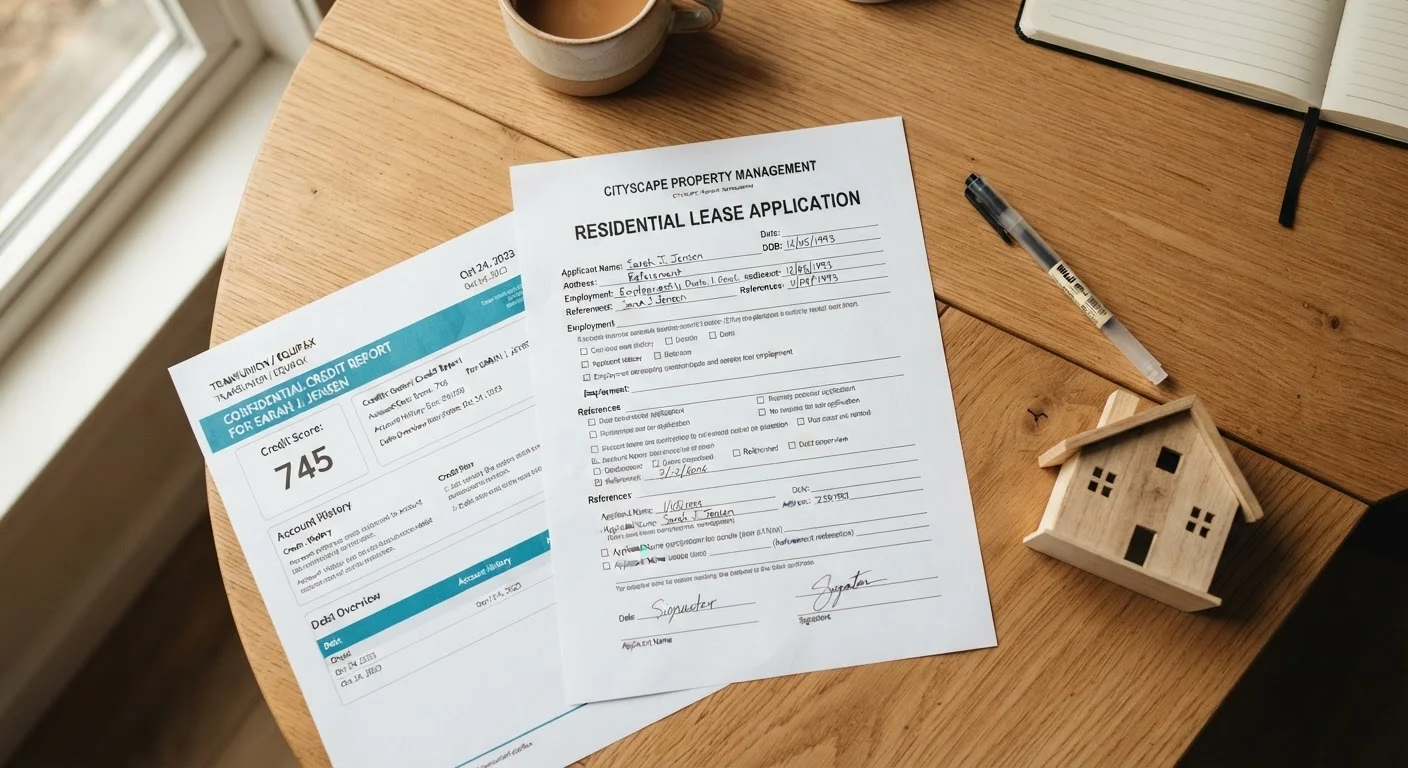
A rental application is a standardized form that prospective tenants complete when they want to rent a home or apartment. It asks for personal details, employment and income information, rental history, and authorization for background and credit checks. Landlords use this information to assess whether an applicant is likely to pay rent consistently and care for the property.
Fair housing laws — primarily the federal Fair Housing Act — prohibit landlords from using applications to discriminate based on race, color, national origin, religion, sex, familial status, or disability. Many states and localities add further protected categories.
What a Rental Application Typically Contains
Most rental applications ask for the same core categories of information, regardless of whether the property is managed by a large company or an individual landlord. Knowing what to expect lets you gather documents ahead of time and present a complete, professional package.
- Personal identification: Full legal name, date of birth, government-issued ID number, and contact information.
- Rental history: Addresses for the past two to five years, along with landlord names and contact details.
- Employment and income: Current employer, job title, length of employment, and gross monthly income.
- References: Two or three personal or professional references who can speak to your reliability and character.
- Authorization for screening: Your signature permitting the landlord to pull a credit report and conduct a background check.
Applications increasingly move online, but the information requested remains consistent. Before you submit, verify that every field is accurate — errors can slow processing or raise red flags.
The Key Factors Landlords Evaluate
Landlords are generally trying to answer one central question: Is this applicant likely to pay rent on time and treat the property with care? They assess this through several overlapping criteria.
Credit History
A credit report shows how consistently an applicant has managed debt — credit cards, auto loans, student loans. Landlords look for patterns of on-time payment, outstanding collections (especially from previous landlords), and overall debt load. A prior eviction that reached court often appears here and carries significant weight. For context on how credit scores are calculated and what thresholds matter, see our article on how credit scores affect housing applications.
Income and Employment Stability
The most widely used benchmark is a gross monthly income equal to at least three times the monthly rent — for example, $4,500 per month in income for a $1,500 rent. Landlords verify this with pay stubs, bank statements, offer letters, or tax returns for self-employed applicants. Length of employment matters too; a longer tenure at the same employer signals stability.
Rental History
Landlords contact previous landlords to ask about on-time rent payments, property condition at move-out, and any lease violations. A clean rental history is one of the strongest signals in a file. If you're a first-time renter without rental history, be ready to explain that and offer alternative evidence of reliability.
3x
Income-to-rent ratio many landlords target
A commonly cited landlord benchmark is that gross monthly income should equal at least three times the monthly rent, though thresholds vary by market and landlord.
620+
Credit score threshold common in rental screening
Many property managers and landlords use a credit score of 620 as an informal minimum, though requirements differ widely depending on the property and local market.
$25–$75
Typical rental application fee range
Application fees generally reflect the cost of a third-party credit and background check; some states cap the amount landlords may charge.
References
Personal and professional references are typically the least weighted factor but can make a difference in close decisions. Choose references who will speak specifically to your dependability and communication style rather than offering generic praise.
Application Fees, Screening Reports, and Your Rights
Most landlords charge an application fee — commonly between $25 and $75 — to offset the cost of pulling a credit and background report. In competitive markets, you may pay this fee for multiple properties before landing a lease, so it's worth treating applications selectively.
Under the Fair Credit Reporting Act (FCRA), if a landlord denies your application based on a screening report, they must send you an adverse action notice identifying the consumer reporting agency used. You can then request a free copy of that report and dispute any inaccuracies directly with the reporting agency.
Fair housing protections are equally important to understand. A landlord may not deny your application because of race, color, national origin, religion, sex, familial status (having children), or disability. Many states extend these protections further — for instance, covering source of income, sexual orientation, or marital status. If you believe an application was denied unlawfully, you can file a complaint with the U.S. Department of Housing and Urban Development (HUD) or a local fair housing agency.
Prepare Your Application Package in Advance
In competitive rental markets, having a ready-to-submit package can be the difference between securing a unit and losing it. Assemble your documents — recent pay stubs, two years of tax returns if self-employed, landlord contact information, and a government-issued ID — before you start touring. This allows you to apply the same day you find a place you like.
Once you understand the full approval process, remember that the financial commitments extend well beyond your first approved application. See our guide on the true cost of renting to understand security deposits, utilities, and other expenses before you commit.
Strengthening a Weak Application
Not every applicant arrives with a perfect credit score and two years of glowing landlord references. There are legitimate ways to improve your position without misrepresenting your situation.
- Offer a co-signer: A co-signer (sometimes called a guarantor) agrees to be legally responsible for rent if you default. This is common for first-time renters or recent graduates.
- Propose a larger security deposit: Where permitted by state law, offering an additional month's deposit can reduce a landlord's perceived risk. Check your state's deposit caps before offering.
- Provide supplemental documentation: Bank statements showing consistent savings, a strong employment letter, or a personal letter explaining past credit difficulties can add useful context.
- Apply earlier in the process: Being among the first applicants in a competitive market matters more than many renters realize.
Once your application is approved and you're moving toward a lease, make sure you review every clause carefully. Our lease review checklist walks through the terms most renters overlook. And if you'd like to understand the broader legal protections available to you as a tenant, see tenant rights every renter should know.
This article provides general educational information about rental applications and is not legal or financial advice. Requirements vary by state and locality. Consult a licensed attorney or housing counselor for guidance specific to your situation.