

Key Takeaways
- Most conventional loans require a minimum credit score of 620; FHA loans may accept scores as low as 500 with a larger down payment.
- A higher credit score typically means a lower interest rate, which can save tens of thousands of dollars over a 30-year loan.
- Payment history is the single largest factor in your credit score, accounting for roughly 35% of your FICO score.
- Checking your own credit does not hurt your score — only hard inquiries from lenders do.
- You can meaningfully improve your score in six to twelve months by paying down balances and correcting errors on your credit report.
Credit Score & Mortgage Qualification
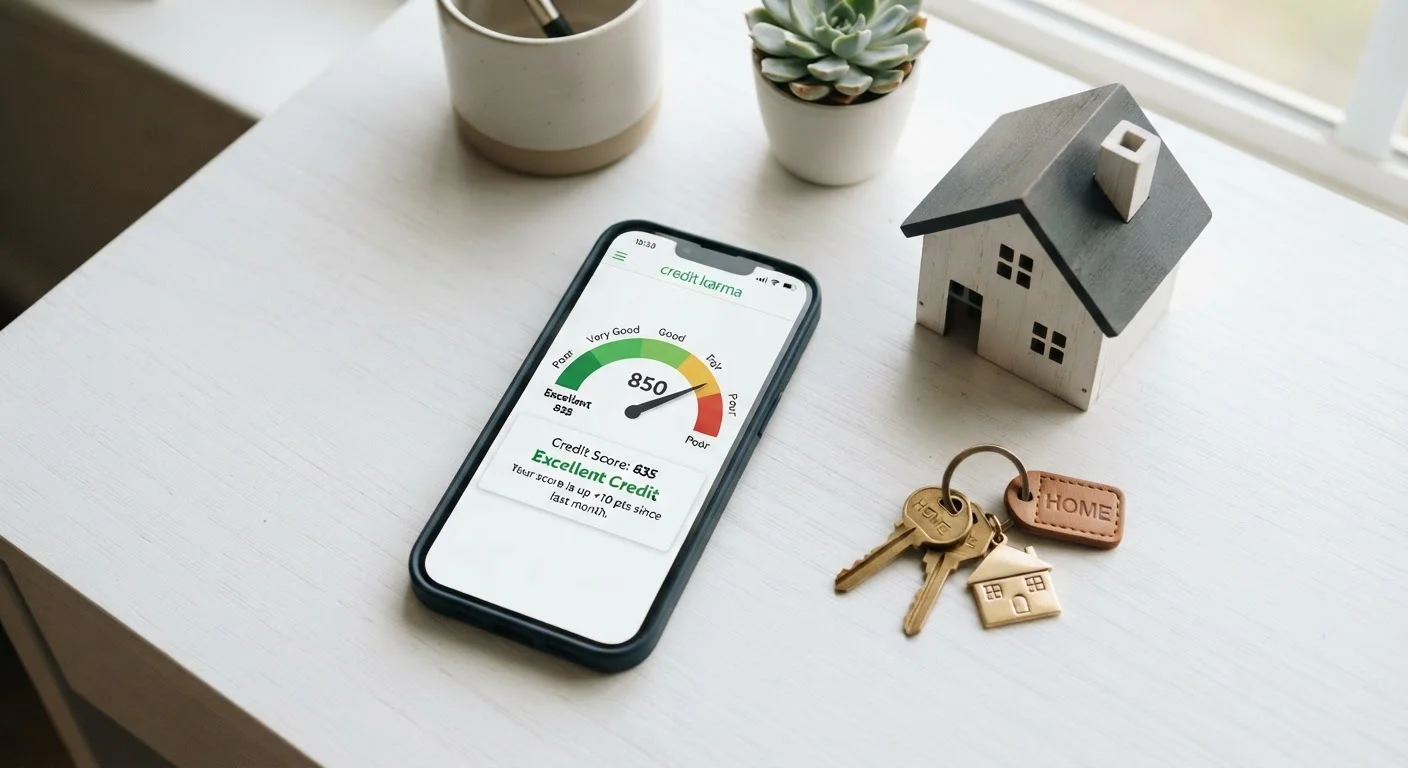
Your credit score is a three-digit number — typically ranging from 300 to 850 — that summarizes how reliably you've managed debt in the past. Mortgage lenders use it, alongside income, debts, and assets, to decide whether to approve your loan application and at what interest rate. A higher score generally unlocks better loan terms and a lower monthly payment.
Most mortgage lenders rely on FICO® Score versions specific to mortgage lending (such as FICO Score 2, 4, or 5), which may differ slightly from the generic score you see on free credit monitoring apps.
Why Lenders Care So Much About Your Credit Score
When a lender evaluates your mortgage application, they're essentially deciding how much risk they're taking on. Your credit score distills years of borrowing behavior into a single number that signals how likely you are to repay the loan. It doesn't tell the whole story — income, employment history, and debt levels all matter too — but it's often the first filter lenders apply.
Lenders typically pull scores from all three major credit bureaus (Equifax, Experian, and TransUnion) and use the middle score for qualification purposes. If you're applying with a co-borrower, lenders generally use the lower of the two middle scores.
To understand more about how the broader lending process works, see our explainer on how mortgages work.
620
Minimum score for most conventional loans
According to Fannie Mae and Freddie Mac guidelines, 620 is the typical floor for conforming conventional mortgage eligibility.
~1 point
Rate difference between high and low credit tiers
Borrowers with scores below 640 can pay a full percentage point or more above rates available to those with scores above 760, based on historical loan pricing data.
35%
Share of FICO score from payment history
FICO's published score factor breakdown identifies payment history as the single largest component of a standard credit score.
Score Thresholds That Actually Matter
Not all credit scores unlock the same mortgage options. Here's a general breakdown of how score ranges correspond to common loan types:
- 760 and above: Typically qualifies for the lowest advertised rates on conventional loans.
- 700–759: Strong profile; most loan programs are accessible at competitive rates.
- 660–699: Conventional loans are available, though rates will be somewhat higher.
- 620–659: The floor for most conventional loans; expect higher rates and stricter requirements.
- 580–619: FHA loans with a 3.5% down payment may still be an option.
- 500–579: FHA loans may be available with a 10% down payment; conventional options are very limited.
- Below 500: Most standard mortgage programs will not approve an application at this level.
Keep in mind these thresholds are guidelines, not guarantees. Individual lenders set their own overlays — internal policies that may be stricter than the minimum guidelines set by loan programs. Down payment size can also influence which tier of loan you access.
Rate-Shop Without Hurting Your Score
When comparing mortgage lenders, submit all applications within a 45-day window. Credit scoring models treat multiple mortgage inquiries during this period as a single inquiry, protecting your score while you compare offers. Don't let fear of credit pulls stop you from exploring your options.
What Goes Into Your Credit Score
Understanding what drives your score helps you focus improvement efforts where they'll have the most impact. FICO scores — the most widely used in mortgage lending — are calculated from five categories:
- Payment history (35%): Whether you've paid bills on time. A single 90-day late payment can significantly drag down your score.
- Amounts owed / credit utilization (30%): How much of your available revolving credit you're using. Keeping utilization below 30% is generally recommended; below 10% is even better.
- Length of credit history (15%): How long your accounts have been open. Older accounts generally help your score.
- Credit mix (10%): A variety of account types (credit cards, installment loans) can be a positive factor.
- New credit (10%): Recent applications for new credit can temporarily lower your score.
“Credit scores are not a judgment of your worth as a person — they're a snapshot of past behavior. And snapshots can change.”
— Consumer Financial Protection Bureau, U.S. federal agency overseeing consumer financial products and services
Practical Steps to Strengthen Your Profile Before Applying
If your score isn't where you'd like it to be, the good news is that credit scores respond to deliberate behavior changes. Here's where to focus:
- Pull your free credit reports from AnnualCreditReport.com — the only federally authorized source — and dispute any errors you find with the relevant bureau.
- Pay down revolving balances. Reducing your credit card balances relative to your limits is one of the fastest ways to lift your score.
- Never miss a payment. Set up automatic minimum payments to eliminate the risk of accidental late payments during the months leading up to your application.
- Avoid opening new credit accounts in the six to twelve months before applying. Each application creates a hard inquiry and temporarily lowers your score.
- Keep old accounts open. Closing a long-standing credit card reduces your available credit and can shorten your average account age.
Once your credit profile is in better shape, your next step is understanding the difference between getting pre-qualified and actually pre-approved. See our guide to pre-qualification vs. pre-approval to understand what each means for your home search.
Your credit score also interacts with other financial factors lenders weigh, including the type of mortgage you choose. Our overview of fixed-rate vs. adjustable-rate mortgages can help you think through which structure fits your situation.
This article is for general informational purposes only and does not constitute financial or legal advice. Credit score requirements and loan program guidelines change over time and vary by lender. Consult a licensed mortgage professional for guidance specific to your financial situation.