
Month-to-Month vs. Fixed-Term Lease: Which Arrangement Suits Your Situation?

Key Takeaways
- Month-to-month leases offer flexibility but typically come with higher monthly rent and less housing security.
- Fixed-term leases lock in your rent rate and provide stronger legal protections against sudden eviction or rent increases.
- Landlords can usually raise rent or end a month-to-month tenancy with just 30 to 60 days' notice, depending on the state.
- Breaking a fixed-term lease early can cost you one to two months' rent in fees or forfeit your security deposit.
- Your life circumstances — job stability, family plans, local housing market — should drive which structure you choose.
Option A
Month-to-Month Lease
The flexible, low-commitment rental arrangement.
Best for: Renters who need geographic flexibility, are between life transitions, or cannot commit to a full year in one location.
Option B
Fixed-Term Lease
The stable, predictable long-term rental agreement.
Best for: Renters who value rent predictability, want stronger housing security, and plan to stay in one place for at least a year.
If you're relocating for a new job and unsure how long you'll stay
Month-to-Month Lease
The short exit window lets you move on quickly without heavy financial penalties if your situation changes.
If you want predictable housing costs over the next year or more
Fixed-Term Lease
Your rent rate is locked in for the lease period, shielding you from mid-year increases in a competitive market.
If you're waiting to buy a home and need temporary housing
Month-to-Month Lease
You won't be trapped in a long agreement when your purchase closes, avoiding costly early-termination fees.
If you're a first-time renter building a stable rental history
Fixed-Term Lease
A completed annual lease demonstrates reliability to future landlords and may improve your rental application profile.
If you're navigating a major life transition such as divorce or relocation
Month-to-Month Lease
Avoiding a long commitment reduces financial exposure during an already uncertain period.
How Each Lease Structure Works
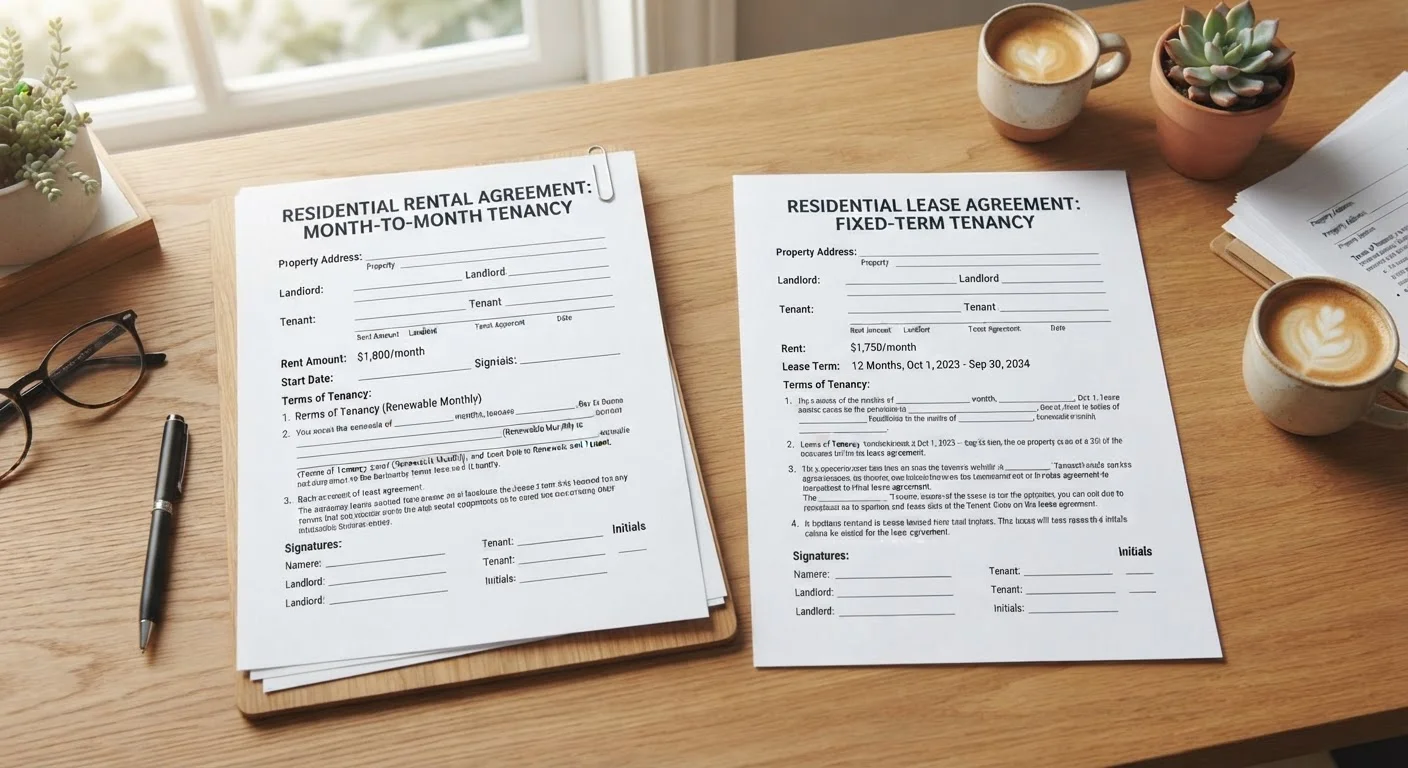
A month-to-month lease (sometimes called a periodic tenancy) automatically renews each month unless either party — the tenant or landlord — provides written notice to end it. Most states require 30 days' notice, though some require 60. This arrangement often begins after a fixed-term lease expires without renewal, or is offered from the start by landlords willing to accept shorter commitments.
A fixed-term lease runs for a set period — most commonly 12 months, though 6- and 18-month terms exist. Both parties agree to the terms upfront: rent amount, move-in date, and end date. Neither side can unilaterally change key terms (such as rent) mid-lease unless the agreement specifically allows it.
Understanding this structural difference is the foundation for everything else. The flexibility of a month-to-month agreement comes precisely because it's terminable on short notice — which cuts both ways. The security of a fixed-term lease comes from its binding nature, which also limits your own freedom to leave.
When a Fixed-Term Lease Converts to Month-to-Month
In many states, if a fixed-term lease expires and neither party takes action, the tenancy automatically converts to a month-to-month arrangement under the same terms — except that either party may then terminate with proper notice. This is called a 'holdover tenancy.' Some leases explicitly address this; others rely on state default rules. Check your lease's expiration language well before your end date to avoid unintended holdover situations.
Cost Differences You Should Anticipate
Month-to-month tenants frequently pay a premium — landlords offset the risk of vacancy by charging above-market rent, often 10–20% more than a comparable fixed-term unit in the same building. That gap compounds quickly: an extra $150 per month equals $1,800 over a year.
Fixed-term leases carry their own financial risks, primarily around early termination. Most leases include an early-termination clause requiring payment of one to two months' rent, or forfeiture of the security deposit — sometimes both. If you break a lease without an enforceable clause, landlords in most states can hold you responsible for rent through the end of the term (though they're generally obligated to make reasonable efforts to re-rent the unit).
10–20%
Month-to-month rent premium over fixed-term
Industry estimates consistently show month-to-month tenants pay a meaningful premium; exact figures vary by market and property type.
30–60 days
Typical notice required to end month-to-month tenancy
Most US states set the minimum notice period at 30 days, though several require 60 days, especially for longer-term tenants.
1–2 months
Common early-termination fee range for fixed-term leases
Early-termination clauses widely reported in rental agreements across US markets; exact amounts depend on individual lease terms.
Before signing either type, read every clause related to rent increases, fees, and notice periods. For a deeper look at negotiating specific terms, see our guide to negotiating lease terms.
Stability, Security, and Tenant Rights
Fixed-term leases offer stronger housing security. A landlord generally cannot raise your rent or force you to leave before the term ends without legal cause — such as non-payment or lease violations. This matters most in cities where rental demand and prices shift rapidly.
Month-to-month arrangements give landlords much more latitude. With proper notice (30–60 days, state-dependent), they can end the tenancy, dramatically raise the rent, or change lease conditions. In tight rental markets, this can leave tenants scrambling to find alternatives on short notice.
Some cities and states have enacted just-cause eviction laws and rent stabilization ordinances that add protections for month-to-month tenants — limiting when and by how much landlords can raise rent or terminate tenancies. Always verify the tenant-protection laws in your specific city or state before assuming standard rules apply.
| Criterion | Month-to-Month Lease | Fixed-Term Lease |
|---|---|---|
| Typical term length | Renews monthly, no set end date | 6, 12, or 18 months |
| Rent predictability | Can change with 30–60 days notice | Locked in for the full term |
| Monthly rent level | Often 10–20% above market | Typically at or below market rate |
| Flexibility to leave | High — 30–60 days notice required | Low — early exit fees apply |
| Landlord's ability to end tenancy | With 30–60 days notice, any time | Only for cause before term ends |
| Tenant housing security | Lower — subject to short-notice changes | Higher — protected for lease period |
| Early termination cost | None beyond standard notice | 1–2 months rent or deposit forfeiture |
If you're weighing whether renting itself is the right choice right now, the renting vs. buying decision framework can help you think through that broader question.
Which Structure Fits Your Life Right Now?
The right lease type depends on factors unique to your situation — no single structure is universally better. Ask yourself:
- How certain is my living situation? If a job change, family event, or planned purchase might move you within 12 months, flexibility may outweigh cost savings.
- How competitive is the local rental market? In markets where vacancy rates are low, locking in a rate for a year can protect you from sharp rent increases at renewal.
- What's my financial cushion? Month-to-month tenants need to be prepared for sudden rent hikes or the need to move quickly, both of which carry short-term costs.
- Does my landlord offer a choice? Not all landlords offer month-to-month terms. Many require a 12-month commitment for initial tenancies.
Thinking carefully about these questions before you sign will help you avoid costly mismatches between your lease and your life. For broader financial context on housing decisions, the overview of homeownership costs provides useful perspective on how renting compares to owning over time.
This article is for general informational purposes only and does not constitute legal or financial advice. Tenant rights and landlord obligations vary significantly by state and municipality. Consult a qualified attorney or housing counselor for guidance specific to your situation.