

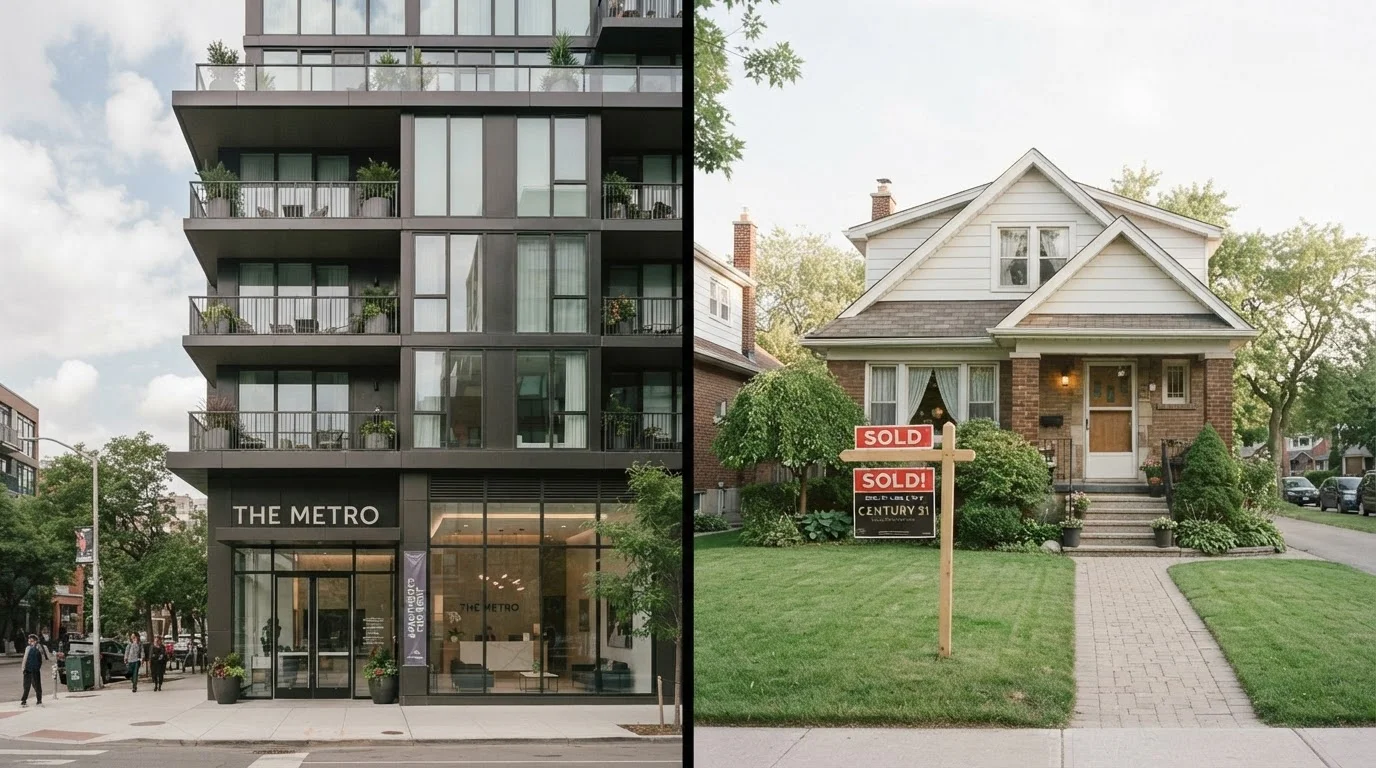
Key Takeaways
- Neither renting nor buying is universally better — both paths carry genuine financial and lifestyle trade-offs.
- Buying builds equity over time but requires significant upfront costs and ongoing maintenance responsibility.
- Renting offers flexibility and predictable monthly costs, but provides no ownership stake in the property.
- Your timeline, savings, income stability, and local market conditions all influence which option makes more sense.
- Running the full numbers — not just the monthly payment — is essential before making a decision.
Our Verdict
Renting and buying serve different life situations, and neither path is inherently superior. Buying can build long-term wealth for those with stable finances and a multi-year horizon, while renting offers flexibility and lower upfront costs that may better fit certain careers, markets, or life stages. The right framework is to evaluate your specific numbers, timeline, and priorities rather than defaulting to conventional wisdom.
| Best for | Recommended |
|---|---|
| Those planning to stay in one place for five or more years with stable income | Buying |
| Those who value flexibility, low upfront costs, or live in high-cost markets | Renting |
| Those still building credit, savings, or career stability | Renting |
| Those ready to take on maintenance responsibility and have adequate reserves | Buying |
Why This Decision Is Harder Than It Looks
The rent-vs.-buy question is one of the most consequential financial decisions most people make — and one of the most misunderstood. The conventional assumption that buying is always better than renting doesn't hold up in every market, at every income level, or at every life stage.
Both options involve real costs, real risks, and real benefits. The goal here isn't to push you toward one path. It's to help you understand what each path actually involves so you can make a clearer, more confident assessment of your own situation. For a deeper look at where the numbers actually diverge, see our realistic cost comparison of renting vs. owning.
| Renting | Buying | |
|---|---|---|
| Upfront costs | Security deposit (1–2 months' rent) | Down payment + closing costs (5–25% of price) |
| Monthly cost predictability | Fixed during lease term | Fixed principal/interest; taxes and insurance can rise |
| Equity building | None | Grows over time, not guaranteed |
| Maintenance responsibility | Landlord handles major repairs | Owner responsible for all costs |
| Flexibility to relocate | High — exit at lease end | Low — selling takes time and costs money |
| Customisation control | Limited by lease terms | Full control as owner |
| Long-term wealth potential | Depends on investing savings | Possible via equity, varies by market |
What Buying Actually Involves
Homeownership comes with well-documented financial advantages — but also costs and obligations that many first-time buyers underestimate.
Upfront requirements
Purchasing a home typically requires a down payment (often 3%–20% of the purchase price), closing costs (generally 2%–5% of the loan amount), and cash reserves for immediate repairs or emergencies. These are non-trivial sums that take most households years to accumulate.
Building equity — with caveats
When you make mortgage payments, a portion reduces your loan principal, gradually increasing your ownership stake in the property. Over a long enough horizon, this equity can become a significant asset. However, in the early years of a fixed mortgage, most of each payment goes toward interest rather than principal. Home values can also decline, particularly in the short term, meaning equity is not guaranteed.
Ongoing costs beyond the mortgage
Homeowners are responsible for property taxes, homeowners insurance, HOA fees where applicable, and all maintenance and repairs. Industry guidance often suggests budgeting 1%–2% of a home's value annually for maintenance, though this varies widely by property age and condition. The full scope of homeownership costs is worth understanding before committing.
Factor In All Ownership Costs Before Comparing
When comparing a potential mortgage payment to your current rent, be sure to add property taxes, insurance, and a maintenance budget to the ownership side of the ledger. A mortgage payment that looks comparable to rent can become considerably more expensive once all ownership costs are included. Getting a realistic monthly ownership estimate before making a decision helps avoid an unpleasant surprise after closing.
What Renting Actually Involves
Renting is often framed as "throwing money away," but that framing ignores the real value renters receive — housing — and the real costs and risks of ownership that renters avoid.
Lower upfront exposure
Renters typically need a security deposit (often one to two months' rent) and sometimes a pet deposit or first and last month's rent. This is substantially less capital than buying requires, and that gap represents money a renter can save, invest, or keep liquid.
Predictable short-term costs
A lease locks in your rent for the term of the agreement, usually 12 months. You're generally not responsible for major structural repairs or appliance replacements — those fall to the landlord. That said, rents can increase significantly between lease terms in competitive markets. For a full picture of what renters spend, see the true cost of renting beyond monthly rent.
Flexibility and its limits
Renting makes it easier to relocate for work, family changes, or simply a shift in preferences. For people in career-growth phases or uncertain situations, this can be a concrete financial advantage. If you're weighing lease structure options, our guide on month-to-month vs. fixed-term leases breaks down the trade-offs.
Renting Long-Term Carries Its Own Risks
While renting offers flexibility, it also exposes you to rent increases, lease non-renewals, and the possibility of being displaced if a landlord sells or redevelops. In high-demand markets, rents can rise faster than wages over time. Renters should maintain robust emergency savings and understand their rights under local tenant protection laws — these vary considerably by state and city.
The Factors That Actually Drive the Decision
Rather than asking "which is better," it's more useful to evaluate these concrete factors:
5–7 years
Typical break-even horizon for buying
Financial analysts generally estimate that homebuyers need to stay in a property for at least five to seven years for buying to outperform renting financially, after accounting for transaction costs.
2%–5%
Typical closing costs as share of loan
The Consumer Financial Protection Bureau notes that closing costs generally range from 2% to 5% of the loan amount, a significant expense many first-time buyers underestimate.
1%–2%
Annual maintenance budget guideline
A commonly cited rule of thumb among housing professionals suggests homeowners budget 1%–2% of their home's value per year for ongoing maintenance and repairs.
- How long you plan to stay: Most financial analyses suggest buying becomes more advantageous after roughly five to seven years in a home, once transaction costs are absorbed by appreciation and equity growth.
- Your local market: In markets where home prices are extremely high relative to rents, renting may be more cost-effective even over longer periods. The price-to-rent ratio — a home's price divided by annual rent for a comparable unit — is one useful benchmark.
- Income and job stability: A mortgage is a long-term, legally binding obligation. Variable income, potential relocation, or career transition can make that commitment risky in ways that renting is not.
- Savings and credit health: Qualifying for a mortgage and affording the total upfront costs requires both strong credit and substantial savings. Buying before you're financially ready can strain your household significantly.
- Lifestyle priorities: Ownership offers control — you can renovate, paint, or keep pets without a landlord's permission. Renting offers ease — no maintenance calls to make, no repair bills to absorb.
For a balanced overview of both sides across these dimensions, our article on renting vs. buying a home: financial and lifestyle trade-offs is a useful companion read.