

Key Takeaways
- How often you use an item is the single most important factor in the rent-vs-buy decision.
- Renting avoids upfront costs, maintenance, and storage — but adds up quickly with repeated use.
- Buying makes more financial sense when an item will be used frequently over a long period.
- Some items depreciate rapidly, making ownership a poor long-term financial choice.
- The right answer depends on your usage pattern, storage space, and budget flexibility.
Our Verdict
Neither renting nor buying is universally the smarter choice — it depends on how often you'll use the item, how long it will last, and what it costs to maintain. Frequent, long-term use generally favors buying; occasional or one-time needs usually favor renting. Running a simple break-even calculation before any significant purchase can save real money over time.
| Best for | Recommended |
|---|---|
| Infrequent or one-time use needs | Renting |
| Regular, ongoing use over several years | Buying |
| Items with high maintenance or rapid depreciation | Renting |
| Budget-conscious consumers with limited upfront capital | Renting (short-term) |
Why the Rent-vs-Buy Question Goes Beyond Big Purchases
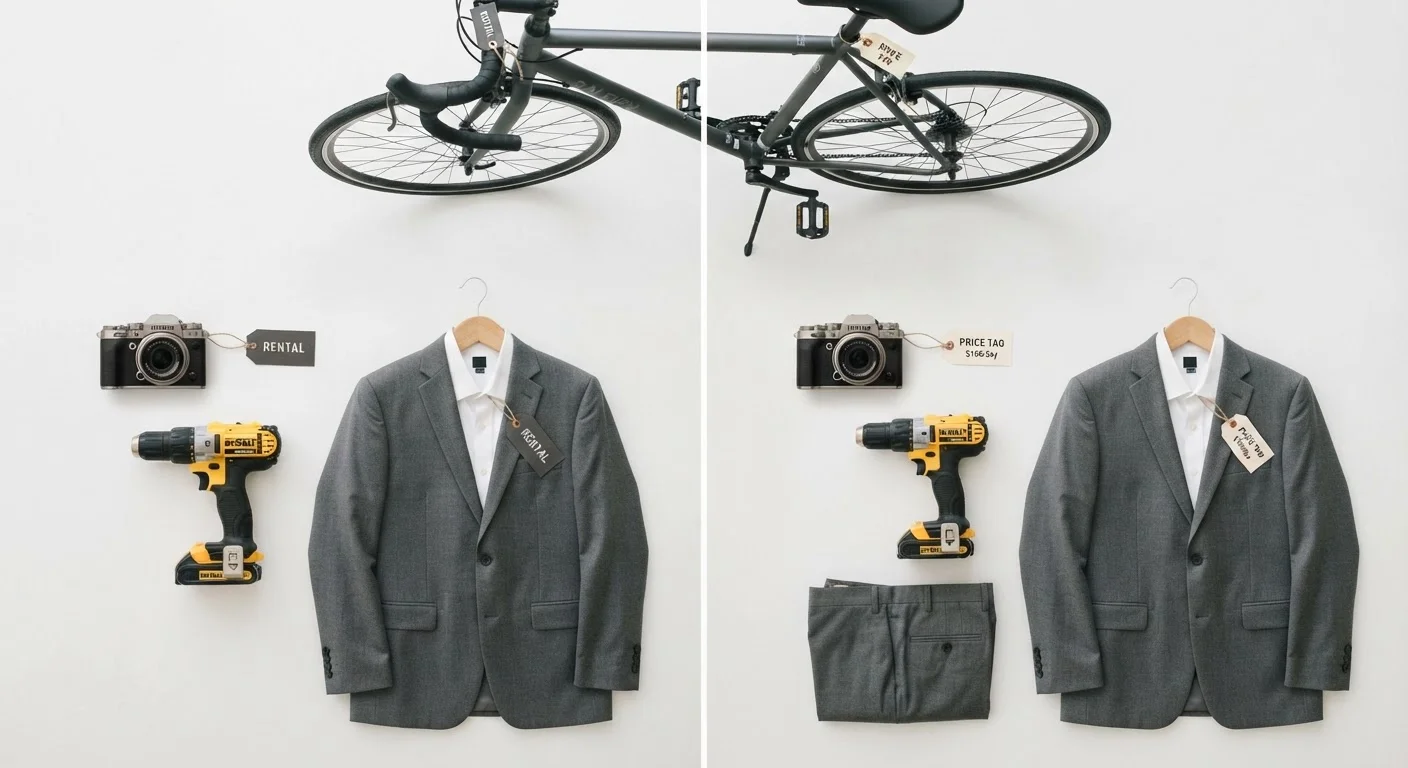
Most people associate the rent-vs-buy debate with homes or cars, but the same logic applies to dozens of everyday items — power tools, formal wear, cameras, recreational equipment, and more. The core question is always the same: does it cost less to pay for access when you need it, or to own it outright?
Ownership feels like the financially responsible default for many consumers, but that instinct isn't always accurate. Buying means paying upfront, absorbing maintenance costs, and accepting that the item may depreciate or become obsolete. Renting avoids those responsibilities — but frequent rentals can easily exceed what the item would have cost to purchase.
For a broader look at how to weigh major spending decisions, see our framework for considered spending. The same principles scale down to smaller purchases.
The Core Variables: What Actually Drives the Decision
Before comparing costs, identify the factors that shape your situation:
- Frequency of use: Will you use this item once a year, once a month, or weekly? This is the most important variable. Low frequency almost always favors renting.
- Duration of need: Is this a temporary situation — a one-time project, a seasonal activity, or a short phase of life — or an ongoing need? Temporary needs favor renting; enduring needs favor buying.
- Upfront capital: Can you comfortably absorb the purchase price without straining your budget? If buying requires financing, factor in interest costs.
- Storage and maintenance: Do you have space to store the item? Will it require regular upkeep that adds to the total cost of ownership?
- Depreciation and obsolescence: Some items lose value quickly or become outdated. Electronics and certain tools are prime examples. High depreciation weakens the case for buying.
| Renting | Buying | |
|---|---|---|
| Upfront cost | Low — pay only when needed | High — full purchase price upfront |
| Best for usage frequency | Occasional or one-time use | Regular or long-term use |
| Maintenance responsibility | Handled by the rental provider | Owner's full responsibility |
| Storage required | None | Yes — space needed when not in use |
| Depreciation risk | None — provider absorbs it | Owner absorbs value loss over time |
| Long-term cost (high use) | Can exceed purchase price quickly | Often lower over time with heavy use |
| Flexibility | High — stop anytime | Lower — tied to the item |
Understanding these variables also applies when thinking about needs, wants, and value in any purchase.
Running a Simple Break-Even Calculation
Once you know how often you'll use an item, a basic break-even calculation can clarify the decision quickly. The idea: divide the purchase price by the per-use rental cost to find how many uses it takes before buying becomes cheaper.
For example, if renting a piece of equipment costs $40 per day and buying it outright costs $200, you'd break even after just five rentals. If you're likely to use it more than five times, buying could make financial sense — assuming maintenance costs are low. If you'll use it twice a year, renting saves money for at least a couple of years.
Don't forget to add realistic maintenance, storage, and depreciation costs to the purchase side of the equation. These are often underestimated.
Build In a Realistic Total Cost
When calculating the purchase side of your break-even, include more than the sticker price. Add estimated annual maintenance, any accessories required, and a rough depreciation figure based on the item's expected lifespan. This gives you a more honest comparison against rental costs and helps avoid underestimating what ownership actually costs.
This framework is closely related to the rent-vs-buy question in housing. For a fuller picture of those trade-offs, our article on financial and lifestyle trade-offs of renting vs. buying a home applies many of the same concepts at a larger scale.
Common Everyday Items: Where Each Approach Tends to Win
While every situation is different, certain item categories consistently lean one direction:
- Formal or specialty clothing
- Items worn once or twice — wedding attire, costumes, formal suits for rare occasions — are strong renting candidates. Buying is worth it only if you expect repeated use over multiple years.
- Power tools and home improvement equipment
- Occasional DIY projects rarely justify owning specialized tools. Renting a tile saw for one bathroom remodel makes more sense than buying one that sits idle for years. Regular home owners who tackle frequent projects may find ownership economical over time.
- Cameras and photography gear
- Rapid technology changes mean purchased camera equipment can quickly become outdated. Renting allows access to current gear without the depreciation risk — unless photography is a consistent, ongoing pursuit.
- Recreational equipment
- Ski gear, kayaks, and similar items often benefit from renting if you use them a few times annually. Frequent participants often find ownership cheaper after a few seasons, though storage requirements matter.
For a related comparison in the auto space, see our guide on buying vs. leasing a car, where similar break-even logic applies.
When Renting Has Hidden Costs Too
Renting isn't without financial downsides. Repeated rentals on any item used regularly can easily outpace the purchase price within a year or two. Rental fees may also include taxes, insurance requirements, or damage deposit holdbacks that raise the effective cost.
Availability is another consideration — rentals aren't always accessible when you need them, especially for specialized or high-demand items. Inconvenience has a real cost in time and effort, even if it doesn't appear on a receipt.
If you rent frequently and find costs accumulating, it may signal that ownership has become the more economical path. Reassessing the break-even point periodically is a sound habit. For a parallel look at hidden costs in another context, see the true cost of renting beyond the monthly rent figure.
This article is for general informational and educational purposes only and does not constitute personalized financial advice. Consult a qualified financial professional for guidance specific to your situation.