

Key Takeaways
- "Refurbished" and "second-hand" are not the same — refurbished items are typically tested and repaired before resale.
- Buying new offers the strongest warranty and condition guarantees, but comes at the highest upfront cost.
- Condition, return policy, and seller reputation matter as much as the label on any pre-owned item.
- Certified refurbished programs from manufacturers often include warranties that rival new-product coverage.
- Shopping any of these options smartly requires comparing total cost, not just sticker price.
Our Verdict
There is no universally superior option among new, refurbished, and second-hand goods. The right choice depends on how much risk you can accept, how long you need the item to last, and what your budget allows. Refurbished items from reputable sources often hit a practical middle ground, but new and second-hand each have contexts where they make the most financial sense.
| Best for | Recommended |
|---|---|
| Those who need reliability and full warranty protection | New |
| Those seeking reduced cost without giving up tested quality | Refurbished |
| Those comfortable with higher uncertainty in exchange for the lowest price | Second-Hand |
| Those buying vehicles who want a documented inspection and some coverage | Certified Pre-Owned |
What the Labels Actually Mean
Walk into any marketplace — physical or online — and you'll encounter a range of terms: "used," "pre-owned," "refurbished," "certified refurbished," and "open box." These words carry real differences in what you're getting, yet they're often used loosely or interchangeably by sellers.
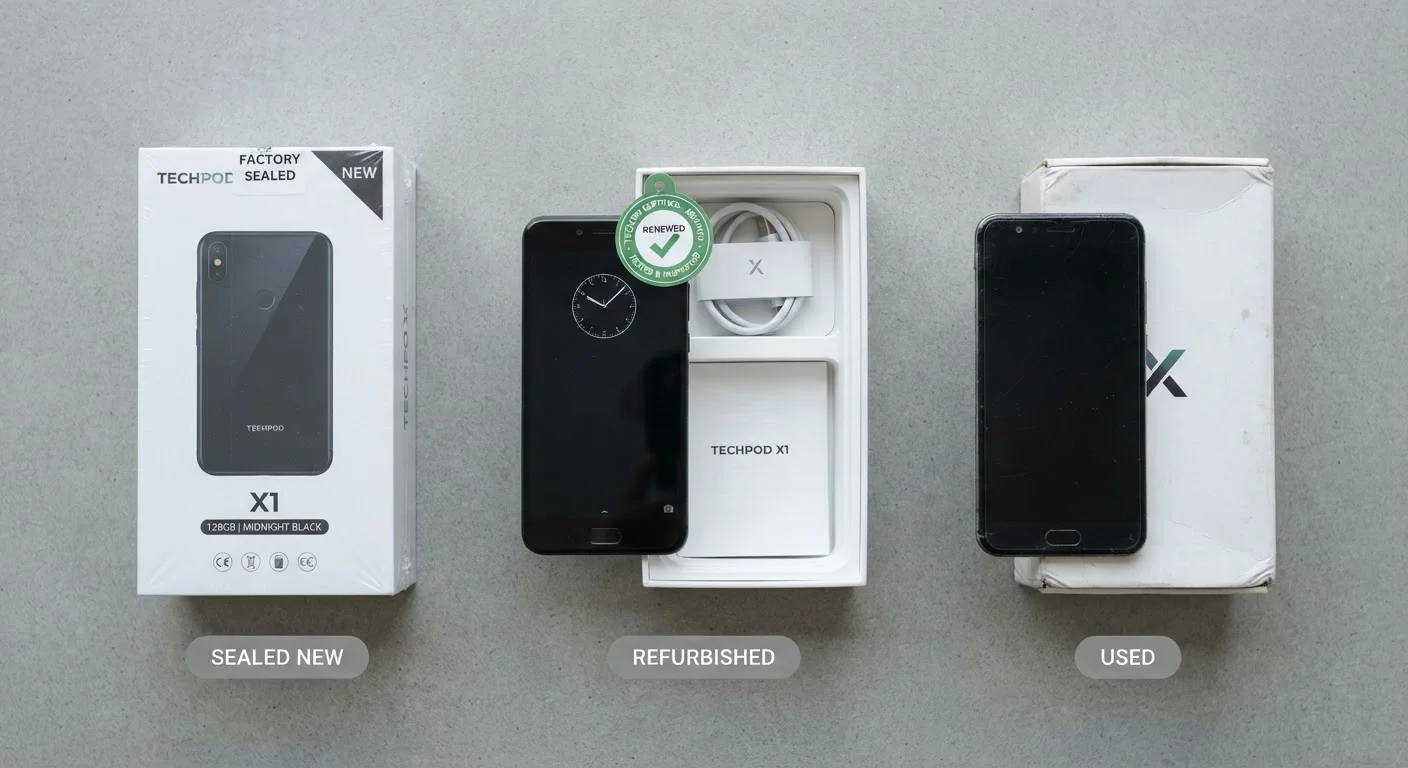
New means the item has not been previously sold, used, or opened (excluding factory testing). It arrives in original packaging with a full manufacturer's warranty.
Second-hand (also called used or pre-owned) means the item was previously owned and used. It is sold as-is, typically without a warranty from the manufacturer. Condition can range from barely touched to heavily worn. The seller may be a private individual, a resale shop, or an online marketplace.
Refurbished means the item has been returned, inspected, repaired as needed, and tested before being re-listed. Who did the refurbishing matters enormously. A manufacturer-certified refurbished product went through the original maker's quality process. A third-party refurbished item was handled by an independent technician — quality standards vary widely.
Open box typically means an item was returned unused or barely used and is resold in its opened original packaging. It may still have most or all of the original warranty intact, depending on the retailer's policy.
Understanding these definitions is your first line of defense when comparing prices across options.
How the Three Main Options Compare
Each category comes with a distinct risk-reward profile. Here's how they stack up across the factors that tend to matter most to everyday shoppers.
| New | Refurbished | Second-Hand | |
|---|---|---|---|
| Typical price relative to retail | Full retail price | 20–50% below retail | Varies widely, often lowest |
| Warranty coverage | Full manufacturer warranty | Partial warranty (varies by source) | Rarely included; sold as-is |
| Condition reliability | Guaranteed unused | Tested and repaired | Unknown without inspection |
| Return policy | Standard retailer policy | Varies by seller | Often final sale |
| Best use case | Long-term or critical needs | Mid-range budget, trusted source | Low-stakes or short-term use |
| Main risk | Overpaying for unneeded coverage | Variable refurbishment quality | Undisclosed damage or defects |
One important nuance: warranties on refurbished goods vary significantly. Manufacturer-certified programs may offer 90 days to a full year of coverage. Third-party refurbished items might offer 30 days or nothing at all. Always confirm in writing before purchasing.
Where the Real Risks Hide
The label alone doesn't determine your risk — the seller and the product category do.
"Refurbished" Is Not a Regulated Term
In most product categories, there is no legal standard defining what "refurbished" must entail. A seller can use the word even if only a basic cleaning was performed. Always look beyond the label to confirm what testing, repair, and warranty actually accompany the item. When in doubt, prioritize sellers who document their refurbishment process explicitly.
For second-hand goods, your main risks are undisclosed damage, missing components, and no recourse if something breaks. Private sellers on peer-to-peer platforms generally have no obligation to accept returns. Ask for photos of every angle, request serial numbers to verify warranty status, and prioritize sellers with strong review histories.
For refurbished goods, the risk is the quality of whoever did the refurbishment. A phone cleaned and tested by its original manufacturer is a very different product from one relisted by an unknown third party after a surface cleaning. Look for explicit statements about what was tested and what is covered.
For new goods, the risk is primarily financial — overpaying for coverage or features you don't need. Some consumers pay a significant premium for "new" when a certified refurbished equivalent would serve them identically for their use case.
The same decision logic applies in higher-stakes purchases like vehicles. Our guide on new, used, and certified pre-owned vehicles explores how these distinctions play out in automotive buying specifically.
How to Evaluate Any Purchase Across All Three Categories
Regardless of which category you're shopping in, a consistent evaluation process helps cut through confusion.
- Identify your minimum acceptable condition. If a cosmetic scratch is fine but a battery at 60% capacity isn't, know that before you browse.
- Check the return and warranty terms. A 30-day return window dramatically reduces your risk even on used items. Confirm whether the warranty is from the manufacturer or the seller.
- Research the seller's reputation. Feedback scores, return rate disclosures, and time in business are meaningful signals. Established retailers offering refurbished goods typically have more accountability than anonymous private sellers.
- Compare total cost, not just price. Factor in potential repair costs, shipping, and the cost of replacement parts for older items. A second-hand appliance priced 60% below new may cost more over three years if it needs frequent repairs.
- Consider the product category. Electronics, appliances, and vehicles carry higher stakes than books or furniture. In higher-stakes categories, refurbished or new often represents better long-term value even at a higher upfront price.
Verify Warranty Status Before You Buy
Many manufacturers allow you to check a product's warranty status using its serial number on their website. For refurbished or second-hand electronics, this simple check can confirm whether any original coverage remains — and save you from an unpleasant surprise after purchase. Do this before finalizing any used or refurbished purchase in a higher-stakes category.
For more structured guidance on comparing total value rather than surface price, see our overview of strategies for finding real deals that go beyond the sticker price.