

Key Takeaways
- Unit pricing shows cost per standard measure, making fair size-to-size comparisons possible.
- Bigger packages are not always cheaper per unit — check the label before assuming.
- Store-brand and name-brand products can be directly compared using unit price.
- Many U.S. states legally require grocery stores to display unit prices on shelf tags.
- You can calculate unit price yourself by dividing total price by package quantity.
- Combining unit pricing with your actual usage prevents overspending on bulk items.
Unit Pricing
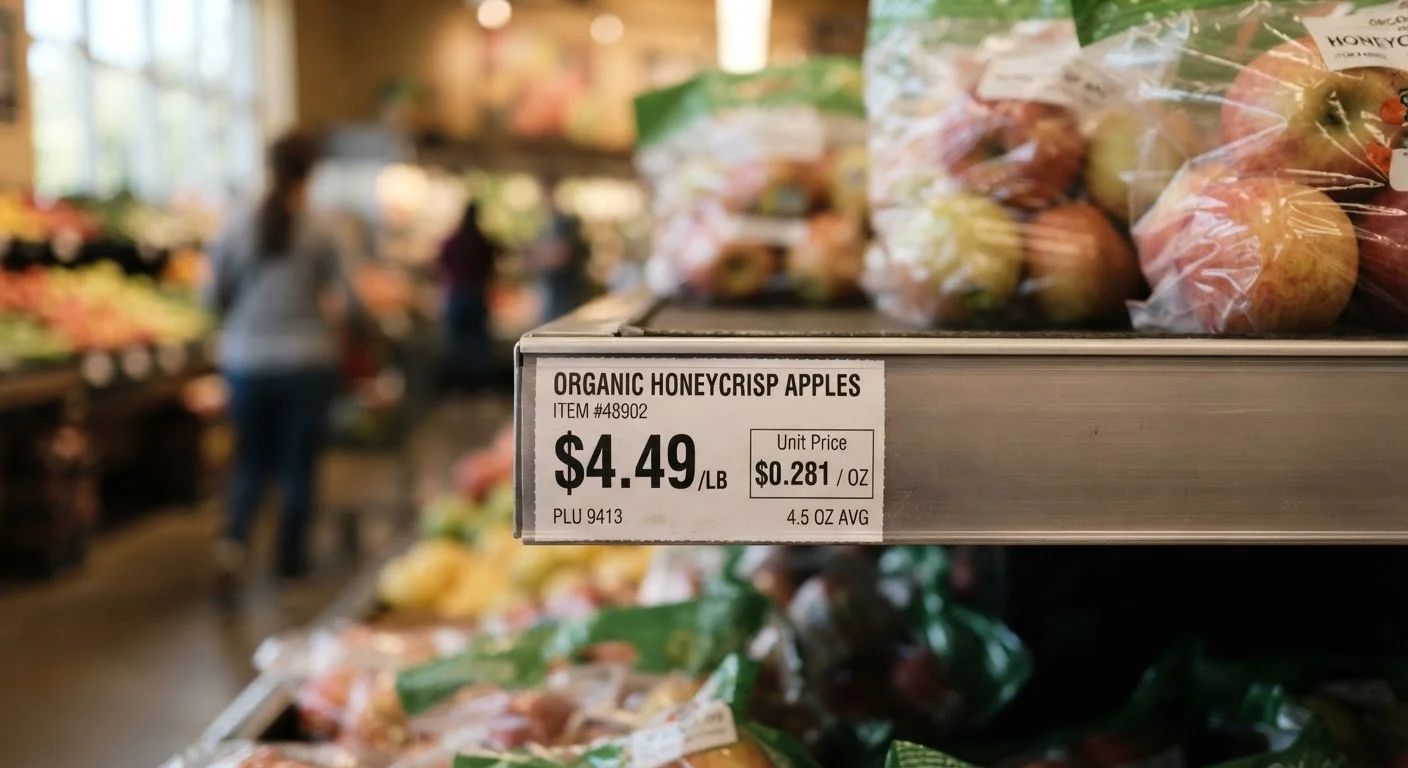
Unit pricing is the cost of a product broken down to a standard measurement — such as per ounce, per pound, per count, or per fluid ounce. It appears as a small figure on the shelf label beneath the total price. This number lets you compare the true cost of different package sizes or brands on equal footing, regardless of how each product is packaged or marketed.
Unit price is calculated by dividing the total retail price by the number of units (weight, volume, or count) in the package. Retailers in many U.S. states are required by law to display unit prices on shelf labels for qualifying grocery items.
What Unit Pricing Actually Tells You
When you pick up two boxes of cereal — one 12 oz for $3.49 and one 18 oz for $4.99 — the sticker prices don't tell you which is the smarter buy. Unit pricing does. By expressing cost as a rate (say, cents per ounce), it puts every product on the same measuring stick, so package size and marketing don't distort your judgment.
This is the core value of unit pricing: it translates a messy retail environment into a single, comparable number. Instead of doing mental math on the spot, you can glance at two labels and make a confident decision in seconds. It's part of a broader habit of comparing prices with purpose — recognizing that the sticker price is rarely the whole story.
~30
U.S. states with unit pricing laws for groceries
Many states have enacted unit pricing regulations requiring grocery stores to display per-unit costs on shelf labels, though requirements vary by state and store type.
Up to 20%
Potential savings identified through unit price comparison
Consumer research has found that consistent use of unit pricing can help shoppers identify meaningful cost differences between package sizes and brands in routine grocery shopping.
How to Read a Unit Price Label
Most shelf labels in U.S. grocery stores follow a two-number format: the total price is displayed prominently, and the unit price appears in smaller text, often in a corner of the label. The unit price will reference a specific measure — common examples include:
- Per ounce (oz) — typical for food, beverages, and cleaning products
- Per pound (lb) — common for produce and deli items
- Per count — used for items like trash bags, diapers, or vitamins
- Per fluid ounce (fl oz) — standard for liquid products
If two items you're comparing show different unit measures, convert them before comparing. For instance, multiply a per-ounce price by 16 to get the per-pound equivalent.
For a deeper breakdown of everything packed into a modern shelf tag, see how to decode unit price labels fully.
No Label? Use Your Phone Calculator
If a shelf label doesn't display a unit price, pull out your smartphone. Divide the total price by the package quantity (ounces, count, etc.) to get the unit price in seconds. This takes about 10 seconds and removes all guesswork from the comparison.
Common Misconceptions About Bulk Buying
Many shoppers assume bigger always means cheaper per unit. That's often — but not always — true. Retailers periodically price mid-size packages more competitively, and store-brand smaller sizes can undercut name-brand bulk sizes with ease. Promotions add another layer: a sale on a standard-size item can make it temporarily cheaper per unit than the 'value' pack sitting next to it.
There's also a personal finance angle worth considering: bulk savings only materialize if you use the product before it expires or goes to waste. A perishable item bought in a large quantity at a low unit price may not actually save money if half of it gets thrown away.
Retailers also use pricing psychology — including bundle deals and decoy sizes — to nudge you toward higher-margin options. Understanding how retail pricing tactics work can sharpen your ability to spot when a deal is genuine and when it's manufactured urgency.
Putting Unit Pricing Into Practice
Using unit pricing consistently takes less than a minute per purchase once you're in the habit. Here's a straightforward approach:
- Locate the unit price on the shelf label before picking up the product.
- Compare across sizes and brands using the same unit measure.
- Factor in your usage rate — does buying the larger quantity make sense for your household?
- Calculate it yourself if the label doesn't show a unit price: divide the price by the number of units (ounces, count, etc.).
Unit pricing is one practical tool within a larger framework of smart shopping. For a comprehensive view of how to evaluate value across stores and channels, the complete guide to comparing prices covers everything from unit pricing to price history.
Unit Pricing Laws Vary by State
While many U.S. states require grocery stores to display unit prices, the rules differ in terms of which products are covered and which store types must comply. If you shop somewhere that doesn't consistently show unit prices, calculating it yourself using the package weight or count is a reliable workaround. For more on reading what shelf labels include and exclude, see what price tag formats really signal.
This article is for general informational and educational purposes only. It does not constitute financial advice. Consult a qualified financial professional for guidance specific to your circumstances.