
Reading a Price Tag: Unit Pricing, Per-Ounce Costs, and What the Labels Don't Spell Out

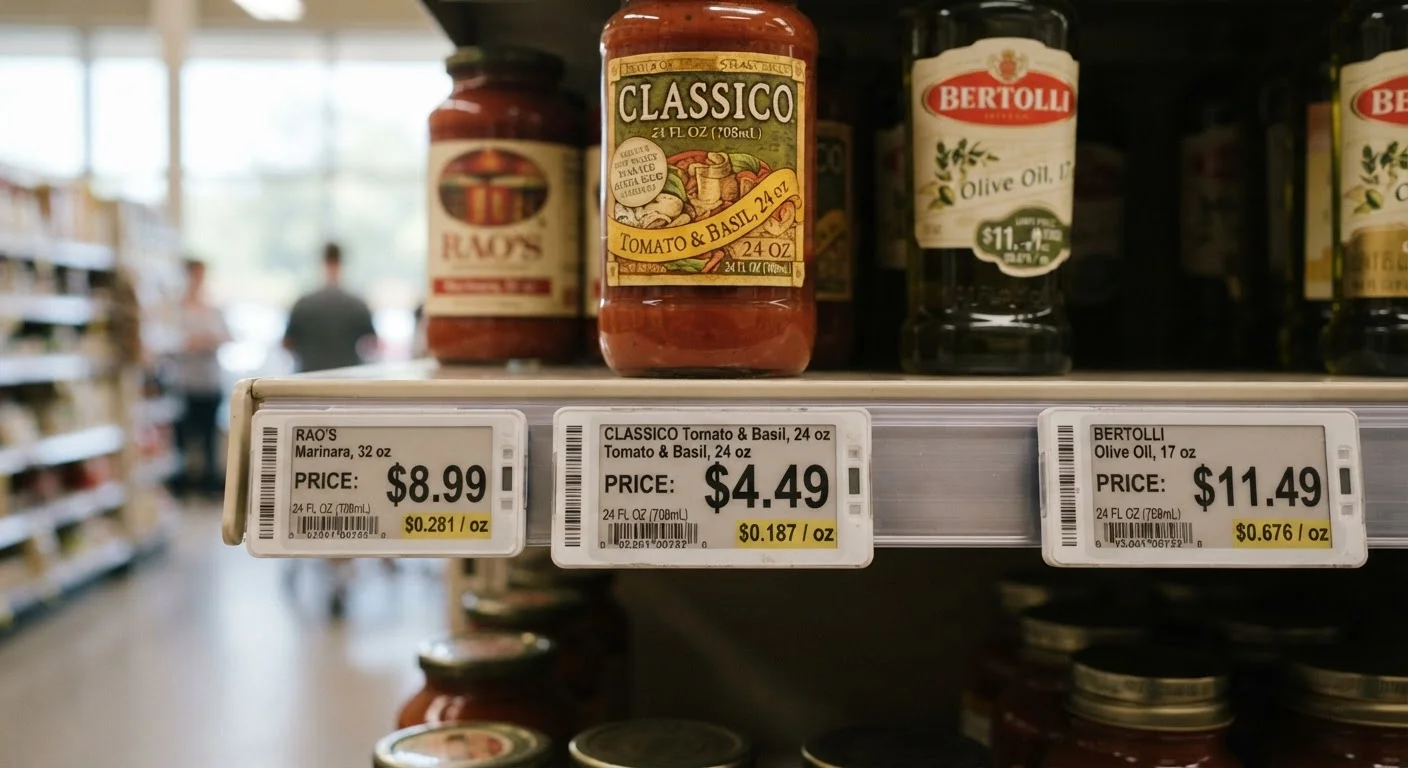
| Location on shelf tag | Usually small print, bottom-left corner of the tag |
| Common units used | Per oz, per fl oz, per 100g, per count, per sheet |
| Basic formula | Total price ÷ total units = unit price |
| Required by law? | Varies by state; not federally mandated for all retail categories (State-level regulations differ; check your state's consumer protection office) |
| Most reliable comparison method | Only when both products show the same unit of measure |
What Unit Pricing Actually Tells You
Every shelf tag in a grocery or big-box store contains two prices: the total (item) price and the unit price. The unit price — usually shown in smaller print — tells you the cost per standardized measure: per ounce, per fluid ounce, per 100 grams, per sheet, per count, and so on. It is the single most reliable number for comparing products across different package sizes.
| Location on shelf tag | Usually small print, bottom-left corner of the tag |
| Common units used | Per oz, per fl oz, per 100g, per count, per sheet |
| Basic formula | Total price ÷ total units = unit price |
| Required by law? | Varies by state; not federally mandated for all retail categories (State-level regulations differ; check your state's consumer protection office) |
| Most reliable comparison method | Only when both products show the same unit of measure |
Without unit pricing, comparing a 12 oz jar to an 18 oz jar requires mental math most shoppers skip. The unit price does that math for you. Per-unit pricing is the shelf tag detail that most shoppers scan past — but it's often the number that matters most.
Unit price is calculated simply: Total Price ÷ Total Units = Unit Price. If a 32 oz bottle costs $4.80, the unit price is $0.15 per oz. If a 20 oz bottle costs $3.40, the unit price is $0.17 per oz. The larger bottle is a better value — but only the unit price makes that obvious at a glance.
What the Label May Not Spell Out
Unit pricing is helpful, but it has blind spots worth understanding before you rely on it entirely.
Unit Price
The cost of a product expressed per standardized measure (e.g., per ounce, per 100g, per sheet). It allows fair cost comparison across different package sizes.
Item Price
The total shelf price for one package, regardless of how much the package contains. Also called the sticker price.
Unit of Measure
The standardized quantity used to calculate unit price, such as fluid ounce, dry ounce, gram, count, or linear foot. Products must share the same unit to be directly comparable.
Yield
The usable portion of a product after preparation or waste. Yield affects the effective cost per serving but is not reflected in the shelf unit price.
Bulk Pricing
A pricing structure where larger quantities are offered at a lower unit price. The savings are only realized if the full quantity is actually used.
Inconsistent Units Across Brands
Retailers are not always required to display unit prices in the same unit for competing products. One brand's label might show cost per ounce; a competing product might show cost per 100 grams. You can't directly compare those two numbers without converting — a step easy to miss in a busy aisle. See what price comparison really involves for a fuller picture of why sticker price alone misleads.
Sale Prices and Unit Price Updates
Shelf tags don't always refresh instantly when a sale begins or ends. The displayed unit price may reflect the regular price even if a promotional sticker has been applied on top. Always calculate manually when a sale tag looks inconsistent with the unit price shown.
Yield and Waste Aren't Factored In
Unit prices measure what's in the package, not what you'll actually use. A whole head of lettuce priced per pound looks cheaper than pre-washed leaves per pound — but trim loss changes the effective cost. Similarly, paper towels vary in sheet thickness; a lower per-sheet price may mean you use two sheets where one thicker sheet would do.
For a related lens on label literacy, reading a nutrition label without the confusion covers the parallel skill of decoding standardized serving sizes, which interact with unit pricing when you're comparing packaged foods.
When the Math Doesn't Add Up
If the unit price on a larger package is higher than the unit price on a smaller one, that's not an error to dismiss — it does happen. Retailers sometimes price smaller 'convenience' sizes at a lower unit cost to move inventory, or the larger size may be a premium or specialty variant. Always trust your own calculation over assumptions about which size is the 'better deal.'
Practical Steps for Using Unit Prices in the Aisle
Unit pricing works best when you apply a short, repeatable process rather than trying to eyeball numbers:
- Find the unit. Confirm both products you're comparing use the same unit of measure. If they don't, convert before comparing.
- Check for sale-price mismatches. If a promotional sticker covers part of the tag, calculate manually: divide the sale price by the package quantity.
- Factor in what you'll actually use. A 64 oz bottle at a lower unit price is only a better deal if you'll use it before it expires or loses quality.
- Weigh pack size against your storage reality. Bulk pricing rarely saves money if the product goes to waste or takes up space you don't have.
~30%
Price difference found between same-brand pack sizes
Consumer advocacy research has shown unit price gaps of 20–30% or more between different sizes of the same product are common in grocery retail.
19 states
US states with unit pricing regulations for grocery stores
As of available legislative records, roughly 19 states have laws requiring unit pricing disclosure in at least some retail grocery contexts.
Price tag formats encode other signals too — including what ending digits and tag colours can indicate about clearance or promotional status. And if you want to build on this foundation, unit pricing explained in depth walks through broader scenarios including non-grocery categories.