
The Hidden Cost Traps in Budget Airfares — and How to Spot Them Before You Pay

Key Takeaways
- Budget airlines often unbundle every service, meaning the advertised fare covers almost nothing beyond the seat itself.
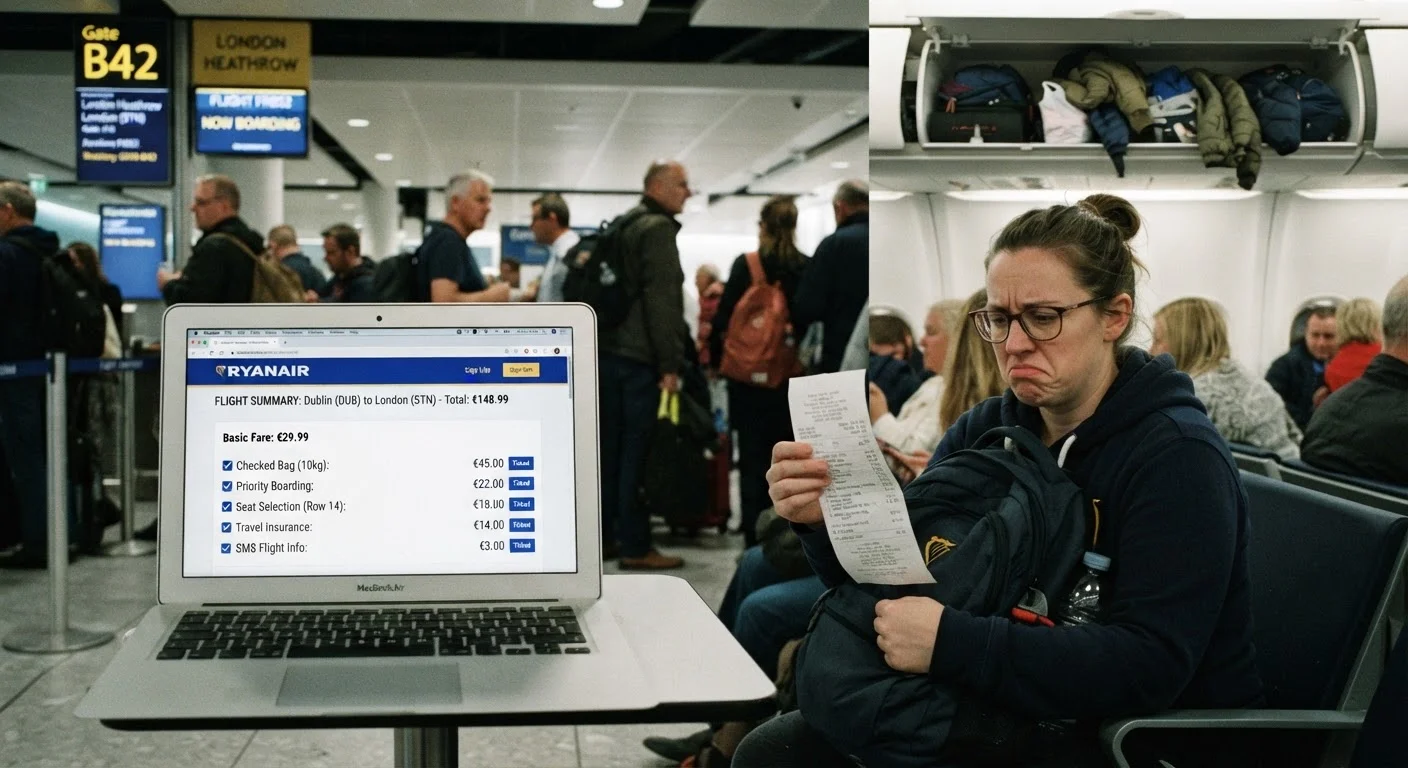
- Carry-on bag fees, seat selection charges, and payment surcharges can easily double a headline fare.
- Always build a full cost comparison — including all mandatory fees — before choosing a flight.
- Reading the fare rules before checkout is the single most effective way to avoid surprise charges.
Why Cheap Fares Aren't Always What They Seem
A $39 fare splashed across a booking screen looks like a win. But by the time you've added a carry-on bag, chosen a seat, and paid with a credit card, that same ticket can quietly climb past $120. This isn't accidental — it's a deliberate pricing model that budget carriers have refined over years.
The strategy is called unbundling: stripping every service out of the base fare and charging for each one separately. The headline price gets clicks; the add-ons generate revenue. Understanding this model is the first step to outsmarting it.
For a broader look at how hidden charges derail travel spending, see hidden travel costs that quietly blow a budget. And if you're comparing fares across carriers, understanding fare classes and ticket restrictions will help you read the fine print without a travel agent.
Comparing only the base fare between carriers without accounting for add-on fees.
Why it happens: Booking search tools often display the lowest possible price, which excludes bags, seat selection, and payment surcharges. Travelers naturally gravitate toward the lowest number shown.
Assuming a personal item and a carry-on bag are the same thing — and packing accordingly.
Why it happens: Most full-service carriers allow a free carry-on, so travelers assume the same applies everywhere. Budget carriers frequently charge for carry-ons while allowing only a small personal item for free.
Paying for seat selection without realizing the alternative is a free random assignment.
Why it happens: The booking flow on many budget airline sites defaults to prompting seat selection, making it feel like a required step rather than an optional upgrade.
Using a credit card that triggers a payment surcharge without checking first.
Why it happens: Credit card surcharges aren't prominently advertised during the booking process — they often appear only at the payment step, when most people are ready to confirm and stop second-guessing.
Ignoring the distance and cost of secondary airports when chasing a low fare.
Why it happens: Budget carriers frequently operate from smaller, less central airports. The fare looks cheap, but ground transport to and from those airports can add meaningful cost to both ends of the trip.
Booking a non-refundable, non-changeable fare without understanding what happens if plans shift.
Why it happens: Budget fares are often the most restrictive ticket types available. The low price draws attention; the change and cancellation terms are buried in the fare rules that few travelers read before purchasing.
How to Build an Apples-to-Apples Fare Comparison
The only way to know whether a budget fare is genuinely cheaper is to price out the total trip cost — not just the base ticket. Before finalizing any booking, run through this checklist:
- Baggage: Note the exact dimensions and weight limits for both personal items and carry-ons. Check the fee for a checked bag if you need one.
- Seat selection: If any seat — including a middle seat at the back — carries a charge, factor it in. If you're willing to accept a random assignment, confirm that option is actually free.
- Payment method: Use a card that the airline doesn't surcharge, or calculate the fee into your total.
- Airport location: Secondary airports often mean higher ground transport costs. A $20 saving on a fare can evaporate against a $35 bus ride each way.
~40%
Share of budget carrier revenue from ancillary fees
Industry analyses have consistently shown that ancillary charges — including bags, seat selection, and on-board purchases — represent a substantial share of ultra-low-cost carrier revenues.
2x
How much add-ons can multiply a base fare
Consumer advocacy researchers have documented cases where a budget airline's all-in price, once bags and seat fees are included, exceeded double the advertised headline fare.
Once you've added every applicable fee, compare that total against a full-service carrier's all-in price on the same route. You may find the gap is smaller than the headline fares suggest — or that the budget option is still the better deal. Either way, you'll know before you pay.
For a complete walkthrough of the research-to-booking process, this end-to-end guide to affordable air travel covers every stage. And if you want to track fare movements before committing, learn how flight price alerts actually work before relying on them.
Always Verify Fees on the Airline's Own Site
Third-party booking tools may not display all fees accurately or may not reflect the most current fee schedules. Before finalizing any reservation, visit the airline's official website to confirm bag fees, seat charges, and payment surcharges. This takes a few extra minutes and can prevent costly surprises at the airport.
Budget airline fees aren't the only hidden costs worth watching. The same unbundling pattern shows up with accommodation — cheap hotel rooms carry their own surprise charges that are just as easy to miss.