

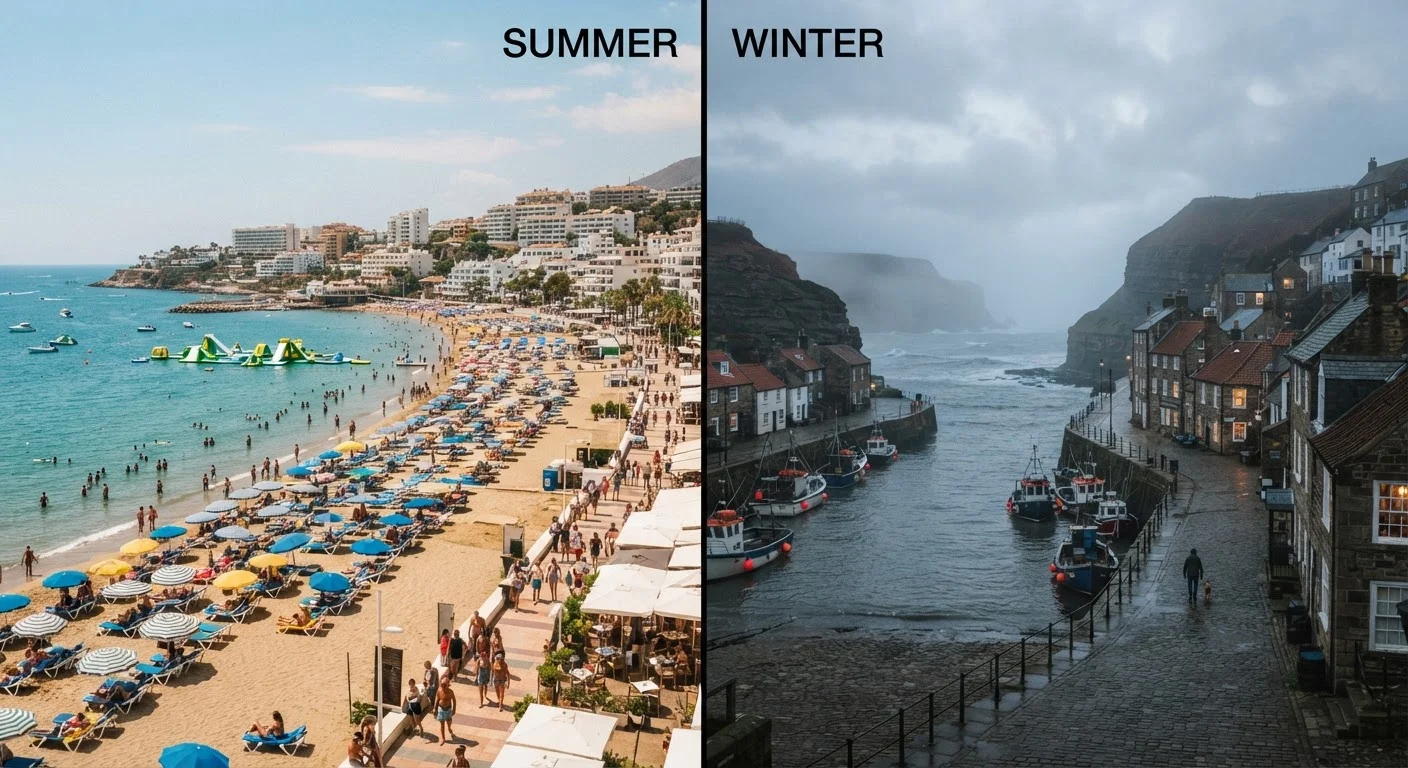
Key Takeaways
- Peak season flights and hotels routinely cost significantly more than the same trip taken off-peak.
- Off-peak travel trades crowds and sometimes weather certainty for meaningful savings across nearly every expense category.
- Shoulder season — between peak and off-peak — is often the most balanced option for cost-conscious travelers.
- Flexibility on travel dates is the single most powerful tool for reducing trip costs.
- Even within peak season, booking well in advance and choosing less central accommodation can reduce the price gap.
Option A
Peak Season Travel
The popular, predictable — and pricier — window.
Best for: Travelers who need school-aligned schedules, specific weather, or holiday experiences and can absorb higher costs.
Option B
Off-Peak Travel
The quieter, more wallet-friendly alternative.
Best for: Flexible travelers prioritizing lower prices, thinner crowds, and a more local experience over ideal weather guarantees.
If your schedule is fixed around school terms or major holidays
Peak Season Travel
When dates aren't flexible, focus on booking early and adjusting other variables — accommodation type or destination — rather than fighting the pricing calendar.
If saving money is your primary goal and your dates are flexible
Off-Peak Travel
Off-peak windows consistently offer lower airfare, reduced accommodation rates, and less competition for budget lodging options.
If you want a balance of savings and comfortable travel conditions
Off-Peak Travel
Shoulder season — the edges of peak period — gives you lighter crowds and moderate pricing without full off-peak weather uncertainty.
If you're planning a first international trip on a tight budget
Off-Peak Travel
Lower baseline costs give first-timers more room to absorb unexpected expenses without blowing their overall budget.
What Peak and Off-Peak Actually Mean
Peak season refers to the period when a destination receives its highest visitor volume. For most US domestic and international destinations, this aligns with summer (June–August), the winter holiday window (late December), and spring break. Off-peak is simply the inverse — the stretches of the year when fewer travelers visit, demand drops, and prices follow.
These windows vary by destination. Peak season in a ski resort is winter; for a beach town, it's summer. Understanding where your destination falls on that calendar is the first step in building a realistic trip budget before you book anything.
It's also worth noting that peak and off-peak aren't binary. Shoulder season sits in between — and is often the most budget-friendly window that still delivers acceptable conditions.
How Timing Affects Flights, Hotels, and Daily Costs
The pricing gap between peak and off-peak travel touches nearly every line item in your trip budget. Airfare is the most obvious: demand-based pricing means the same route can cost considerably more during high-traffic periods. Accommodation follows the same logic — hotels and short-term rentals raise rates when occupancy is high.
| Criterion | Peak Season | Off-Peak Season |
|---|---|---|
| Airfare | Higher; demand-driven prices | Generally lower; more seat availability |
| Hotel & rental rates | Premium pricing, limited availability | Lower nightly rates; more negotiating room |
| Crowd levels | High; queues and competition for spots | Low; easier access to attractions |
| Attraction availability | Fully operational, all options open | Some reduced hours or seasonal closures |
| Weather reliability | Typically favorable and predictable | More variable; destination-dependent |
| Booking lead time needed | Months in advance recommended | More last-minute flexibility possible |
| Overall daily spend | Higher across most categories | Lower; more room in the daily budget |
Beyond transport and lodging, daily costs shift too. Popular attractions charge peak-period pricing, tours fill up faster and often cost more, and even dining in heavily touristed areas can reflect inflated prices during busy months. Off-peak travelers frequently report easier access to restaurants, shorter queues, and a more relaxed experience overall.
For those weighing accommodation type alongside timing, see how short-term rentals compare to budget hotels for multi-night stays — the math shifts depending on season.
20–50%
Typical airfare premium during peak periods
Industry pricing analyses consistently show domestic and international airfare rising significantly during summer and holiday windows compared to off-peak equivalents.
30%+
Average hotel rate increase in peak season
Hotel revenue management data shows occupancy-driven rate increases of 30% or more in popular destinations during high-demand travel periods.
The Trade-Offs You Need to Weigh
Off-peak travel isn't a straightforward win for every traveler. Reduced prices often come with real trade-offs: some attractions operate on reduced hours or close entirely, weather may be less predictable, and certain destinations genuinely lose their appeal outside their prime window.
Peak season, despite the cost, offers certainty. Attractions are fully operational, weather is typically more reliable, and some experiences — a summer festival, a holiday market, a specific seasonal event — simply aren't available any other time.
Verify Conditions Before You Book
Off-peak availability for attractions, tours, and transport can change year to year. Always check directly with venues and local operators before finalizing an itinerary. Entry requirements, seasonal closures, and local event calendars can all affect your plans — consult official tourism and government sources for the most current information.
The key question isn't which season is objectively better, but which trade-offs are acceptable given your priorities. Budget travelers willing to do thorough pre-trip research tend to navigate off-peak conditions more successfully. How experienced budget travelers approach itinerary research covers the specific habits that make the difference.
Group composition matters too — families with school-age children have far less flexibility than solo travelers or couples, which changes the entire calculation. Affordable lodging options shift depending on who's traveling, so factor that into your off-peak planning as well.