
Rideshare, Carshare, and Rental: The Differences That Actually Affect Your Wallet

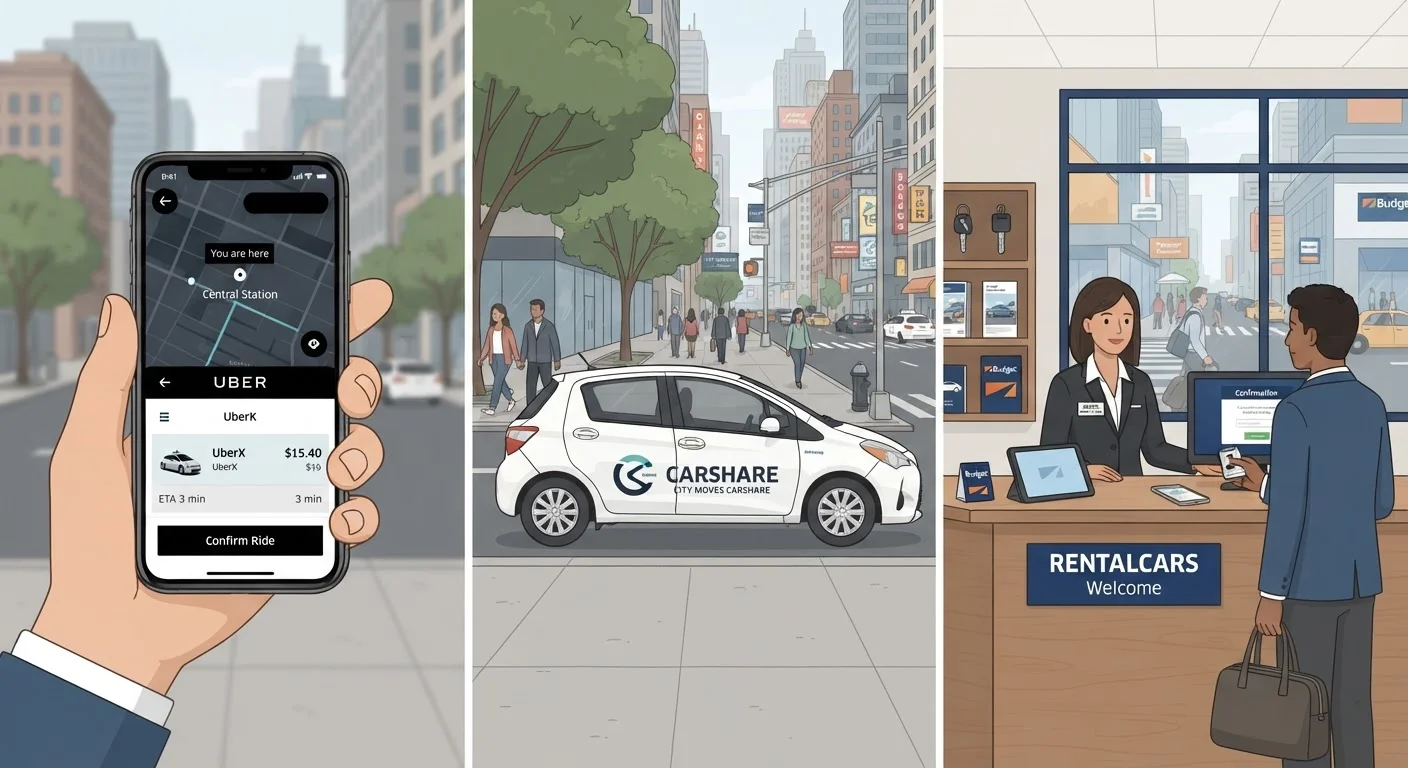
Key Takeaways
- Rideshare means paying a driver per trip; you never touch the wheel or handle insurance.
- Carshare lets you drive yourself by the minute or hour, typically within a defined service area.
- Traditional car rentals make the most financial sense for multi-day trips where you need full flexibility.
- Each option has hidden costs — surge pricing, mileage fees, or fuel charges — that change the real price.
- Your trip length, frequency, and flexibility needs should determine which option you use.
Our Verdict
No single option wins across every situation. Rideshare works best for short, infrequent trips where you don't want the hassle of driving. Carshare suits urban dwellers who need a vehicle for a few hours without renting for a full day. Traditional rentals remain the most cost-effective choice when you need a car for multiple days or longer distances.
| Best for | Recommended |
|---|---|
| Airport runs, late-night trips, or when you simply don't want to drive | Rideshare |
| Quick errands or short urban trips measured in hours, not days | Carshare |
| Weekend getaways, road trips, or travel where you need consistent access for multiple days | Daily Car Rental |
What Each Service Actually Is
These three options are often lumped together, but they work in fundamentally different ways — and confusing them can lead to overpaying or choosing the wrong tool entirely.
Rideshare (think services like Uber or Lyft) connects you with a driver through an app. You pay per trip. You don't drive, you don't park, and you have no responsibility for the vehicle. The driver handles insurance and fuel costs, which are baked into your fare.
Carshare (services like Zipcar or similar regional programs) lets you reserve and drive a shared vehicle yourself, usually billed by the minute or hour. You pick up the car from a designated spot, use it, and return it to an approved location. Insurance and fuel are typically included in the rate, but you're behind the wheel.
Traditional car rentals work through agencies where you rent a vehicle by the day (or longer), pay for fuel yourself, and return the car to a rental location. They offer the widest vehicle selection and typically the most flexibility for longer trips. For a broader look at what owning or not owning a vehicle actually costs over time, see our comparison of car ownership vs. car-free living.
How the Costs Stack Up
Price comparisons between these three services get complicated fast because each charges differently. Here's a simplified breakdown of how costs typically accumulate.
| Rideshare | Carshare | Daily Rental | |
|---|---|---|---|
| Who drives | A paid driver | You | You |
| Typical billing unit | Per trip | Per minute or hour | Per day |
| Fuel included | Yes (in fare) | Usually yes | No — you pay |
| Insurance included | Yes (driver's) | Usually yes | Extra charge or use your own |
| Parking responsibility | None | Yours during use | Yours throughout |
| Best trip length | Under 30 minutes | 1–6 hours | Full day or multi-day |
| Geographic availability | Most US cities | Dense urban areas | Most US markets |
| Surge or peak pricing | Yes, significant | Rarely | Rarely |
A few things the table doesn't capture: rideshare pricing surges during peak demand, which can easily double or triple a fare. Carshare rates look affordable by the hour but add up quickly if you underestimate how long you'll need the vehicle. Rentals carry upfront costs — taxes, fees, and optional insurance — that often add 30–50% on top of the advertised daily rate.
Check Your Credit Card Before Paying for Rental Insurance
Many travel-oriented credit cards include collision damage waiver coverage when you pay for a rental with that card. Before accepting the rental agency's daily damage waiver, call your card issuer to confirm what's actually covered and under what conditions. This single check can save you $15–$30 per day on a rental.
If you're weighing whether it makes more financial sense to skip car ownership altogether, understanding ongoing ownership costs is a useful place to start.
The Hidden Factors That Change the Equation
Beyond the base rate, several factors shift which option actually saves you money in practice.
Trip Distance and Duration
Rideshare fares scale directly with distance and time. A 30-minute highway trip can easily cost $35–$60 one way. That same budget could cover an entire day's carshare use or a fraction of a daily rental. For longer distances, rentals almost always win on per-mile cost.
Parking and Fuel
With rideshare, parking is never your problem. With carshare, fuel is usually included but parking must be managed (and you'll pay for it). With rentals, both parking and fuel are your responsibility — a meaningful cost in dense urban areas or on long drives.
Insurance Coverage
This is where things get genuinely confusing. Rideshare passengers need no insurance at all. Carshare programs typically include liability and collision coverage in the rate. Rental agencies push their own damage waivers, which can add $15–$30 per day — though many credit cards and personal auto policies offer rental coverage worth checking before you pay extra.
Carshare Overruns Can Get Expensive Fast
Carshare services bill by the minute or hour, and underestimating your trip length is a common and costly mistake. If you return a vehicle late or extend a reservation at the last minute, per-minute rates can add up quickly. Always build in buffer time — and check whether a daily cap rate applies before booking a longer outing.
Availability and Geographic Limits
Carshare programs are concentrated in dense urban and college-town markets. If you live outside those areas, carshare likely isn't a realistic option. Rideshare coverage has grown but can be thin in rural areas. Traditional rental agencies operate in most metro areas and airports nationwide.
Matching the Right Option to Your Situation
Rather than picking a favorite, most people benefit from understanding when each service fits.
~$1.50–$3.00
Typical rideshare cost per mile (non-surge)
Rideshare per-mile costs vary by city, time of day, and demand; surge pricing can push rates considerably higher.
~$10–$15/hr
Average carshare hourly rate
Carshare rates vary by program and market; daily caps are often available for longer use periods.
~$50–$80/day
Average daily rental before fees and taxes
Taxes, facility fees, and optional insurance waivers can add 30–50% to the advertised base rental rate.
- Use rideshare when you need to get somewhere without any driving responsibility — late nights out, airport drop-offs, or situations where parking costs would eat up any savings from driving yourself.
- Use carshare when you need a vehicle for a few hours in a city where carshare operates, and the round-trip to a rental agency isn't worth it. It works especially well for errands, short appointments, or day trips within a metro area.
- Use a traditional rental when you need a vehicle for a full day or more, plan to cover significant distance, or want flexibility to pick up and drop off at different locations.
For people exploring whether to give up a personal vehicle entirely, these three options — possibly combined with transit and other shared commuting options like those covered in vanpooling and carpooling alternatives — can collectively fill most transportation needs without ownership. Whether that math actually works depends heavily on where you live and how often you need a vehicle. If you're also weighing the longer-term question of leasing versus buying, this breakdown of leasing vs. buying costs can help frame that decision.