

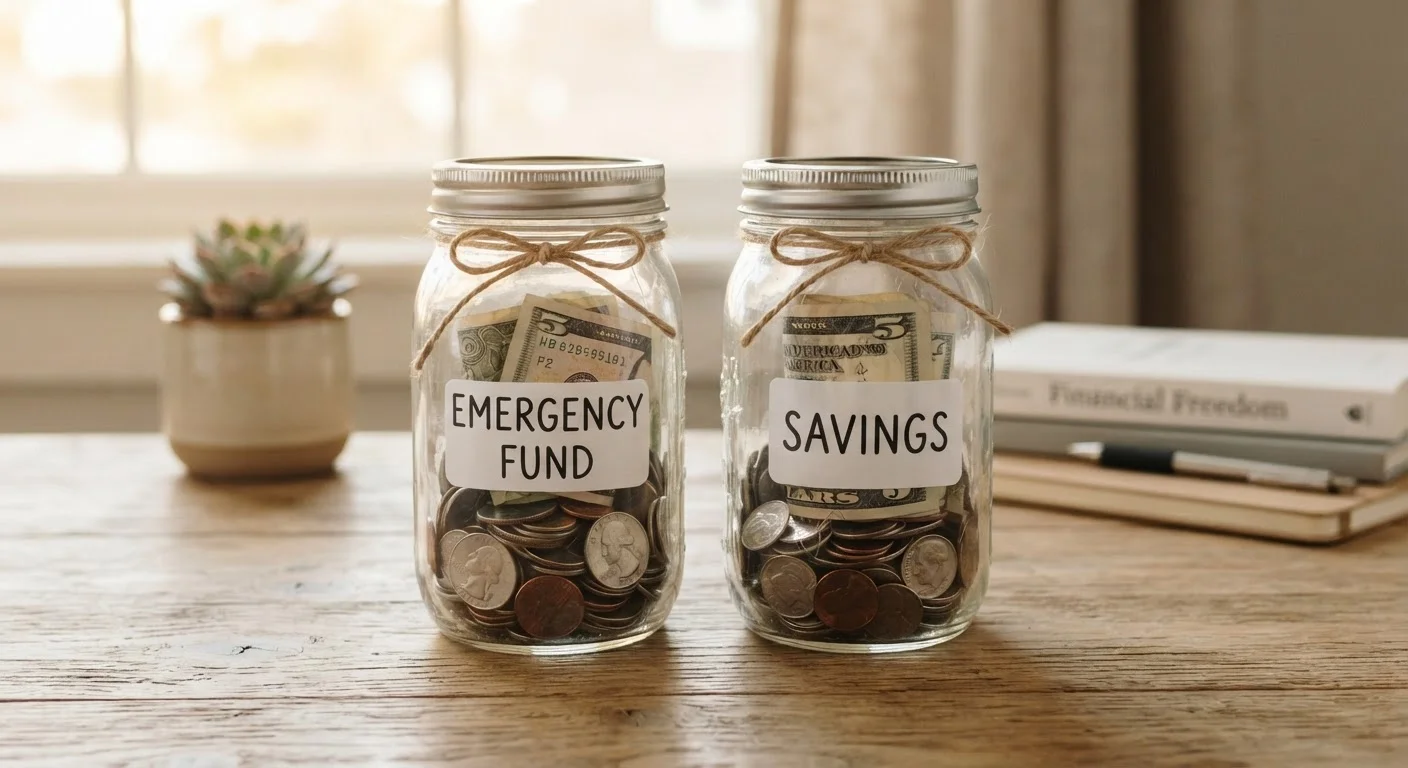
Key Takeaways
- An emergency fund is reserved strictly for unplanned financial crises, not general saving goals.
- A savings account is a tool — your emergency fund can live inside one, but not every savings account is an emergency fund.
- Most financial guidance suggests keeping three to six months of essential expenses in an emergency fund.
- You can — and should — build both at the same time using small, consistent contributions.
- Keeping them in separate accounts helps prevent accidental spending of emergency reserves.
Option A
Emergency Fund
Your financial safety net for life's unexpected moments.
Best for: Covering sudden, unavoidable expenses — like a job loss, medical bill, or car repair — without going into debt.
Option B
Savings Account
A flexible, goal-oriented place to grow your money over time.
Best for: Setting aside money for planned future goals like a vacation, down payment, or holiday spending.
If you have no financial cushion and face income risk
Emergency Fund
Building even one month of expenses as a dedicated emergency reserve should come first — it prevents debt when the unexpected hits.
If you already have an emergency fund and want to reach a specific goal
Savings Account
Once your safety net is in place, a separate savings account helps you work toward planned goals without raiding your emergency reserves.
If you're starting from zero and overwhelmed by where to begin
Emergency Fund
A small starter emergency fund — even $500 to $1,000 — creates an immediate buffer that reduces financial stress and debt reliance.
If you have irregular or freelance income
Emergency Fund
Variable earners face higher income disruption risk, making a robust emergency fund especially critical before pursuing other saving goals.
The Core Difference: Purpose, Not Location
People often use "emergency fund" and "savings account" interchangeably — but they describe two different things. A savings account is a type of bank account. An emergency fund is a financial strategy — a specific pool of money set aside exclusively for unplanned crises.
Think of it this way: your emergency fund can sit inside a savings account, but a savings account isn't automatically an emergency fund. A savings account you're using to save for a kitchen renovation is not an emergency fund, even if the money is technically "saved."
The distinction matters because purpose drives behavior. If you haven't mentally and physically separated your emergency money from your other savings, you're more likely to dip into it for non-emergencies — and more likely to reach for a credit card when a real crisis hits. For a broader look at how saving fits your overall budget, see our budgeting basics hub.
| Criterion | Emergency Fund | Savings Account |
|---|---|---|
| Primary purpose | Cover unexpected financial crises | Save toward any financial goal |
| When you use it | Only for true emergencies | When you reach your planned goal |
| Recommended size | 3–6 months of essential expenses | Whatever your goal requires |
| Account type | Usually a high-yield savings account | Any savings or deposit account |
| Liquidity needed | High — must be quickly accessible | Varies by goal timeline |
| Should it be separate? | Yes — dedicated, ring-fenced account | Yes — separate from emergency fund |
What Counts as an Emergency — and What Doesn't
An emergency fund is for expenses that are unexpected, necessary, and urgent. Common examples include sudden job loss, an unplanned medical or dental bill, a major car repair needed to get to work, or a broken appliance essential to daily living.
What it's not for: holiday gifts, a planned vacation, a sale you don't want to miss, or predictable annual expenses like car registration. Those belong in a regular savings account or — for irregular but foreseeable costs — a sinking fund. (Learn how sinking funds work for expenses like insurance premiums or annual subscriptions.)
Drawing this line clearly is what makes an emergency fund effective. Without it, the account slowly drains for semi-optional purchases, leaving nothing when a genuine crisis arrives.
~57%
Americans who couldn't cover a $1,000 emergency from savings
According to Bankrate's annual Emergency Savings Report, a majority of U.S. adults would struggle to pay for an unexpected $1,000 expense without borrowing.
3–6 months
Recommended emergency fund coverage
Most personal finance frameworks, including those from the Consumer Financial Protection Bureau, suggest covering three to six months of essential living expenses.
$500–$1,000
Suggested starter emergency fund target
Many financial educators recommend an initial "mini" emergency fund as a first milestone before building toward a full multi-month reserve.
How Much to Keep — and Where to Keep It
A widely cited guideline suggests keeping three to six months of essential living expenses in your emergency fund. "Essential" means rent or mortgage, utilities, groceries, insurance, and minimum debt payments — not your full lifestyle spending. If your income is unpredictable, leaning toward the higher end is generally prudent. For homeowners, unexpected repair costs add another layer of risk worth planning for; sizing a home emergency reserve involves different considerations than a general fund.
For storage, a high-yield savings account (a savings account that typically offers a higher interest rate than standard accounts) is a common choice. It keeps your money accessible, earns some interest, and — crucially — is separate from your checking account, which reduces impulsive withdrawals. The goal isn't to maximize returns; it's to keep funds safe, liquid (easily accessible), and mentally ring-fenced.
Your broader savings goals — a down payment, travel fund, or future tuition — belong in their own dedicated account. Keeping them separate from your emergency fund makes both purposes clearer. Common savings rate frameworks can help you decide how to allocate contributions between the two.
Building Both at the Same Time
You don't have to finish your emergency fund before starting other savings — and waiting until you have three months' expenses saved before doing anything else can feel discouraging. A more sustainable approach is to split contributions: direct a portion of each paycheck toward your emergency fund and a separate portion toward a savings goal.
Even small amounts add up. Consistent $25 or $50 weekly transfers — automated so you don't have to think about them — create real progress over months. Understanding how to make smarter spending decisions can help free up room in your budget to fund both accounts simultaneously.
If your income varies month to month, the proportional approach works better than fixed dollar targets. Saving strategies for variable earners offer useful frameworks for months when income dips unexpectedly.
Once your emergency fund reaches your target, you can redirect that contribution entirely toward your savings goals — giving yourself a meaningful boost toward planned milestones. Understanding which of your expenses are flexible vs. fixed can show you exactly where that extra room might come from.
This article is for general informational purposes only and does not constitute personalized financial advice. Consult a qualified financial professional for guidance tailored to your individual circumstances.