

Key Takeaways
- Suburban car-free living is possible but requires deliberate planning around trip types and distances.
- E-bikes and cargo bikes handle a surprising share of errands that most people assume need a car.
- Combining two or three transportation modes usually works better than relying on any single alternative.
- Where you live within a suburb matters enormously — proximity to transit or services is a key variable.
- Occasional car rentals or carshare memberships can fill the gaps without the full cost of ownership.
Why Suburbs Aren't Automatically Off-Limits for Car-Free Living
The assumption that suburbs require a car is understandable — most were built around driving. But the picture has changed. E-bikes have extended cycling range, app-based carshare services have reached many suburban communities, and some transit agencies have added demand-responsive routes that don't require waiting at a fixed bus stop.
That said, going car-free in a suburban area is not a one-size-fits-all decision. Your specific suburb matters more than your general region. A neighborhood within a half-mile of a commuter rail station or a walkable town center presents a very different starting point than a cul-de-sac where the nearest grocery store is four miles away on a road with no shoulder.
Before committing to any strategy, map your most frequent trips — work, grocery, medical appointments, school — and measure the actual distances. That exercise tends to reveal which gaps are small and bridgeable and which are genuinely difficult. See the full range of transportation alternatives for a starting point on what options may already be available in your area.
Practices That Actually Work
The following approaches reflect patterns seen in households that have successfully reduced or eliminated car use in suburban settings. None of them require extraordinary sacrifice — they require thoughtful setup.
Anchor your setup to one reliable, high-frequency transit route
A single dependable connection to a train station, bus rapid transit line, or express bus corridor can make the rest of your transportation network function. Without it, you're stitching together too many unreliable pieces. This one route effectively extends your mobility radius without requiring you to own a vehicle.
Use an e-bike or cargo bike as your primary short-trip vehicle
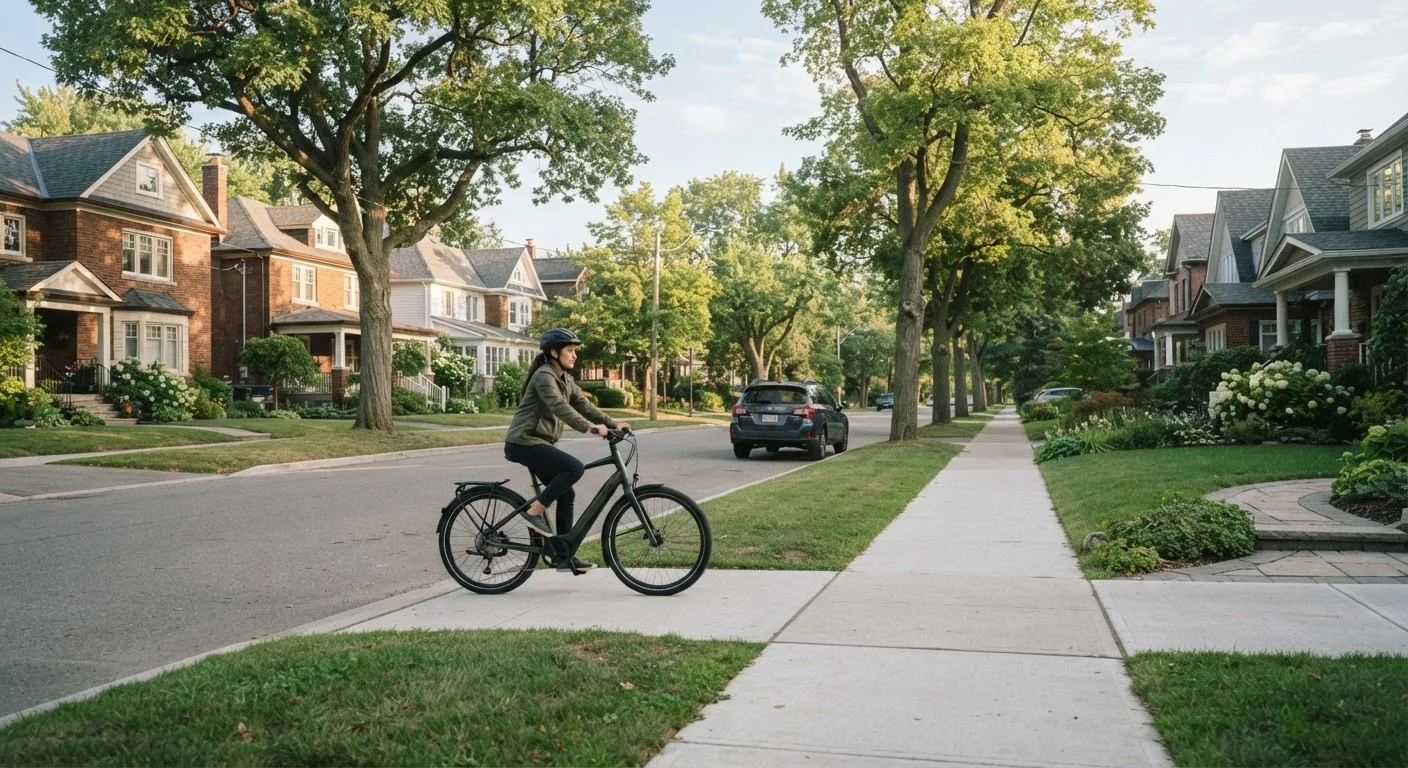
Electric-assist bikes cover the 1–5 mile trips that are too far to walk comfortably but too short to justify a car. Cargo variants can carry groceries, kids, or gear that would otherwise require a trunk. Compared to a car, the upfront cost is lower and ongoing costs are minimal.
Join a carshare program for the trips that genuinely need a car
Carshare services — where you rent by the hour or day — let you access a vehicle without ownership costs like insurance, depreciation, and parking. They work best when you need a car occasionally rather than daily. Keeping a membership removes the pressure to own a car as a fallback for rare situations.
Build grocery and errand consolidation into your weekly routine
Multiple short, unplanned trips are where car-free living breaks down fastest. Batching errands into one or two planned outings per week — timed around transit or carshare availability — drastically reduces the number of trips you need to make. This habit also tends to reduce impulse spending.
Establish a contingency plan for unexpected trips
Not having a plan for urgent, unplanned needs is the most common reason people abandon car-free setups. Identifying in advance who you can call, which rideshare services operate in your area, and where the nearest carshare vehicle is parked removes the panic from unplanned situations.
Quick Actions You Can Take Now
If you're exploring this seriously, a few low-effort steps can tell you a lot before you make any major changes.
For a broader financial comparison between owning a car and building a car-free setup, see what the real costs look like side by side. And if your household currently has two cars, reducing to one may be a more realistic first step worth exploring first.
Location Within the Suburb Is a Critical Variable
Two households in the same town can have dramatically different car-free experiences based on where they sit within it. Proximity to a main commercial corridor, a transit stop, or a shared-use path makes a measurable difference. If you're renting or have flexibility in where you live, walkability and transit access are worth treating as primary criteria alongside rent and square footage. Tools like Walk Score can give you a rough starting benchmark for any address.
What Doesn't Work — And Why It's Worth Knowing
Households that struggle with car-free suburban living often share one of a few common friction points. Relying on a single solution — say, only public transit — tends to break down the moment that system has a gap, a schedule conflict, or a weather problem. Planning for redundancy matters.
Similarly, underestimating the physical demands of cycling in hilly terrain or harsh winters leads to mode abandonment. If you live somewhere with extreme seasons, factor in realistic riding days per year, not ideal ones. Lesser-known transit options like neighborhood electric vehicles or demand-responsive shuttles are sometimes available and worth investigating before assuming the only alternative is a bike or a rideshare.
Finally, some trips genuinely require a car — a medical emergency, a large furniture purchase, a multi-stop day with kids. Building a plan that includes occasional car rental or carshare access removes the pressure to make every trip fit a rigid car-free framework. A complete overview of car-free strategies can help you think through edge cases you might not have considered.