

Key Takeaways
- Car-free living is financially realistic in many U.S. cities, but requires planning based on your specific location.
- No single alternative replaces driving for every trip—combining modes covers more ground than any one option alone.
- Public transit, biking, and rideshare each carry different cost structures, reliability levels, and use cases.
- Long-distance trips without a car are possible via intercity bus, train, or air travel.
- Your neighborhood's walkability score and transit access are the biggest factors in whether going car-light is practical.
Why Consider Going Car-Free or Car-Light?
Car ownership in the U.S. carries costs that are easy to underestimate. Beyond monthly loan or lease payments, drivers typically absorb insurance premiums, fuel, routine maintenance, parking fees, and eventual repairs. The American Automobile Association (AAA) estimates the average annual cost of owning and operating a new vehicle at thousands of dollars per year—a figure that varies significantly by vehicle type and location.
For many households, going fully car-free isn't realistic. But going car-light—reducing how often you rely on a personal vehicle—can meaningfully cut transportation spending. Understanding all your available options is the first step. For a broader look at the landscape, see the full map of modern transportation alternatives.
$12,000+
Average annual cost to own and operate a new car
AAA's annual "Your Driving Costs" study estimates total ownership costs including depreciation, fuel, insurance, and maintenance.
45%
U.S. households within a quarter-mile of transit
According to the American Public Transportation Association, nearly half of U.S. households have some transit access nearby, though frequency and quality vary widely.
3x
Higher rideshare cost vs. transit for daily commutes
Multiple urban transportation studies have found that app-based rideshare consistently costs several times more per mile than bus or rail for regular commuters.
Public Transit: The Backbone of Car-Free Life
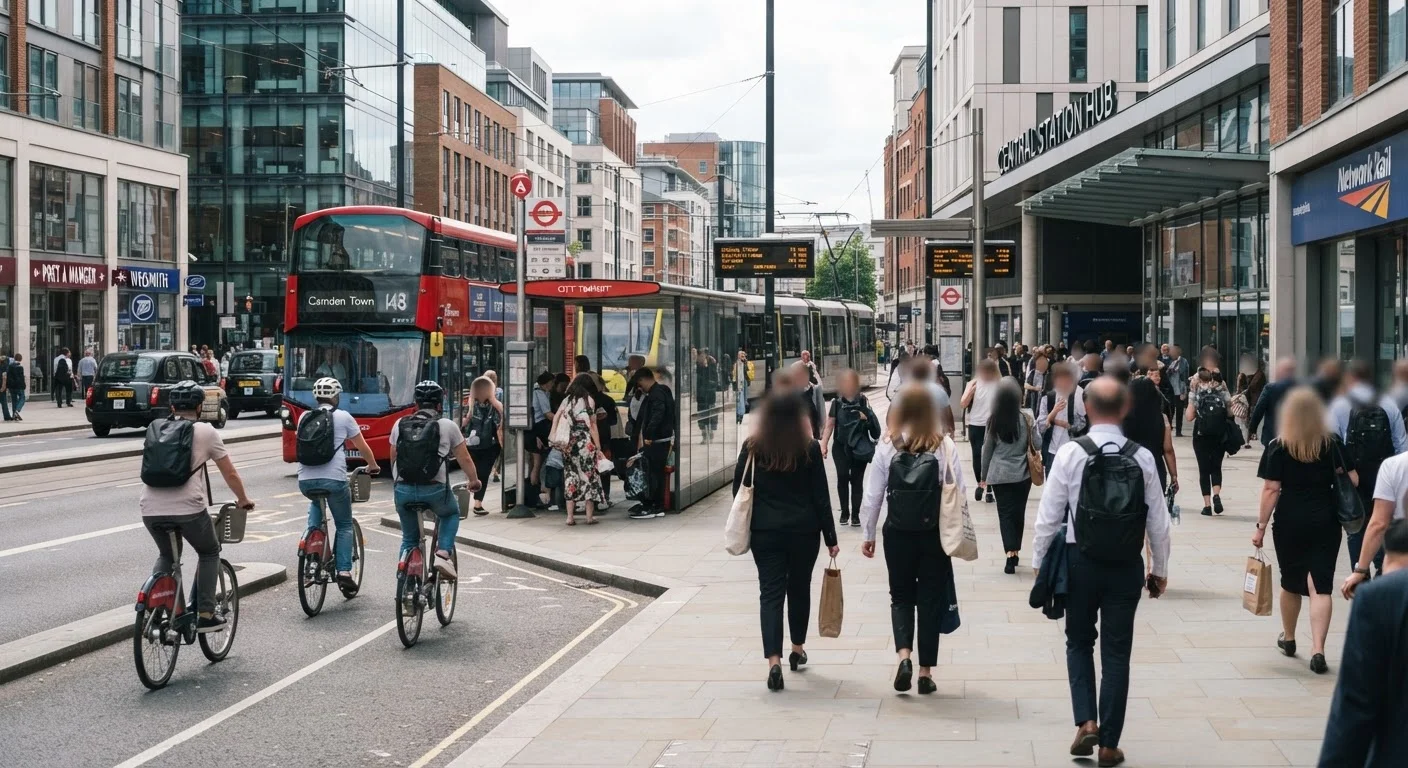
Buses, subways, light rail, and commuter trains form the foundation of car-free transportation in most U.S. metro areas. Transit reliability and coverage vary dramatically by city—dense urban cores like New York, Chicago, and San Francisco offer frequent, multi-line service, while mid-size and smaller cities may have limited routes and long headways between departures.
Before committing to a car-free lifestyle, check your local transit authority's route maps and frequency data. Key questions to ask:
- Does a bus or rail line connect your home to your workplace or school?
- What are the first and last departure times for routes you'd use daily?
- Is service frequency high enough (ideally every 15 minutes or less) to be practical?
Many transit agencies offer monthly passes that reduce per-trip costs substantially compared to paying per ride. Some employers also offer pre-tax commuter benefits that further offset transit costs.
Transit Quality Varies Enormously by Location
National transit statistics can be misleading because they average across cities with vastly different systems. A transit pass is a practical daily tool in Boston or Seattle but may offer limited utility in a sprawling Sun Belt suburb. Always evaluate your specific routes and schedules rather than relying on general impressions of how good transit is in your metro area.
Biking, E-Bikes, and Scooters
Human-powered and electric micromobility covers the first- and last-mile gaps that transit often can't reach. A conventional bicycle requires a modest upfront investment and near-zero operating costs. E-bikes—electric-assisted bicycles—extend the practical range and reduce physical exertion, making them viable for longer commutes or hilly terrain.
Docked and dockless bike-share programs exist in many cities, offering per-minute or monthly-membership pricing without the burden of owning and storing a bike. Electric scooter rentals are similarly available in urban areas, typically charged by the minute.
Before buying an e-bike, spend a few weeks using a bike-share program for your actual commute route. You'll quickly learn whether e-assist is necessary for your terrain and distance before committing to a larger purchase.
Many riders overestimate how much electric assist they need, or discover that a conventional bike handles their route fine—saving several hundred to over a thousand dollars.
Check whether your employer offers pre-tax commuter benefits before paying for a transit pass out of pocket. Federal law allows employees to set aside pre-tax dollars for qualifying transit and vanpool expenses, which effectively lowers the cost.
Pre-tax commuter benefits can reduce the real cost of a transit pass by an amount equal to your marginal tax rate—a straightforward savings most commuters don't take advantage of.
When evaluating micromobility, factor in your local infrastructure. Protected bike lanes meaningfully change the safety and comfort equation. Helmets are required by law in some states and strongly advisable everywhere.
Rideshare and Car-Share Services
App-based rideshare platforms provide on-demand car trips without ownership. They're most cost-effective for occasional trips—grocery runs, medical appointments, or late-night rides when transit isn't running. For daily commuting, rideshare costs typically exceed transit or biking by a wide margin.
Car-share programs (where members rent vehicles by the hour or day) occupy a middle ground. They're well-suited for errands requiring a vehicle—hauling furniture, making a suburban trip—without the full burden of ownership. Membership fees, hourly rates, and vehicle availability vary by provider and city.
Rideshare Surge Pricing Can Add Up Fast
Rideshare fares increase significantly during high-demand periods—rush hours, bad weather, major events, or late nights. If you're budgeting rideshare as a regular part of your transportation mix, use off-peak or estimated-fare data rather than surge-period prices for your calculations. Relying on rideshare as a daily commute option can easily exceed the cost of a car payment in high-demand markets.
Some less-discussed options—like demand-responsive transit and neighborhood electric vehicles—also deserve a look. See transportation modes most people overlook for more on those.
Long-Distance Travel Without a Car
Getting beyond your metro area without a car is achievable, though it requires more planning than driving. The main options:
- Intercity bus: Generally the lowest-cost option for regional trips. Routes connect hundreds of cities, and many operators offer advance-purchase discounts.
- Passenger rail: Amtrak serves most major U.S. cities. Travel times can be long on some corridors, but trains offer a comfortable, low-stress experience with no airport security lines for domestic trips.
- Air travel: Practical for longer distances when time is limited. Factor in airport transit time, baggage fees, and getting to and from the airport on each end.
For any long-distance trip, compare door-to-door travel time—not just the time in motion—and total out-of-pocket cost across modes before deciding.
“The most important variable in whether someone can live without a car isn't their willingness—it's the quality of the infrastructure around them. Land use and transit investment are the policy levers that expand or shrink individual choice.”
— Transportation Policy Researcher, Urban Mobility Research Institute
Building a Multi-Modal Approach That Works
The most practical car-free or car-light lifestyle usually combines several modes rather than relying on one. A typical arrangement might look like: transit for daily commuting, a bike or scooter for short local trips, rideshare for occasional errands requiring cargo capacity, and intercity rail for periodic longer trips.
The financial case for this kind of arrangement depends heavily on where you live. A detailed cost comparison of car ownership versus car-free living can help you run the numbers for your situation. And if you're ready to start combining modes day-to-day, this guide to building a multi-modal routine walks through practical setup steps.
Start by auditing your current trips for one week. Identify which trips could realistically shift to a different mode today, which would need minor infrastructure (a bike, a transit pass), and which genuinely require a car. That honest inventory is where a workable plan begins.
Start Small Before Going All-In
You don't have to go completely car-free to realize meaningful savings. Try replacing just your two or three most frequent short car trips with walking, biking, or transit for a month. Track what you actually spend and how long each trip takes. This trial approach lets you test the logistics without selling your car or making any irreversible changes.
This article provides general information about transportation options and is not financial or legal advice. Costs, service availability, and regulations vary by location and change over time. Verify current details with local transit authorities, service providers, and relevant government sources before making decisions.