

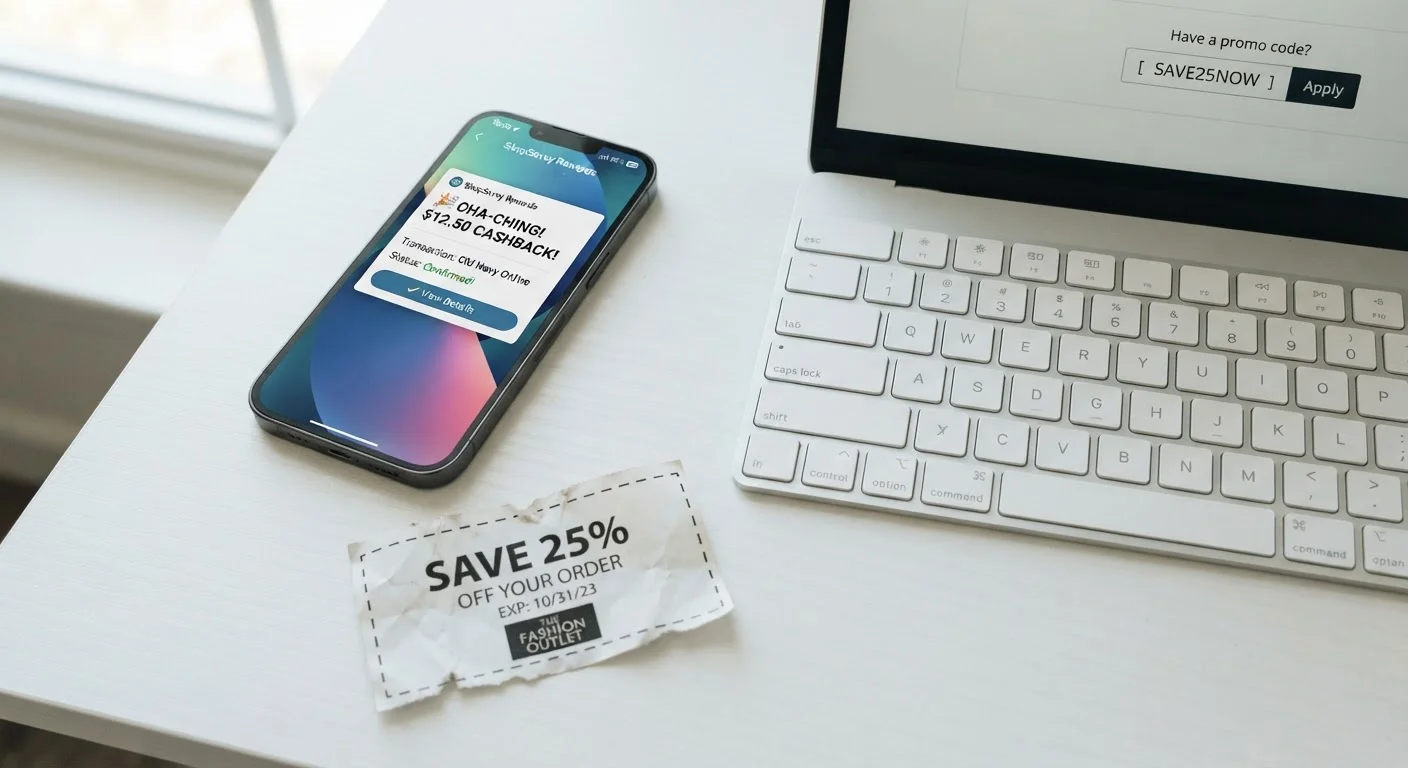
| When discount applies | Coupons & promo codes: at checkout. Cashback: after purchase. |
| Works in physical stores | Coupons: yes. Cashback: sometimes. Promo codes: rarely. |
| Typical format | Coupon: barcode or clip. Promo code: text string. Cashback: percentage rebate. |
| Can be combined | Sometimes — depends on retailer terms. Always check before assuming. |
| Expiry risk | All three can expire. Cashback offers often require activation before purchase. |
Why the Distinction Matters
Most shoppers have used all three at some point — clipped a coupon, entered a code at checkout, or earned money back through an app — without thinking too hard about how they actually differ. That's fine until you're trying to get the most out of a purchase and pick the wrong tool for the job.
Cashback, coupons, and promo codes are not interchangeable. Each one reduces your cost differently, comes with different conditions, and fits different shopping situations. Understanding how each works gives you a clearer picture of what you're actually saving — and when one approach is genuinely more useful than another. For a broader look at how retailers structure savings, see how real discounts are structured.
| When discount applies | Coupons & promo codes: at checkout. Cashback: after purchase. |
| Works in physical stores | Coupons: yes. Cashback: sometimes. Promo codes: rarely. |
| Typical format | Coupon: barcode or clip. Promo code: text string. Cashback: percentage rebate. |
| Can be combined | Sometimes — depends on retailer terms. Always check before assuming. |
| Expiry risk | All three can expire. Cashback offers often require activation before purchase. |
How Each Discount Type Works
Cashback
Cashback returns a percentage of what you spend after the transaction is complete. You pay full price (or a discounted price) at checkout, and a portion comes back to you later — sometimes within days, sometimes after weeks. The return might land in a linked bank account, a digital wallet, or as points redeemable for cash. Because the money arrives after the fact, it requires patience and tracking. If you forget to activate a cashback offer before buying, you typically lose it.
Coupons
A coupon applies a discount at the point of purchase, either by reducing the item price or by offering something free or bundled in. Paper coupons, digital coupons clipped through a retailer app, and manufacturer coupons all follow this same logic: you present them, the price drops immediately. Coupons tend to be product-specific and often tied to minimum quantities or expiry dates. They're among the most transparent discount formats — what you see is what you save, right at checkout.
Promo Codes
Promo codes — sometimes called discount codes or coupon codes — are alphanumeric strings entered into a field during online checkout. Like coupons, they reduce price immediately. Unlike coupons, they're almost entirely digital and apply broadly across a cart or a category rather than a single product. A code might give a flat dollar amount off, a percentage discount, or free shipping. Codes are often tied to specific channels (an email subscriber list, a social media campaign) and may have limited-use windows.
Cashback
A rebate returned to the buyer after a purchase is completed, expressed as a percentage of the amount spent. It arrives after the transaction, not at the register.
Coupon
A physical or digital voucher that reduces the price of a specific item at the point of sale. Coupons are typically product-specific and expire on a set date.
Promo Code
An alphanumeric code entered during online checkout that applies a discount to a cart, category, or order total. Also called a discount code or coupon code.
Stacking
Combining multiple discount types on a single purchase — for example, applying a promo code and also earning cashback on the same transaction. Whether stacking is permitted depends on each retailer's terms.
Activation
The step required to make a cashback offer apply to your purchase, such as clicking through a cashback portal or clipping a digital offer before buying. Skipping activation usually voids the reward.
When One Option Has an Edge
The right choice often depends on your shopping channel and what you're buying. Here's a straightforward breakdown:
- Cashback adds value on top of other discounts, since it usually activates regardless of what else you've applied. It rewards regular, planned spending more than impulse purchases because you need to remember to activate it beforehand. It's also useful when no coupons or codes are available — you still recover some cost. See how stacking cashback with other offers works in practice.
- Coupons shine in grocery and household categories where they're widely issued by manufacturers and retailers alike. They require less digital setup than cashback and work in physical stores without an internet connection. However, they can push you toward buying more than you need to hit a threshold.
- Promo codes are most powerful for one-time or infrequent online purchases — electronics, clothing, travel bookings — where a single percentage-off code can represent meaningful savings. They're easy to find and easy to apply, but may exclude sale items. Check how category affects your comparison strategy before assuming a code will apply to everything in your cart.
~60%
US online shoppers who search for a promo code before checkout
Widely cited in e-commerce research, reflecting how routine code-hunting has become among digital shoppers.
Days to weeks
Typical cashback processing time
Processing periods vary by platform and retailer; some post rewards within 48 hours while others take 60–90 days.
One practical note: promo codes and coupons reduce what you pay; cashback reduces what you've paid. That timing difference matters if you're budgeting tightly. Also worth knowing — some common deal-hunting assumptions about these tools don't hold up under scrutiny.
For context on how in-store and online pricing affects which discount types are available to you, see where prices actually differ by channel. And if you're enrolled in a loyalty programme, it's worth understanding what you're exchanging for those rewards.