

Key Takeaways
- Dorm beds typically cost 40–70% less per night than a private room in the same hostel.
- Private hostel rooms offer a door that closes, but bathrooms are often still shared.
- Dorms favor solo travelers; private rooms work better for couples or those needing reliable sleep.
- Noise, security, and light exposure vary significantly between the two room types.
- Your trip length, travel style, and destination all affect which option delivers better overall value.
Option A
Shared Dorm Room
The social, stripped-back option for maximum savings.
Best for: Solo travelers and backpackers who prioritize low nightly cost and meeting other travelers over personal space.
Option B
Private Hostel Room
The middle ground between full hotel privacy and hostel pricing.
Best for: Couples, light sleepers, or anyone who wants hostel amenities without sharing a room with strangers.
If you're traveling solo on a tight nightly budget
Shared Dorm Room
The per-night savings are substantial, and solo travelers typically find the social environment an asset rather than an inconvenience.
If you're traveling as a couple or with a friend
Private Hostel Room
Splitting a private room between two people often costs the same or less per person than two separate dorm beds, with far more comfort.
If you're a light sleeper or work remotely while traveling
Private Hostel Room
Dorm environments are unpredictable with noise and light at all hours; a private room gives you meaningful control over your sleep and focus.
If you're on a multi-week backpacking trip through multiple cities
Shared Dorm Room
Accumulated savings across many nights can fund additional travel days, and dorms are consistently the standard in the global backpacker circuit.
If you value hostel social life but need occasional privacy
Private Hostel Room
You still have full access to common areas, kitchens, and events, while retreating to a private space when needed.
The Core Trade-Off: Cost vs. Comfort
When you book a bed in a hostel, you're not just choosing a price — you're choosing a living arrangement. The gap between a shared dorm and a private room is wider than most first-timers expect, and it touches nearly every part of your stay: how well you sleep, how safe your belongings feel, and how much energy you have the next day.
Dorm beds are priced low because they pack multiple guests into one room — typically four to twelve beds, though some budget hostels go higher. That density is exactly what makes them affordable and socially active, but it also means noise, disrupted sleep, and shared personal space are realities you have to plan around. If you want to understand how the rest of hostel life works before committing to either option, this first-timer's orientation to hostel rooms is worth reading first.
Private hostel rooms sit at a higher price point, but they're still generally cheaper than a standard budget hotel. What you're paying for is a door that closes and an immediate reduction in the number of strangers in your personal space. That said, don't assume a private hostel room is equivalent to a hotel room — bathrooms are often still shared with other guests on the floor, and soundproofing varies widely.
| Criterion | Shared Dorm Room | Private Hostel Room |
|---|---|---|
| Typical nightly cost | Lower — often 40–70% less | Higher — closer to budget hotel rates |
| Privacy | Minimal — shared with strangers | Good — your own lockable space |
| Bathroom access | Shared with all dorm guests | Often still shared with floor guests |
| Sleep quality | Variable — noise and light unpredictable | More consistent and controllable |
| Social opportunity | High — natural meeting environment | Lower in-room; common areas still available |
| Security | Lockers provided; personal vigilance needed | Room lock adds a layer of security |
| Best for group size | Solo travelers | Couples or pairs splitting the cost |
What Dorm Life Actually Looks Like
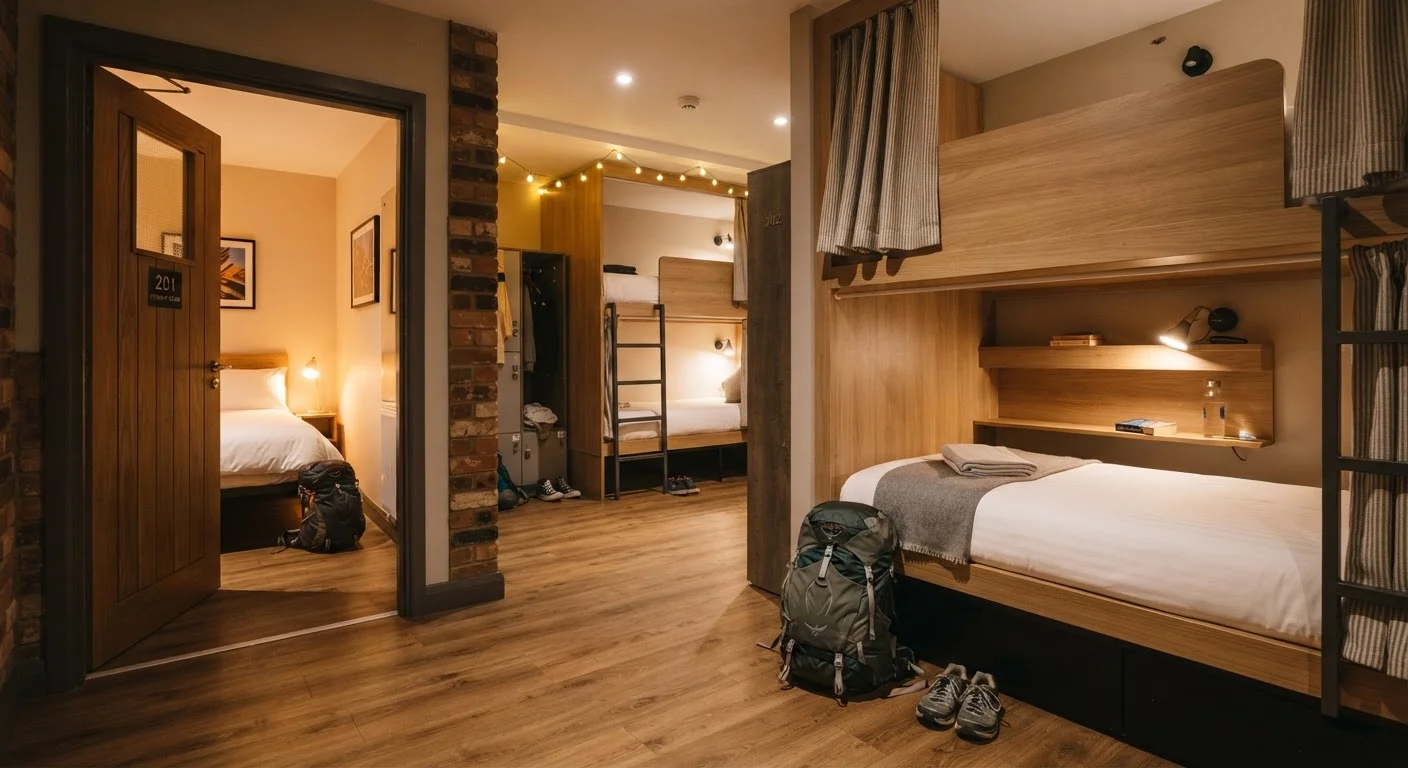
A dorm room in a well-run hostel usually provides a bunk or single bed, a small locker for valuables (bring your own padlock or plan to rent one), and shared bathroom access. Curtains on individual bunks are increasingly common in newer hostels, offering some visual privacy even in a full room.
The social dimension is real and genuinely valuable for many travelers. Dorm rooms are where people swap destination tips, form impromptu travel groups, and feel less isolated on solo trips. If that kind of connection is part of what you're looking for, a dorm bed delivers it organically — no forced socializing required.
The practical downsides come down to predictability. You cannot control who else is in the room, what time they come back at night, whether they snore, or how considerate they are with lights and noise. Most hostels have quiet hours, but enforcement varies. Light sleepers and anyone with an early morning commitment should weigh this carefully.
6–12
Typical beds in a standard hostel dorm
Dorm sizes vary widely by hostel; smaller dorms of 4–6 beds generally command slightly higher prices but offer a quieter experience.
40–70%
Potential savings of dorm vs. private room
Price gaps between dorm and private rooms vary by city, hostel, and season — always compare within the same property for an accurate figure.
Security is manageable but requires awareness. Valuables should go in a locker; passports, phones, and cash should never be left loose on a bunk. Different traveler types approach this differently, and it's worth thinking about your own comfort level with shared living before you book.
When a Private Hostel Room Earns Its Price
A private hostel room makes straightforward financial sense the moment you're traveling with even one other person. Two travelers splitting a private room typically pay the same or less per person than two dorm beds — and they get a space entirely their own. Couples in particular will almost always find this math works in their favor.
Beyond the numbers, there are practical scenarios where the upgrade is worth it even for solo travelers: an early flight requiring reliable rest, a stretch of travel that's left you worn down, or a destination where you'll be working remotely and need consistent quiet. The hostel common areas remain accessible regardless of which room type you book, so you don't sacrifice social access by choosing a private room.
It's also worth comparing across lodging types before assuming a private hostel room is automatically the right call. Understanding what separates hostels from guesthouses and budget hotels can clarify whether a private hostel room or a different lodging category makes more sense for your specific trip. And if you're booking either option, how you book can affect the final price — worth checking before you confirm.
Private Doesn't Always Mean En Suite
A common misconception is that a private hostel room includes a private bathroom. In many hostels — especially older or budget-tier properties — private rooms share bathroom facilities with other guests on the same floor. When comparing options, check specifically whether an en-suite bathroom is included, as this significantly affects both comfort and price.