

Key Takeaways
- Hostel dorm rooms are shared spaces; packing light and using your locker keeps things manageable.
- Shared bathrooms are the norm — quick routines and shower shoes help you adapt fast.
- Common areas like kitchens and lounges can significantly cut your daily travel costs.
- Most hostels have 24-hour security, key card access, and personal lockers for valuables.
- Knowing the unspoken etiquette before you arrive makes your stay smoother for everyone.
Hostel
A hostel is a type of budget accommodation where guests typically sleep in shared dormitory rooms with bunk beds, though many also offer private rooms at lower prices than standard hotels. Guests share common areas such as bathrooms, kitchens, and lounges. Hostels are popular with cost-conscious travelers who want affordable lodging and, often, a social atmosphere.
Hostels are distinct from hotels in that they operate on a bed-per-bed pricing model in dorms, rather than selling entire rooms. Amenities and quality vary widely — from basic backpacker spots to well-designed boutique hostels.
What to Expect When You Walk In
Arriving at a hostel for the first time can feel disorienting — the lobby might look more like a café than a hotel front desk. That's by design. Most hostels cultivate a relaxed, communal feel from the moment you walk in.
At check-in, you'll typically show your ID and booking confirmation. Staff will explain the house rules, hand over a key card or locker key, and point you toward your room. This is a good moment to ask about quiet hours, kitchen access, and whether the hostel stores luggage. If you're arriving after hours, check whether the hostel has a self-check-in option — many do.
Before you head to your bunk, scan the common areas. Notice where the bathrooms are relative to your dorm, locate the kitchen, and find the nearest exit. A quick orientation loop takes two minutes and saves you from fumbling around at midnight.
Ask at Check-In, Not Later
The front desk moment is your best window to get practical information — quiet hours, kitchen closing times, luggage storage availability, and local transit tips. Staff expect these questions from new arrivals and are usually happy to help. Once you've settled into your bunk, you're less likely to seek out this information proactively.
The Dorm Room: Your Home Base
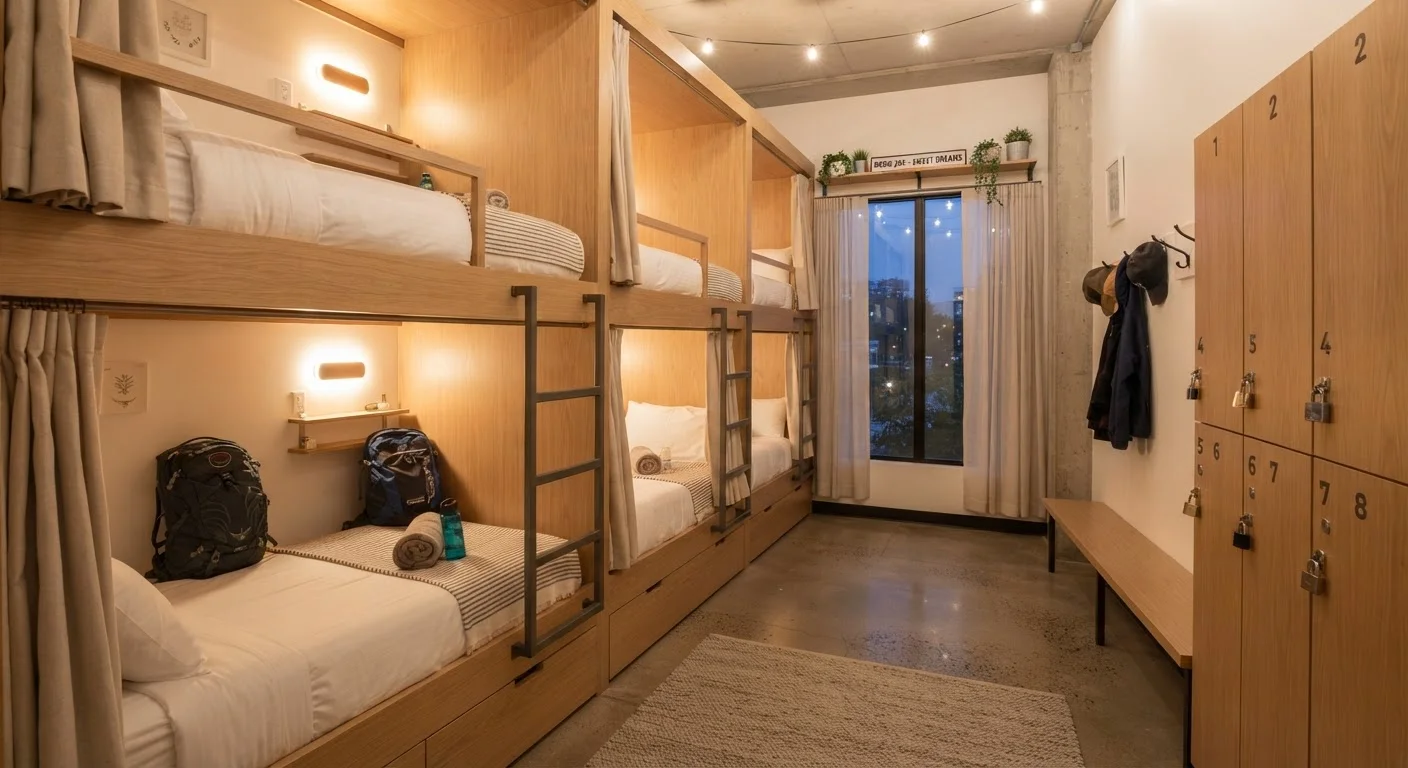
The dorm room is where most first-timers feel the biggest adjustment. Rooms typically hold anywhere from 4 to 12 beds, arranged as bunk beds along the walls. Each bed usually comes with a reading light, at least one power outlet, and a curtain on newer properties. Your bunk is your personal territory — everything else is shared.
Each guest is assigned a locker, usually underneath or beside their bunk. Use it. Laptops, passports, cash, and anything you'd be upset to lose should go in there with a padlock — most hostels expect you to supply your own. A small combination padlock takes up almost no space in your bag and is worth every penny.
Noise and light are the two main friction points in dorms. People keep different schedules, and someone will almost certainly come in after you've fallen asleep. Earplugs and a sleep mask are not optional — they're standard kit. For a deeper look at whether a private room might suit you better, see our comparison of dorm beds and private hostel rooms.
~$30–$50
Typical nightly dorm bed cost in major US cities
Hostel dorm beds in cities like New York, Chicago, and Los Angeles generally range from $30 to $50 per night, compared to $150+ for a standard budget hotel room, based on commonly reported booking data.
4–12
Typical number of beds per hostel dorm room
Most hostel dorm rooms accommodate between 4 and 12 guests; smaller dorms (4–6 beds) are generally quieter and more popular with light sleepers.
6–8
Guests per bathroom in well-run hostels
Industry guidance for hostel operators generally targets a ratio of around 6 to 8 guests per bathroom facility to keep wait times reasonable.
Shared Bathrooms and Shower Etiquette
Shared bathrooms are standard in dorm-style hostels. The ratio of guests to showers varies widely — a well-run hostel aims for around 6 to 8 guests per bathroom unit, though this isn't always the reality. Peak times are typically 7–9 a.m. and again after dinner. Showering slightly outside those windows makes the experience noticeably more comfortable.
Always wear flip-flops or shower shoes in shared bathrooms. This is non-negotiable from a hygiene standpoint. Keep your shower short — five to seven minutes is the unspoken standard when others are waiting — and take your toiletries with you rather than leaving them on shelves. A small hanging toiletry bag keeps everything organised and portable.
Bathroom Availability Varies by Property
Some hostels have bathrooms inside or adjacent to each dorm room (called ensuite or pod-style), while others have shared facilities down the hall serving multiple rooms. The listing description should specify which type applies — if it isn't clear, it's worth confirming before you book. Ensuite dorms typically cost a bit more but suit travelers who prefer more privacy.
Common Areas: Kitchen, Lounge, and Social Spaces
The shared kitchen is one of the most underused money-saving tools in a hostel. Most have basic appliances — a stove, microwave, fridge, and kettle — along with communal cooking equipment. Preparing even one or two meals a day here can meaningfully reduce your food spend in expensive cities. Label your food clearly in the fridge (masking tape and a marker work fine) and clean up after yourself. Those two habits cover most kitchen conflicts.
The lounge or common room is where the social element of hostel life lives. This is where you'll find travelers comparing itineraries, playing cards, or planning day trips together. You're never obligated to participate, but it's worth knowing the space is there. Many people who book hostels specifically for the social aspect find that genuine connections — and occasionally, travel companions — happen organically in these rooms.
For a broader comparison of hostel life against other budget options, our article on hostels, guesthouses, and budget hotels lays out the key differences. And if this is your first trip flying solo, the guide to affordable lodging for solo travelers is worth a read before you book.
Unspoken Rules That Make Everyone's Stay Better
Hostel etiquette isn't formally posted anywhere, but ignoring it makes you that guest. A few guidelines that hold almost universally:
- Keep lights off after quiet hours. Use your phone's torch if you need to find something in the dark.
- Pack your bag before bed if you have an early departure — rustling through a bag at 5 a.m. is a genuine grievance.
- Don't monopolise outlets. Charge what you need and free up the plug when you're done.
- Keep noise low in the dorm. Conversations and phone calls belong in the common room, not the sleeping area.
- Respect others' bunk space. Don't place your belongings on someone else's bed, even briefly.
These habits cost nothing and go a long way. Before your trip, run through our pre-arrival checklist for budget rooms to make sure you've covered the practical bases — cancellation policies, what's included, and neighbourhood considerations — before confirming your booking.
“The travelers who have the best time in hostels are usually the ones who come prepared — they know what to expect, they respect the space, and they treat it like a community rather than just a bed for the night.”
— Travel on a Budget Editorial Team, Budget travel researchers and writers