

Key Takeaways
- MaaS platforms bundle transit, rideshare, bike-share, and scooters into one app or subscription.
- The concept is designed to make car-free or car-light commuting more practical for everyday users.
- MaaS is already operating in parts of Europe and select U.S. cities, though coverage varies widely.
- Subscriptions may offer flat monthly fees, but actual savings depend heavily on your commute pattern.
- MaaS works best in dense urban areas with robust underlying transit networks.
Mobility-as-a-Service (MaaS)
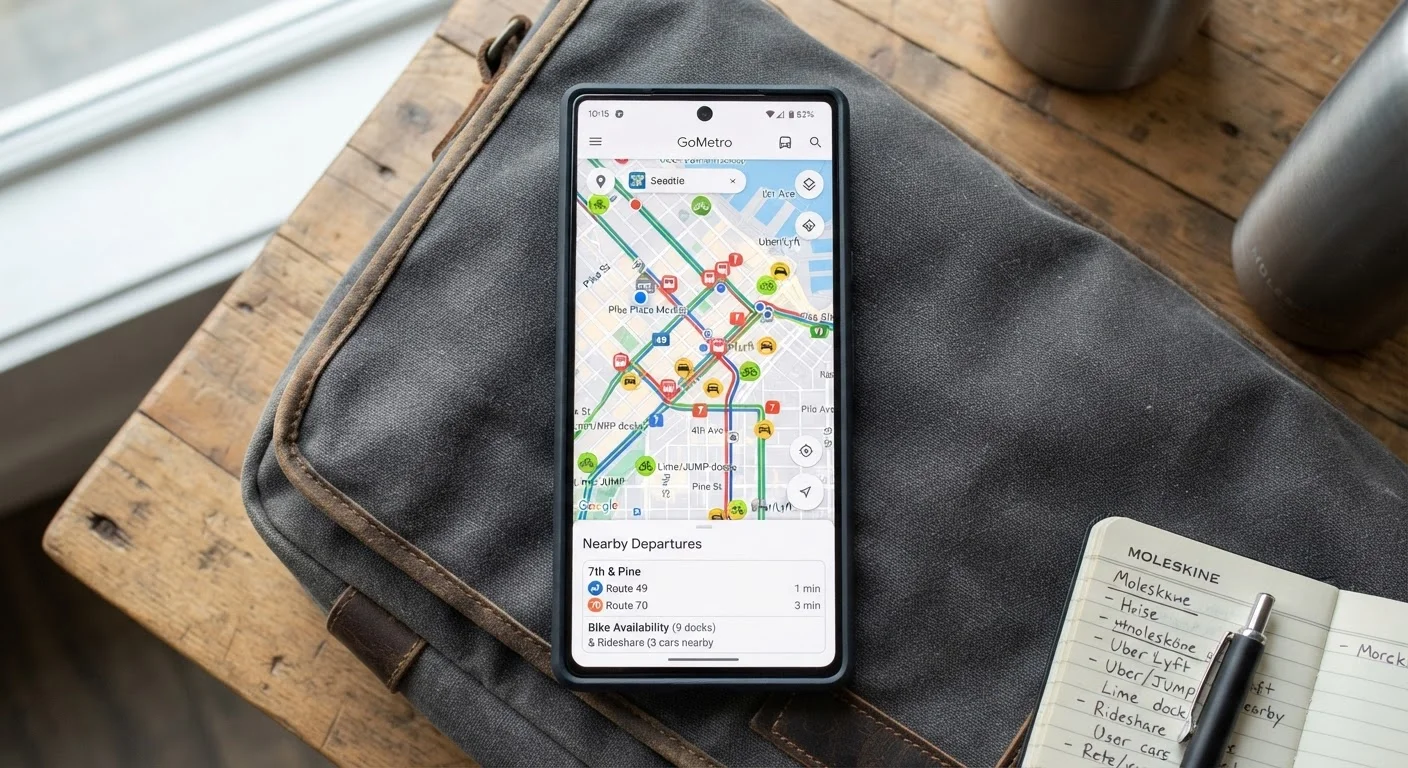
Mobility-as-a-Service, or MaaS, is an approach to transportation that combines multiple ways of getting around — buses, trains, rideshare, bike-share, scooters, and more — into a single digital platform. Instead of managing separate apps, tickets, and accounts, a commuter can plan, book, and pay for an entire trip through one interface. The goal is to make getting around without a personal car as convenient as owning one.
MaaS platforms typically rely on open data standards and APIs to integrate real-time transit feeds, dynamic pricing from rideshare providers, and micro-mobility networks into a unified trip-planning engine.
The Problem MaaS Is Trying to Solve
For most Americans, getting around without a personal vehicle means juggling multiple apps — one for the bus schedule, another for a rideshare, a third for a bike-share dock. Each has its own payment method and its own learning curve. That friction adds up, and it pushes many people back toward car ownership even when they'd prefer alternatives.
Mobility-as-a-Service addresses that friction directly. By acting as a single layer on top of existing transportation networks, a MaaS platform removes the coordination burden from the commuter. You describe where you're going and when, and the platform assembles the options.
If you're curious about the full range of alternatives available beyond a personal vehicle, our overview of modern transportation alternatives covers the landscape in detail.
$10,000+
Estimated annual cost of owning a new car
AAA's vehicle cost studies have consistently found that total annual ownership costs — including depreciation, insurance, fuel, and maintenance — commonly exceed $10,000 for a new vehicle.
45%
U.S. commuters with access to public transit
According to the American Public Transportation Association, roughly 45% of Americans have no access to public transit, underscoring why MaaS adoption is uneven across the country.
1
App to manage all transportation modes in a MaaS system
The core MaaS proposition is consolidation: one account, one payment method, and one planning interface replacing multiple separate services.
How MaaS Platforms Are Structured
MaaS platforms generally fall into two models. The first is an aggregator: an app that surfaces transit schedules, rideshare estimates, and bike-share availability side by side, letting you compare and book each leg separately. The second is a subscription bundle: a monthly fee that grants a set amount of access across partner services — similar to a cable bundle, but for transportation.
The subscription model has seen the most experimentation in Europe. Helsinki's Whim app, often cited as an early example, allowed users to purchase monthly passes covering unlimited public transit plus a set number of rideshare trips and short-term car rentals. Results from these pilots have been mixed — uptake varies significantly by city and user demographic.
Understanding how rideshare fits into this picture is useful background. Our article on the differences between rideshare, carshare, and rentals breaks down how each model actually works.
Check What's Actually Available in Your City
Before assuming a MaaS platform will work for your commute, look up which transit providers and shared-mobility services it actually partners with in your metro area. Coverage gaps between neighborhoods are common, especially outside dense city cores. Your local transit authority's website is a reliable starting point.
What It Means for Your Daily Commute
For commuters in cities with functional MaaS infrastructure, the practical benefit is fewer decisions at the start of each trip. Rather than checking three apps before leaving the house, a single query surfaces the fastest or most affordable combination of transit modes for that specific moment — accounting for delays, weather, and real-time availability.
MaaS also makes multi-modal commuting more approachable for people who haven't tried it. Combining transit, biking, and rideshare can reduce costs and stress, but designing that kind of routine takes planning. Our guide on building a practical multi-modal routine walks through how to get started.
For shorter first- and last-mile connections — the stretch between a transit stop and your actual destination — MaaS platforms often integrate e-bikes and scooters, which are well-suited to filling that gap.
Realistic Expectations: Where MaaS Falls Short
MaaS is not a universal solution. Its effectiveness is directly proportional to the quality of the underlying transit network. In cities with infrequent bus service, no bike-share infrastructure, and limited rideshare coverage, a MaaS app surfaces very few usable options — and a slick interface doesn't compensate for absent services.
Privacy is a legitimate concern as well. MaaS platforms collect detailed location and travel-pattern data in order to function. Users should review data-sharing policies before committing to any platform, particularly those that offer subscription tiers with behavioral tracking.
Finally, the economics are not automatically favorable. A subscription makes financial sense only if your usage aligns with what the plan covers. Infrequent travelers may pay for capacity they don't use; heavy travelers may exceed plan limits. Shared commuting arrangements — explored in our piece on vanpooling, carpooling, and commuter buses — can sometimes offer comparable coordination benefits without a platform dependency.
MaaS Is Still Evolving in the U.S.
Full-featured MaaS platforms remain more established in parts of Europe than in the United States, where regulatory fragmentation and varying transit quality have slowed deployment. Several U.S. cities have run pilots, but widespread availability is not yet the norm. Conditions can change quickly as transit agencies and technology providers form new partnerships.